
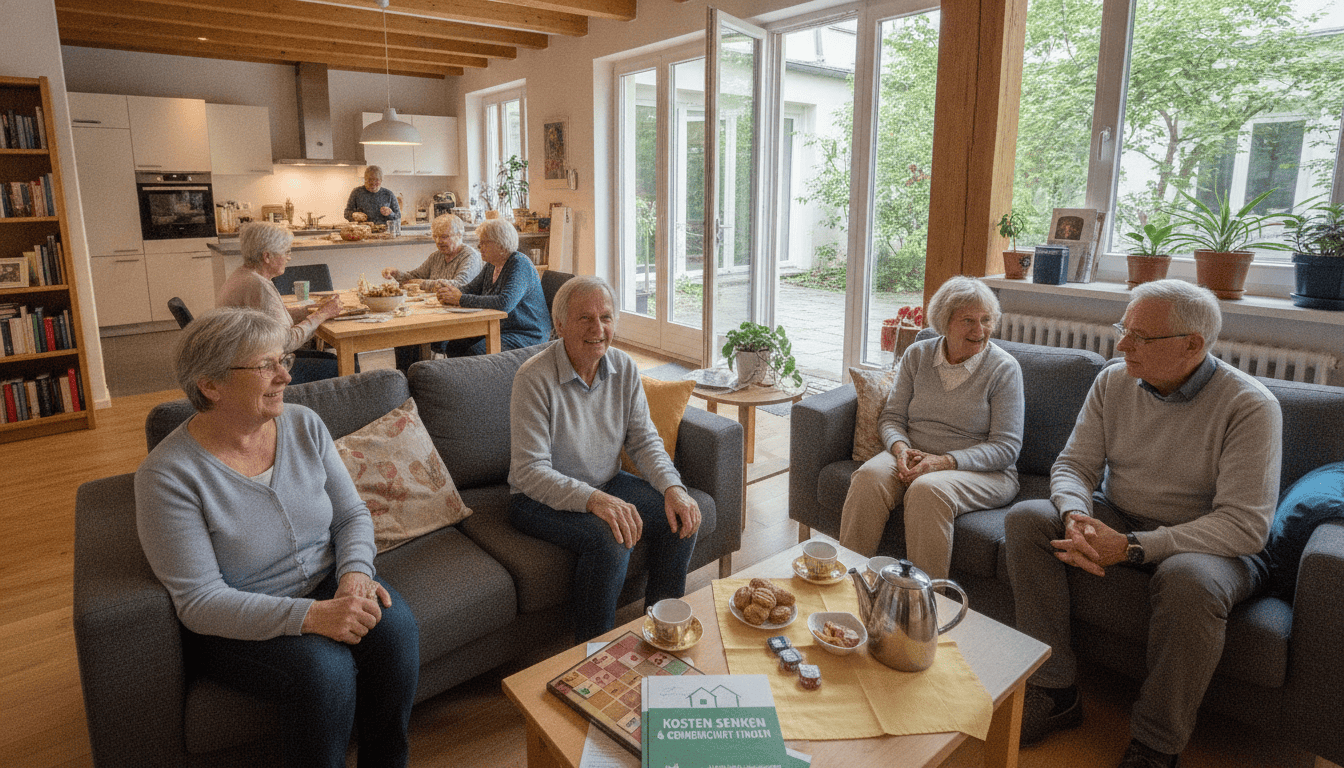
Senior co-housing expands in Germany as intergenerational and senior-only WGs offer affordable, communal living
Senior co-housing grows across Germany with converted buildings and mixed-age households, offering affordable rents near €8 per square metre and easing isolation.
Berlin project shows intergenerational model works
The concept of senior co-housing is taking root in Berlin where a mixed-age household demonstrates daily life across generations. In the Grünau district seven residents aged between 30 and 70 share a large house with garden, private flats of 40 to 60 square metres, and communal spaces. Rent in that arrangement runs at roughly eight euros per square metre and the household organizes shared routines such as weekly movie nights and a communal freezer that occasionally sparks minor disputes.
Converted inn in Dithmarschen provides a rural alternative
A former guesthouse in Rehm-Flehde-Bargen has been repurposed into a seniors’ shared living project, showing how rural properties can be adapted. Owner Hartwig Michelsen converted about 400 square metres on the ground floor into six age-appropriate rooms with private bathrooms and a shared kitchen, and he reports steady demand since the first residents moved in three years ago. He says the waiting list remains long and most enquiries come from women, with current residents aged around 60 to 70 and tenant selection increasingly participatory.
Survey data indicates growing openness among older adults
Research by the polling institute Forsa suggests a notable shift in attitudes toward communal living among older people, with about two thirds reporting they could imagine living in a shared household. That receptiveness is strongest among active, independent seniors who seek social contact and cost sharing rather than institutional care. Policymakers and housing groups see this as an opportunity to relieve isolation while maintaining independence, though experts emphasise that different models suit different levels of care need.
Variations of co-housing cater to diverse needs
Senior co-housing appears in several forms ranging from pure seniors WGs to mixed-generation houses and schemes labelled living-in-exchange arrangements. In senior-only WGs residents can split household help and care costs, making services more affordable by pooling resources. In intergenerational settings, younger occupants may pay reduced rent in return for help with shopping, household tasks, or companionship, creating informal support networks that supplement professional care where required.
Benefits and everyday challenges of shared living
Residents and operators highlight clear advantages of co-housing including reduced loneliness, lower per-person housing costs, and improved quality of life through shared activities. Practical frictions do arise, as in any communal household, where differences in standards for cleanliness, noise tolerance and routines must be negotiated. Successful projects tend to formalise decision-making on new tenancies and house rules, and offer basic services like cleaning to reduce conflict and sustain harmony.
Alternative projects and personal choices across regions
Beyond urban examples, creative alternatives have emerged such as collective living on a farm near Erlangen and a refurbished Victorian villa in Laboe described in a recent novel that chronicles residents renovating their home together. Classified ads illustrate a wide market with offers ranging from shared rooms in large rural estates to caravan rentals on a farm, reflecting varied preferences and budgets. Still, many older people choose to stay in long-term homes for emotional reasons, keeping a senior-ready apartment as a future option while remaining rooted in familiar neighbourhoods.
Communal housing advocates argue that senior co-housing can fill gaps between independent living and formal care by combining autonomy with social support. The model is not a one-size-fits-all solution but it is gaining traction as a practical, community-based response to demographic change and housing pressure.
