
Japan housing vacancy spurs architect-led revival in Okutama
Japan housing vacancy spurs renovation drives in shrinking towns; architect Harumichi Maruya’s Okutama project offers practical lessons for Europe and Germany.
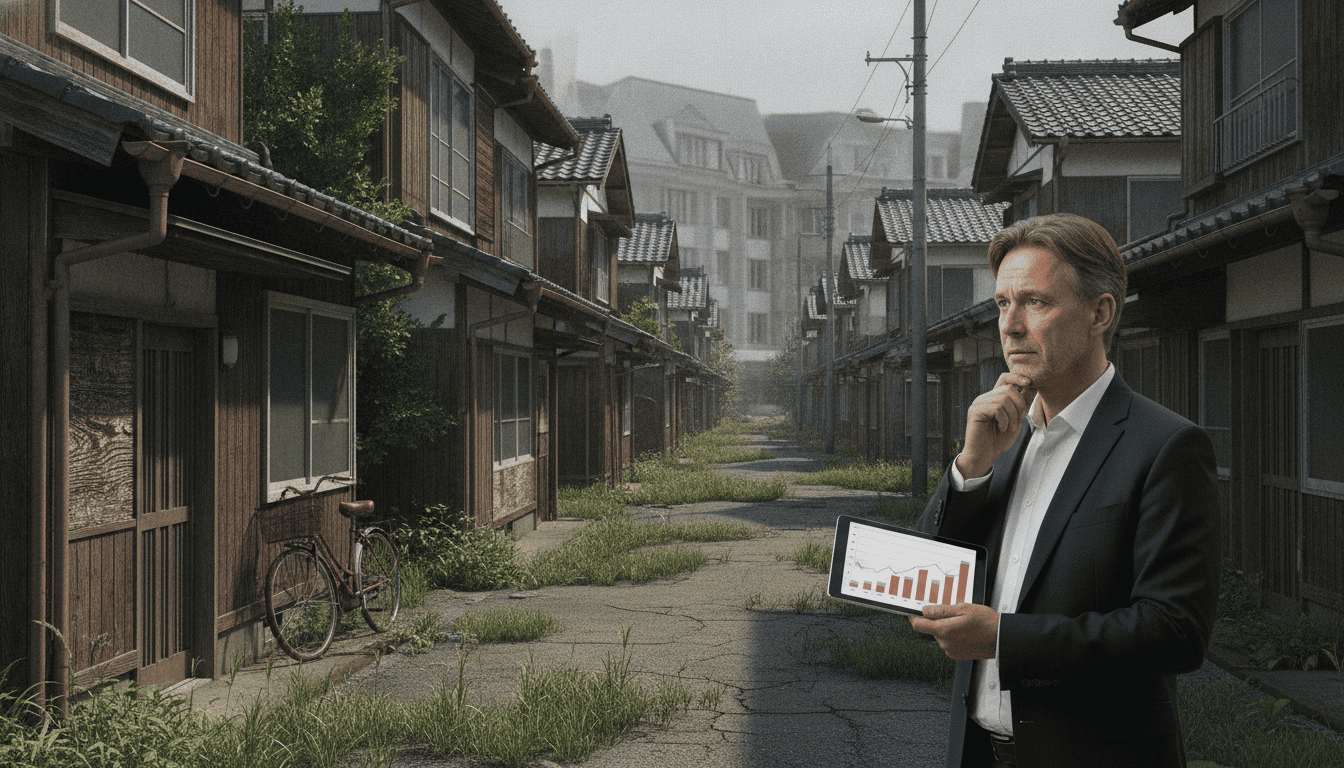
Harumichi Maruya has set out to reverse the effects of Japan housing vacancy in the mountain town of Okutama, where rows of empty houses stand under overgrown hedges and faded paint. On July 2, 2026, observers found Maruya placing promotional flyers in abandoned letterboxes and assessing properties that have been uninhabited for years. His campaign highlights a growing demographic problem: more homes than people, and the complex task of turning surplus housing into usable, safe accommodation.
Architect Revives Okutama with Renovation Campaign
Maruya, an architect by training, focuses on small-scale restoration and marketing to make vacant properties habitable again. He and a team assess structural condition, clear vegetation, and produce modest renovation plans that reduce the cost barrier for new occupants.
The initiative uses straightforward messaging and low-overhead fixes to attract buyers and renters who might otherwise be deterred by the stigma and expense associated with empty rural houses. Local footage shows volunteers replacing windows and repairing roofs, aiming to create a replicable model for other towns.
Empty Houses Reflect Demographic Shift
The surge in vacant dwellings is driven largely by long-term population decline and aging, a trend experts identify as central to Japan housing vacancy. Younger residents have migrated to major cities for work, leaving many rural properties unclaimed when older owners die or move into care.
Across municipalities, the supply of housing now outpaces demand in regions that once relied on agriculture and local industry. This mismatch has created clusters of derelict homes that pose risks to safety, property values, and municipal finances.
Market Barriers and Local Realities
Despite the abundance of empty homes, market realities complicate reuse: uncertain ownership, unclear legal status, and the rising cost of structural remediation deter private buyers. Many properties sit under tangled inheritance claims, making transactions slow or impossible without legal intervention.
Additionally, the geographic isolation of towns such as Okutama constrains demand; potential residents often cite limited public services, fewer job opportunities, and long commutes as reasons to avoid rural relocation. Those barriers mean that cheap houses alone rarely translate into sustainable repopulation.
Policy Efforts Struggle to Keep Pace
National and municipal programs have attempted to address Japan housing vacancy with subsidies, tax incentives, and public databases that list available properties. Some towns offer free or deeply discounted homes if buyers commit to renovation and residency, while others provide grants for safety upgrades.
However, officials acknowledge that policy measures have not kept pace with the scale and complexity of the problem. Funding is frequently short-term, bureaucratic hurdles persist, and many initiatives fail to bridge the gap between listing an empty house and making it attractive and safe for modern living.
European and German Regions Face Similar Trends
Observers in Europe, including parts of Germany, are watching Japan’s experience closely because aging populations and rural outmigration are increasingly familiar challenges. Regions with falling populations are beginning to see clusters of vacant housing and the same legal and economic friction that hampers reuse.
Policy-makers in Germany have started pilot programs to repurpose rural houses and support local entrepreneurs, but advocates warn that early action and tailored incentives are necessary to avoid the systemic deterioration seen in parts of Japan. Lessons from Okutama underline the need for coordinated legal, financial, and community approaches.
Community Initiatives and Economic Hurdles
Local residents and volunteers play a pivotal role in Maruya’s Okutama project, offering labor, local knowledge, and social capital that outside schemes often lack. Community-led workshops teach renovation skills, and small networks of entrepreneurs are testing guesthouse and remote-work models to attract new inhabitants.
Still, financing remains a central hurdle: renovation costs can outstrip the potential resale value in depressed local markets, and lenders are cautious about backing projects where long-term demand is uncertain. Without changes to credit, tax, and inheritance frameworks, many promising community efforts will struggle to scale.
As Okutama’s pilot suggests, addressing Japan housing vacancy requires more than listing empty houses or offering one-off subsidies; it demands sustainable economic opportunities, streamlined legal processes, and partnerships between architects, local governments, and residents that can make village life viable again.
