
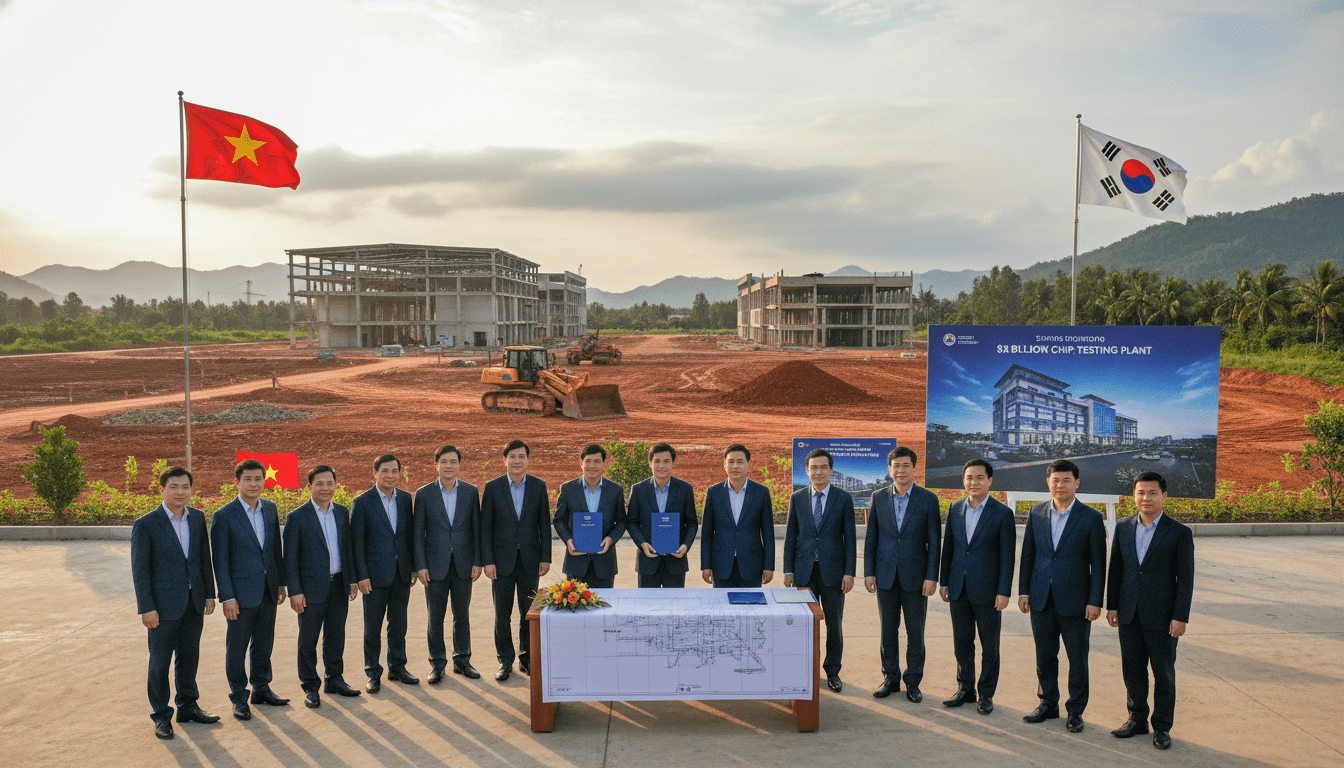
Samsung Semiconductor Testing Plant in Vietnam: $1.5B Investment Planned, $2.5B More Under Consideration
Samsung plans a $1.5B semiconductor testing plant in Vietnam, with a potential additional $2.5B, per an April environmental permit filing seen by Reuters.
Samsung Electronics has filed for environmental approvals for a new semiconductor testing plant in Vietnam, seeking to invest about $1.5 billion and indicating it may add up to $2.5 billion more for the project. The application, submitted to local authorities in April and reviewed by Reuters, frames the move as a significant expansion of the company’s chip operations in Southeast Asia. If realized, the project would mark one of the largest single investments in Vietnam’s semiconductor ecosystem to date.
Samsung Files Environmental Permit for Vietnam Facility
Samsung’s application to Vietnamese regulators requests permission to construct and operate a memory chip testing facility, according to documents cited by Reuters. The filing lists the main investment figure of roughly $1.5 billion and names a possible supplementary capital allocation of $2.5 billion. The documents do not give a definitive timeline for construction or production milestones, but they signal a concrete step toward expanding Samsung’s onshore chip testing capacity.
Samsung Electronics, in recent years, has increasingly located production and testing functions outside South Korea to diversify supply chains and reduce regional concentration risk. The April filing represents an early-stage regulatory move rather than a final investment decision, but it demonstrates the company’s intent to broaden its footprint in Vietnam. Local permitting agencies will next review the environmental impact assessment as part of the approval process.
Planned Investment and Possible Scale-Up
The core investment cited in the permit application is approximately $1.5 billion, intended for a facility dedicated to testing memory semiconductors. The application also states Samsung is considering allocating an additional $2.5 billion to the same project, which could substantially expand capacity or add adjacent testing and packaging operations. Together, the figures imply a potential total commitment of about $4 billion if Samsung proceeds with the larger plan.
Company officials have not publicly confirmed an exact investment timetable or the conditions that would trigger the extra funding. Industry observers say such staged announcements allow firms to secure land use and approvals while retaining flexibility to scale up according to market demand. The dual-figure presentation in regulatory filings is consistent with a phased approach to capital expenditure in semiconductor manufacturing.
Vietnam’s Role in Samsung’s Supply Chain
Vietnam has long been a manufacturing hub for Samsung’s consumer electronics, including smartphones and components, and the country has been cultivating higher-value industrial activity. A new semiconductor testing plant would further integrate Vietnam into the global chip supply chain, moving beyond assembly of finished devices to technical stages of semiconductor production. This would align with Vietnam’s broader economic policy goals of attracting advanced manufacturing and high-tech investment.
For Samsung, establishing testing capacity in Vietnam could shorten logistics routes for chips used in locally assembled products and diversify operational risk away from concentrated facilities in South Korea and other hubs. It would also position the company to tap into local talent and regional trade advantages while supporting Vietnam’s ambitions to climb the technology value chain.
Regulatory Review and Local Impact
The environmental permit application triggers a review process by Vietnamese authorities that evaluates potential impacts on land, water, emissions, and community health. Such assessments typically involve multiple rounds of technical review and public consultations, and they can extend over several months depending on the project’s complexity. Approval would be one of several prerequisites before construction can commence.
If approved and built, the facility could generate hundreds to thousands of local jobs during construction and operation, including positions in engineering, testing, logistics, and facility management. Local governments commonly offer incentives, such as tax breaks or infrastructure support, for large-scale high-tech investments, though such arrangements would be subject to negotiation and public disclosure under Vietnamese law.
Market Context and Global Supply Chain Implications
The proposed investment comes at a time when global chipmakers are diversifying manufacturing footprints to improve resilience amid geopolitical tensions and shifting trade patterns. Adding testing capacity in Vietnam could relieve bottlenecks in the memory chip value chain and provide Samsung with greater geographic flexibility. Analysts will be watching whether the move prompts other suppliers and foundries to consider similar expansions in Southeast Asia.
Memory chips remain a cyclical market, influenced by demand for consumer electronics, data centers, and AI infrastructure. Samsung’s potential multi-billion-dollar commitment reflects both a long-term strategic bet on continued demand and a tactical decision to secure more robust testing and validation capacity nearer to assembly sites.
Samsung did not immediately provide additional public comment on the project, and the permit documents filed in April remain the principal source of the initial report. Reuters reviewed the application, and local officials are expected to confirm procedural steps as the assessment proceeds.
The application marks an important signal of intent from one of the world’s largest chip producers, and it highlights Vietnam’s growing appeal as a destination for more advanced stages of semiconductor manufacturing.
If regulators approve the environmental assessment and Samsung proceeds with construction, the new testing plant could reshape parts of the regional chip ecosystem and accelerate Vietnam’s transition into higher-value technology manufacturing.
