
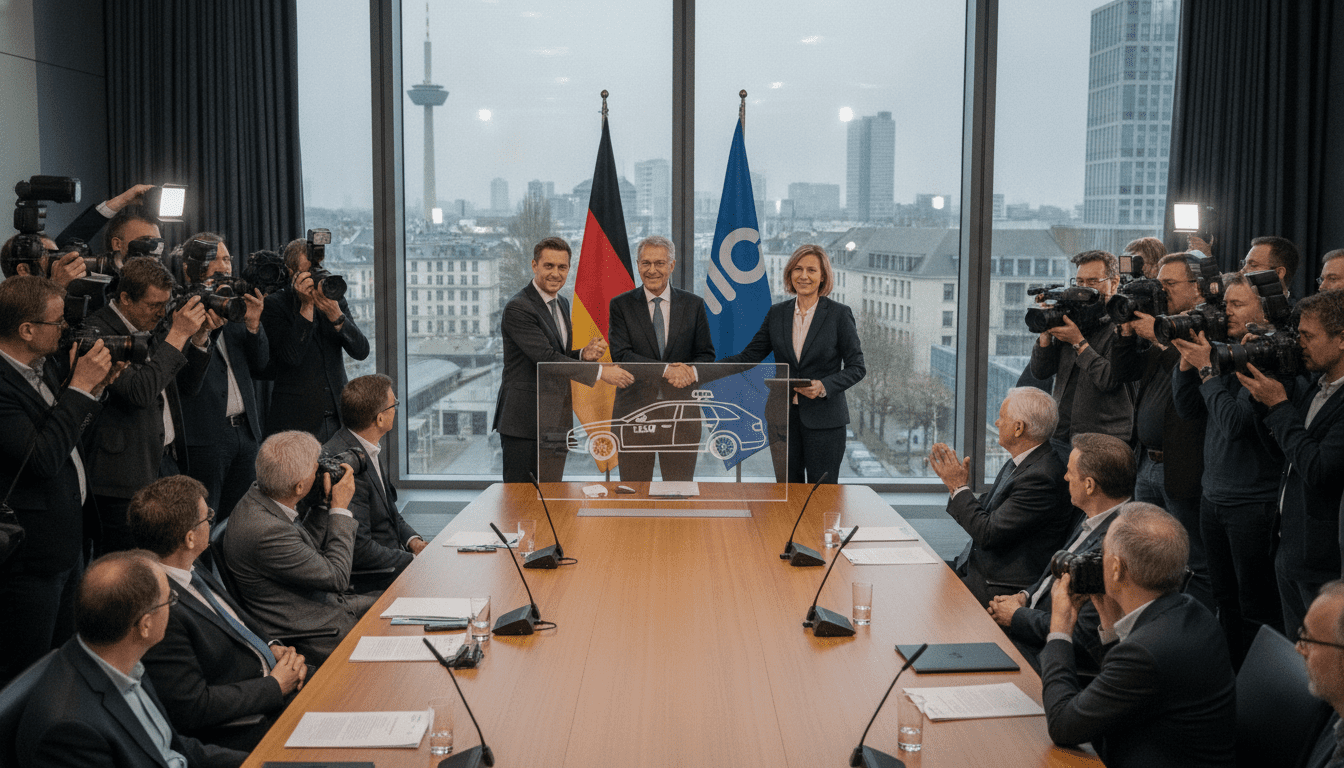
Safe Driver Group acquires Taxi Frankfurt, launches Taxi First Mobility to modernize services
Safe Driver Group acquires Taxi Frankfurt and will relaunch it as Taxi First Mobility to modernize bookings, expand services and integrate taxis with platforms like Uber.
Safe Driver Group completes acquisition of Taxi Frankfurt
Safe Driver Group, through its operating arm Safe Driver Ennoo GmbH, has acquired the 1919-founded Taxi Frankfurt cooperative and will convert it into Taxi First Mobility GmbH. The purchase, confirmed by Safe Driver Group CEO Thomas Mohnke, transfers control of Frankfurt’s largest taxi central with more than 1,400 affiliated vehicles. The cooperative’s roughly 60 members approved the transaction and will see the organisation restructured under a GmbH framework.
The transaction is reported to include a mid‑single‑digit million euro payment, with a substantial portion attributable to a property the cooperative retains in the Gallus district. Former cooperative board members Marten Clüver and Roman Marx will continue to lead the business under the new corporate form.
Deal terms and changes to ownership structure
The change from a traditional Genossenschaft to a limited company marks a notable shift in ownership and governance for Taxi Frankfurt. Members voted to accept the offer after negotiations that balanced immediate financial compensation with the promise of investment and operational renewal. The new Taxi First Mobility GmbH will inherit the cooperative’s client base, vehicle pool and central dispatch functions.
Mohnke has framed the purchase as the first step in a broader consolidation strategy. He signalled that further acquisitions are conceivable, suggesting that the company aims to become a national service provider for taxi dispatch and support functions.
Modernisation plans and software overhaul
A primary immediate investment will be in a modern dispatch and booking platform to replace legacy systems used by many taxi centrals. Mohnke says the upgrade will allow Taxi First Mobility to offer app‑based ordering alongside traditional phone dispatch, catering to passengers who expect smartphone booking while preserving service for customers who prefer human contact. The upgrade is pitched as a way to increase utilisation, reduce idle time and improve real‑time matching of drivers and passengers.
Mohnke also plans to introduce modular add‑on services for passengers, including paid options such as porter assistance, accompaniment to terminals or medical waiting rooms, and multilingual support. These services are intended to create higher‑margin offerings that differentiate taxis from pure ride‑hailing commoditised trips.
Integration with platforms and driver participation
Safe Driver Group operates Ennoo, the German general contractor that receives Uber bookings on behalf of the platform, and intends to leverage that experience to bring platform referrals into the Taxi First Mobility network. The company will enable Taxi Frankfurt drivers to receive bookings through Uber’s app in addition to the new centralised system. Mohnke emphasises this as a way to increase overall trip volumes and capture customers who habitually use ride‑hailing apps.
Revenue‑sharing and driver incentives are part of the plan, with Mohnke indicating drivers will participate in earnings from added services. He also described a series of “trust‑building measures” for drivers to ease the transition toward more integrated digital operations.
Sector tensions over pricing and regulation
The deal comes amid ongoing tensions between traditional taxi operators and platform‑based rivals such as Uber and Bolt. Taxi companies argue that platforms’ reliance on rental‑car operators and flexible pricing undercuts regulated taxi tariffs, creating what they describe as a “ruinous” competitive environment. Platforms counter that flexible pricing and digital matching can expand overall demand and provide better service in many markets.
Within this debate, some municipalities have moved toward regulating minimum fares for rental cars, for example in Cologne, while industry leaders call for broader regulatory changes to allow greater price flexibility and wider tariff corridors for taxis. Taxi Frankfurt’s outgoing board members have stressed that modern technical solutions must be paired with an updated regulatory framework to secure the sector’s future.
Consolidation trend and prospects for the German taxi market
Industry observers say Germany’s taxi sector, which includes around 700 local centrals, has been under pressure from falling margins and several recent insolvencies in cities such as Bochum, Leipzig and Braunschweig. Outsourcing of dispatch functions to larger centrals has already become common in smaller and mid‑sized communities during off‑peak hours, and the Safe Driver Group acquisition formalises a move toward centralised operations at scale.
Mohnke argues that consolidation could stabilise the sector by rationalising overhead, investing in technology and creating new revenue streams. Critics caution that widespread buyouts by a single corporate group would represent a paradigm shift for a traditionally fragmented and independent industry and could raise concerns about market concentration.
The acquisition also explicitly positions taxis to coexist with emerging mobility technologies. Mohnke notes that future autonomous vehicles are likely to handle bulk point‑to‑point trips, but will not replicate many human services taxis provide — such as carrying luggage or accompanying vulnerable passengers — which could preserve a role for staffed taxis.
Taxi Frankfurt’s rebranding as Taxi First Mobility will be an early test case of whether a combined strategy of digital integration, new service tiers and platform cooperation can revive demand for regulated taxis. If the initiative succeeds, it may encourage similar partnerships or acquisitions elsewhere in Germany.
The transaction highlights a moment of strategic reassessment for urban mobility: incumbents are pursuing technological upgrades and business model changes while regulators and platforms continue to negotiate rules for pricing and market access. The outcome in Frankfurt will be watched closely by operators, drivers and policymakers as they weigh whether consolidation and cooperation can deliver a sustainable future for the taxi industry.
