
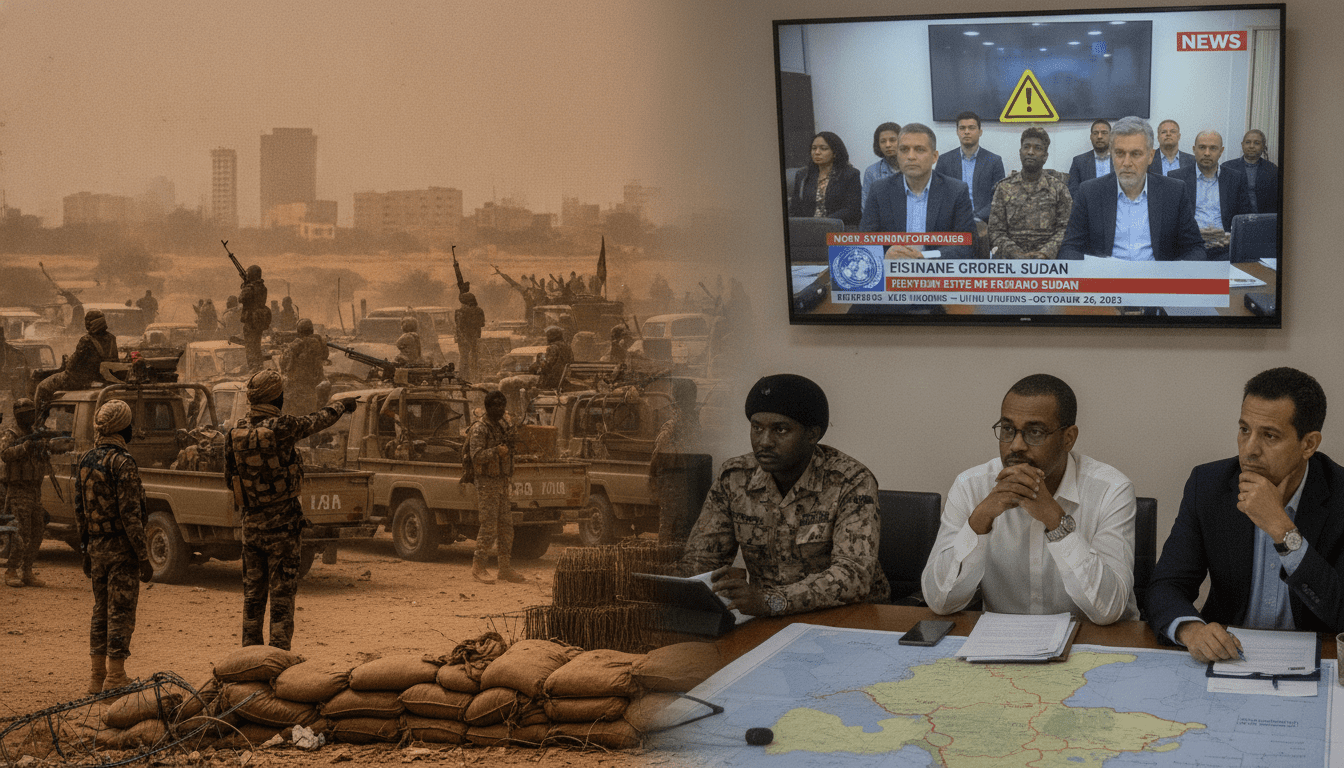
UN Warns of Imminent Siege on el-Obeid as RSF Buildup Raises Atrocity Fears
UN warns Sudan’s RSF could besiege el-Obeid, risking mass atrocities as drone strikes, fuel shortages and displacement intensify across North Kordofan.
The United Nations has issued an urgent warning that Sudan’s Rapid Support Forces (RSF) could imminently lay siege to el-Obeid, placing the city and surrounding communities at grave risk. The UN alert, citing troop concentrations, intensified shelling and drone strikes, said the situation in el-Obeid could rapidly deteriorate and trigger large-scale civilian harm.
UN warns RSF could repeat el-Fasher tactics in el-Obeid
Volker Türk, the UN high commissioner for human rights, said investigators have observed patterns in Kordofan that mirror the playbook used in North Darfur’s el-Fasher. He warned that without immediate action to halt an imminent offensive, civilians in and around el-Obeid face severe danger and potential mass atrocities.
The UN statement referenced the fall of el-Fasher in October 2025, which followed an 18-month siege and prompted international findings of widespread killings, sexual violence and looting. The high commissioner said those earlier events “bore the hallmarks of genocide” and urged swift measures to prevent a repeat.
RSF troop build-up and intensified attacks around el-Obeid
United Nations and local reports describe a significant RSF deployment in areas surrounding el-Obeid, accompanied by increased artillery fire and drone activity directed at urban targets. Fuel stations and logistics convoys have been repeatedly struck, undermining the city’s capacity to support civilians and emergency responders.
Humanitarian actors say sustained strikes on critical infrastructure have created a cascading crisis, as fuel shortages hamper mobility and the operation of water and sanitation systems. Observers warn that continued escalation would amplify the humanitarian toll and restrict lifesaving access.
Humanitarian services collapse and mass displacement
The strikes and fuel scarcity have effectively paralyzed public transport and impeded water treatment operations in el-Obeid, forcing residents to travel on foot or by animal-drawn carts. Many families are attempting to flee the city toward the neighbouring White Nile State, creating new displacement flows and stretching limited shelter options.
Local networks report interruptions to health services and shortages of food and medical supplies, complicating relief efforts. Humanitarian agencies have repeatedly appealed for safe corridors and immediate cessation of attacks on civilian infrastructure to prevent further loss of life.
RSF strategic positions that threaten a siege
Military analysts describe a ring of RSF strongholds that could enable a siege of el-Obeid if combined with a concerted offensive. Key positions identified include Jabal Abu Sunun to the west, the Kazqil area to the south and the town of Bara to the north, providing encirclement options within striking distance of the state capital.
Control of these nodes would permit the RSF to interdict supply lines and limit civilian movement, increasing the likelihood of protracted deprivation within the city. Observers say the combination of ground forces and persistent aerial strikes would make humanitarian access increasingly perilous.
International coalition demands restraint and pressure on parties
A coalition calling itself the Coalition for Atrocity Prevention and Justice for Sudan — including Canada, France, Germany, Ireland, the Netherlands, Norway, Sierra Leone and the United Kingdom — presented a joint statement to the UN Human Rights Council demanding an immediate halt to the assault on el-Obeid. The statement, backed by 21 additional states, urged all parties to de-escalate and comply with international humanitarian law.
The coalition called on foreign governments to apply maximum pressure on the RSF, the Sudanese Armed Forces and their external supporters to prevent atrocities and protect civilians. The document stopped short of naming specific external backers, even as other reports allege financial and logistical channels that have bolstered RSF capabilities.
Historical context heightens alarm over potential crimes
Human rights officials and advocacy groups note that the current warnings are informed by the intense violence recorded in el-Fasher, where prolonged siege tactics led to documented massacres and widespread sexual violence. Those past episodes remain central to concerns that a siege of el-Obeid could produce similarly catastrophic outcomes.
UN experts have urged immediate, coordinated diplomatic and operational steps to block an offensive and secure protection for civilians. Without such measures, the risk profile for Kordofan resembles earlier scenarios that produced severe and long-lasting harm.
International agencies have sought comment but reported contacts remained unanswered at the time of the UN advisory.
The unfolding situation in el-Obeid underscores an urgent need for international engagement to prevent further escalation, protect civilians and preserve humanitarian space. Authorities, regional actors and external backers face mounting pressure to act before the crisis intensifies into large-scale, avoidable atrocities.
