
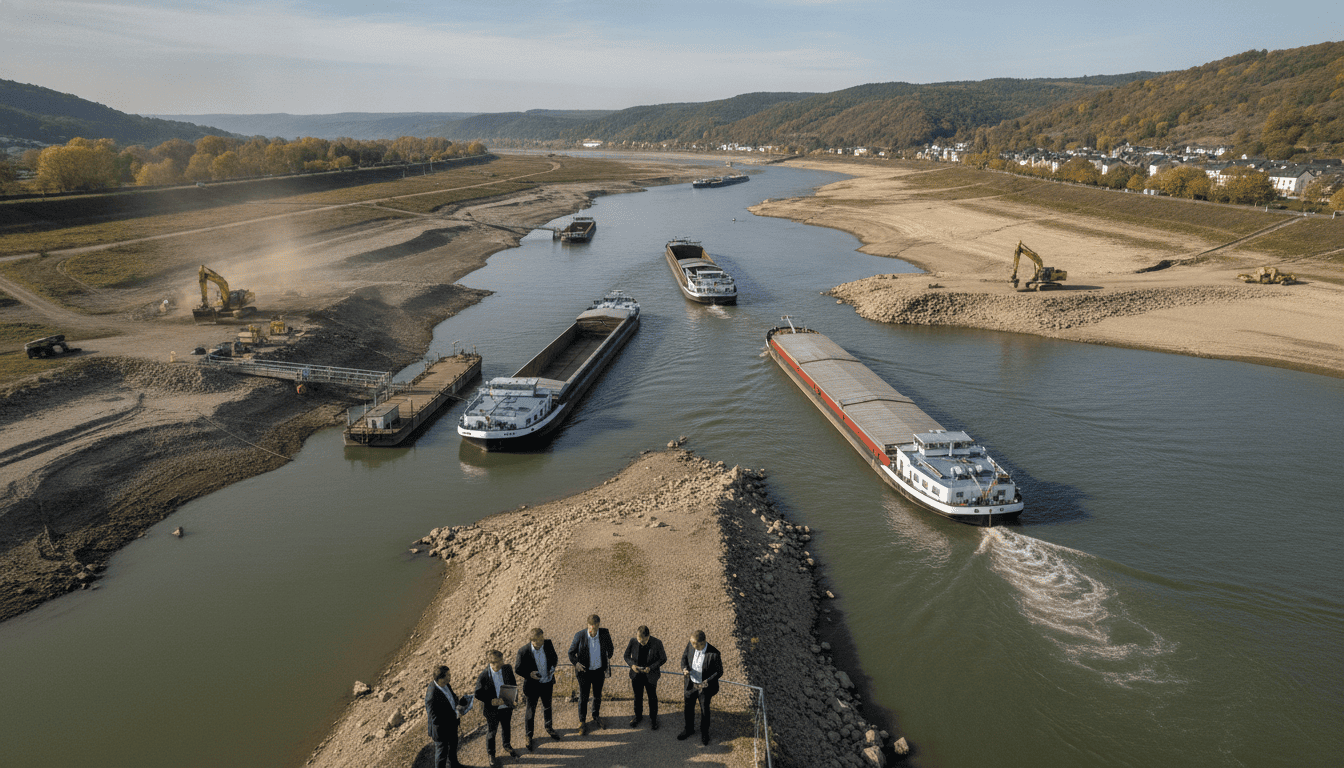
Low Rhine water levels threaten Germany’s economy, IfW warns of Q3 GDP hit
Low Rhine water levels could shave up to 0.2% off Germany’s Q3 GDP, IfW warns, as cargo capacity falls, transport costs rise and Kaub nears record lows.
The sharp fall in Rhine river levels is threatening Germany’s fragile economic recovery, with the Kiel Institute for the World Economy (IfW) warning that low Rhine water levels could reduce third-quarter growth by up to 0.2 percentage points. Analysts say constrained barge capacity and rising freight costs are already disrupting supply chains for key raw materials and refined fuels. Authorities at the Waterways and Shipping Administration expect further declines at critical points, keeping pressure on inland shipping and industry into August.
IfW projects GDP drag from reduced inland shipping
The IfW’s director of the Macroeconomics and Growth research group has calculated that the combined effects of limited shipments and higher transport expenses could lower GDP growth in the third quarter by roughly 0.1–0.2 percentage points. That outlook is particularly worrying because many forecasters were already expecting only modest summer growth of around 0.2 percent. In practical terms, a prolonged spell of low Rhine water levels could tip the economy from weak growth into stagnation.
The institute also flagged that, in July, Rhine gauges at Kaub recorded unusually low readings and that producer activity in manufacturing could fall sharply when navigation is constrained. Under typical business conditions, IfW said, industrial output could be depressed by nearly 0.8 percent in a month of severe shipping restrictions, translating into about a 0.2 percent hit to overall monthly economic activity.
Kaub gauge returns near historic low, shipping limits tighten
At the narrow navigation point near Kaub, water levels fell to around 30 centimetres, according to traffic and waterway reports, with forecasts indicating a possible further drop to about 25 centimetres later in the week. That would bring the gauge close to the record low registered in October 2018 and well below thresholds normally regarded as critical for Rhine navigation. Such readings force operators to reduce vessel drafts and loadings to avoid grounding.
As a result, barges are no longer able to sail fully laden. Industry sources report that many vessels are operating at only 15–20 percent of their capacity, requiring the same cargo to be divided among multiple ships and pushing freight prices higher. The bottleneck raises logistical costs for sectors dependent on bulk river transport, including agriculture, steel, chemicals and energy distribution.
Supply chains strained as key commodities are delayed
The Rhine is a primary artery for commodities such as grain, ores, coal and refined oil products; interruptions therefore ripple quickly through manufacturing and retail supply chains. With barges carrying smaller loads and turnaround times lengthening, factories face delayed deliveries of feedstock and producers of fuels and fertilizers encounter mounting logistical bills. Companies that had already been operating on narrow margins are especially exposed to these short-term cost increases.
Sectors that rely on consistent bulk shipments may resort to more expensive road freight or piecemeal rail movements, a shift that raises per-unit transport costs and can complicate inventory management. The cumulative effect is likely to show up in lower industrial production figures and increased input prices if low water conditions persist.
Rail closure reduces alternative capacity until December
The pressure on logistics is compounded by a months-long closure of a major right-bank rail corridor used as an alternate freight route, Deutsche Bank Research analysts have noted. Renovation work is scheduled to keep that line unavailable for goods traffic until December 12, limiting the ability of rail to absorb cargo displaced from waterways. Because rail capacity cannot fully replicate the volumes normally carried by barges, the combined constraints further squeeze shippers’ options.
Analysts warn that, even where rail can step in for some routes, the network lacks spare slots and wagons to handle a sudden surge, and transshipment between barge and rail often adds time and cost. The temporary reduction in multimodal flexibility therefore increases the vulnerability of industries dependent on bulk and heavy freight.
Drought and low inflows blamed for river decline
Meteorologists and water authorities point to a mix of sustained dry weather, reduced inflows from tributaries and lower contributions from Lake Constance as the primary causes behind the Rhine’s fall. The extended heat and limited rainfall in recent weeks have left catchment areas parched and rivers running below seasonal norms. Waterway managers have signalled that without significant precipitation, levels are unlikely to rebound sharply in the near term.
Authorities are monitoring navigational channels and adjusting restrictions to balance safety with commercial needs, but recovery depends on a change in hydrological conditions. Emergency measures such as dredging or temporary locks offer limited relief and cannot substitute for volume lost across the river system.
Outlook and short-term policy responses
Policymakers and industry groups are weighing short-term interventions to ease bottlenecks and shield critical supply chains, including targeted scheduling, price monitoring and temporary regulatory flexibility for multimodal transfers. Companies are also urged to review inventories, seek alternative suppliers where feasible and update logistics plans to reflect higher transport costs. Economists stress that while the immediate shock is manageable, the cumulative effect could be meaningful if low Rhine water levels persist into autumn.
Longer-term debates are likely to intensify about climate resilience for inland waterways and investments in alternative freight infrastructure to reduce systemic risk. For now, businesses and authorities face a race to adapt operations and limit economic fallout while hoping for weather-driven improvement.
The immediate economic picture will depend on upcoming rainfall and river inflows, but the current combination of shallow channels, constrained barge loadings and limited rail alternatives has already begun to tighten supply chains and add costs for German industry.
