
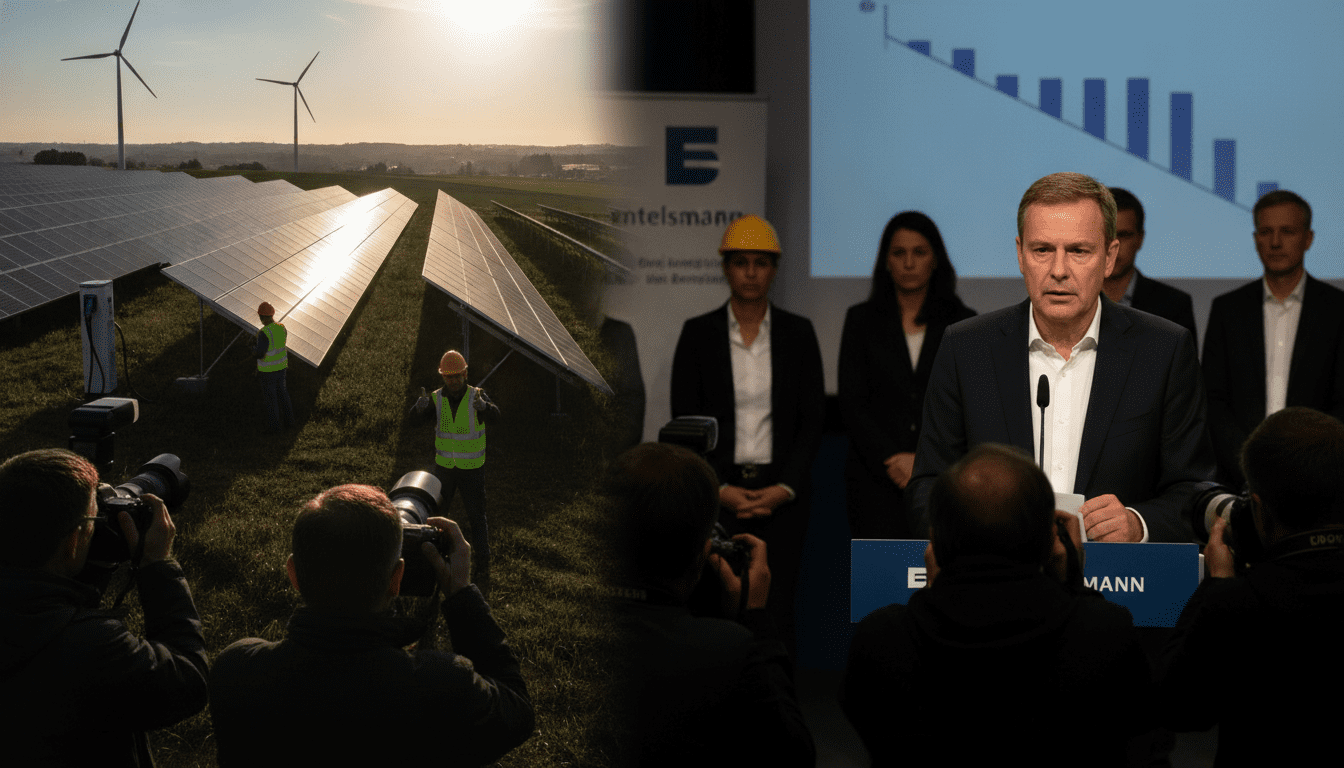
Record surge in renewable energy jobs in Germany hits 436,000 in 2025, study warns reforms could cost positions
Bertelsmann study finds renewable energy jobs in Germany reached 436,000 in 2025, up nearly 4% from 2023, but policy changes may threaten thousands without domestic production and certainty.
Germany’s renewable energy sector employed a record 436,000 people in 2025, according to a new analysis by the Bertelsmann Stiftung, with renewable energy jobs in Germany rising almost four percent compared with the previous peak in 2023. The study cautions that planned energy-policy reforms by the federal government could endanger “thousands of jobs” if they reduce incentives, remove clear rules for clean heating, or fail to secure domestic production. The foundation links employment shifts closely to policy settings and investment certainty across wind, solar and heating sectors.
Record employment in renewables in 2025
The Bertelsmann Stiftung’s figures show employment gains concentrated where investment and regulatory clarity exist, lifting the sector to its highest level on record in 2025. The reported 436,000 jobs mark an increase from the earlier best year, 2023, and reflect growth across installation, planning and associated services. Despite the headline increase, the foundation emphasizes that the trend remains vulnerable to abrupt policy changes.
Heat pump installation slump and rebound tied to jobs
The analysis highlights the so‑called “heat pump kink” as an example of how political debate alters demand and employment. Installations fell from about 350,000 units in 2023 to roughly 200,000 in 2024 amid controversy over heating legislation, before rebounding to nearly 300,000 in 2025. The foundation says employment in heat‑pump manufacturing and installation tracked this volatility, underlining the sensitivity of jobs to regulatory signals.
Wind sector shrinkage after auction reforms
Historical shifts in the onshore wind industry illustrate the labor risk of sudden regulatory change, the report notes. Between 2016 and 2018, employment in the wind sector fell by roughly one‑fifth following the introduction of a new auction system and caps on expansion. Those policy moves dampened investment and led to a pronounced decline in workforce levels, researchers say.
Solar manufacturing decline cut domestic jobs
The Bertelsmann study also revisits an earlier episode in the solar industry when domestic employment collapsed after subsidy cuts and a collapse in local manufacturing. Between 2011 and 2013, jobs in the solar sector fell from about 156,700 to 70,200 as incentives were reduced and production shifted abroad. Today’s installations are rising, but the foundation warns that most solar modules are still produced overseas, limiting job gains within Germany.
Bertelsmann urges domestic production and planning certainty
Jana Fingerhut, the foundation’s labour market expert, argues that expansion alone will not secure employment without rebuilding domestic value chains and predictable rules for investors. The report calls for measures to support in‑country production and to ensure long‑term planning certainty so private capital can commit to projects and local manufacturing can scale. Without such steps, the foundation warns that growth in installed capacity will not translate into sustained domestic job creation.
Government reform plans could put thousands of positions at risk
The study urges that upcoming legislative reforms in the energy sector be designed to protect employment, noting several proposals under discussion in the federal government. Economy Minister Katherina Reiche (CDU) has proposed aligning new wind and solar build‑out more closely with grid expansion, increasing the share of grid financing borne by plant operators and potentially removing subsidies for small rooftop solar systems. Bertelsmann cautions that cutting support for small installations, curbing incentives for climate‑friendly heating, or creating regulatory uncertainty could slow investment and cost jobs.
The foundation frames its recommendations as pragmatic measures to reconcile cost control with industrial and labor policy priorities, urging policymakers to weigh short‑term savings against longer‑term effects on domestic manufacturing and regional employment. The study’s examples from heat pumps, wind and solar underline how quickly employment can respond to changes in law and market incentives.
Looking ahead, the report calls for a policy mix that combines stable funding frameworks, targeted support for rebuilding manufacturing capacity, and clearer timelines for grid expansion to avoid bottlenecks. Such steps, the foundation argues, would help convert Germany’s rising renewable energy deployment into sustained job growth rather than transient gains vulnerable to political shifts.
