
Rheinmetall F126 cancellation sends shares tumbling as industry faces wider fallout
Rheinmetall F126 cancellation sends shares tumbling; ministry cites €18bn cost. Suppliers face losses as TKMS offers Meko alternative from 2029 and outlook.
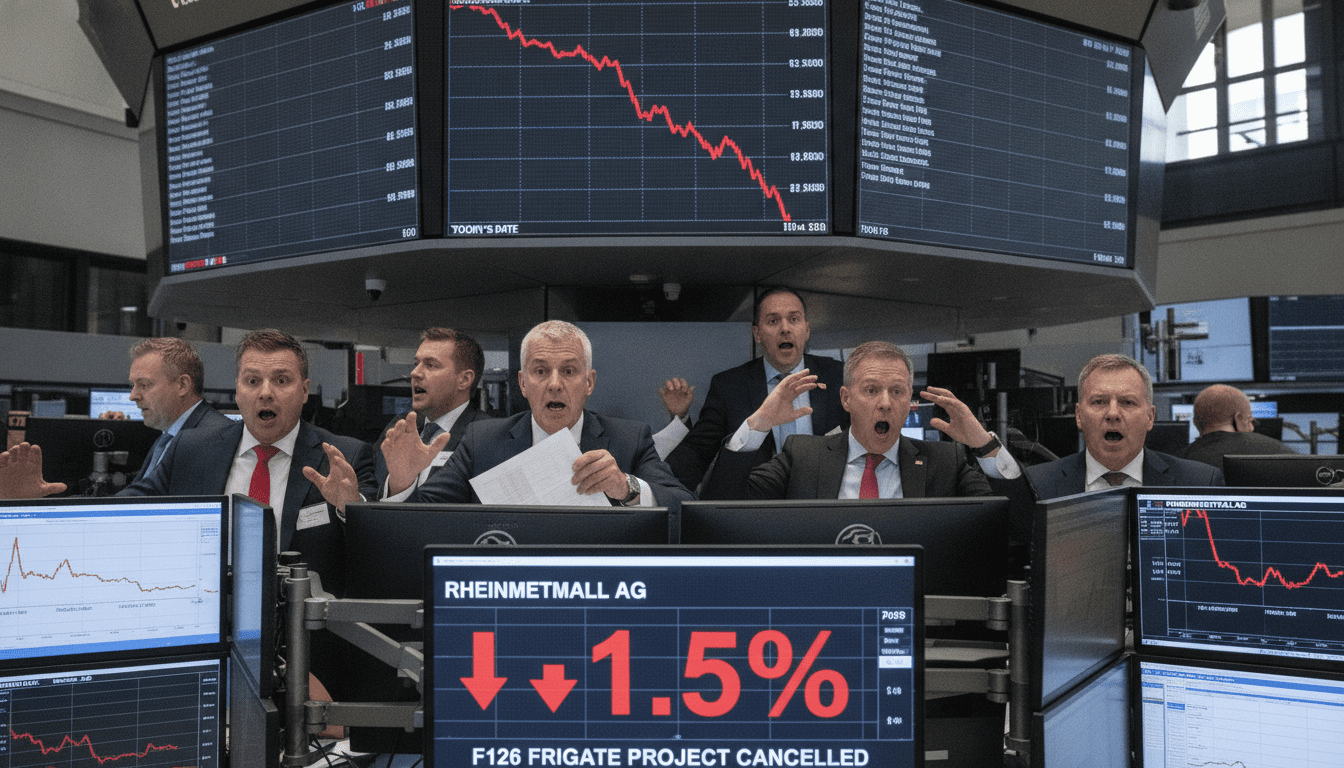
Rheinmetall’s stock plunged after the German Ministry of Defence confirmed it will stop the F126 frigate project, triggering market shock and fresh questions about the naval arm of the Düsseldorf-based group. The F126 cancellation has erased almost a quarter of Rheinmetall’s market value since the announcement and deepened losses that began earlier this year. Investors and suppliers are now reassessing the financial and industrial consequences of the abrupt decision.
Market reaction and share performance
Since the ministry’s confirmation the share price of Rheinmetall slid sharply, reflecting investor concern over lost revenue and disrupted growth plans. Analysts noted the paper had already fallen considerably year-to-date, despite a prior rally that drove the stock well above pre-war levels. Even after the drop, the company’s valuation remains substantially higher than before the Ukraine conflict, underscoring the volatile repositioning of defence stocks.
Trading desks cited a swift re-pricing of expected naval revenues, with market participants factoring in the direct hit to Rheinmetall’s projected order intake for 2026. The company declined to comment publicly on the decision, leaving investors to rely on ministry statements and industry estimates to gauge the damage.
Government assessment: €18 billion to continue the program
Officials in the Federal Ministry of Defence told lawmakers that continuing the F126 program with a new partner would cost roughly €18 billion, a figure that the ministry said made the program untenable. Rheinmetall executives had previously estimated the additional cost at “more than €10 billion” if the company were to take over as general contractor. The ministry’s higher figure crystallized the scale of the fiscal exposure and helped justify the cancellation.
The cost projection effectively removes the project from Rheinmetall’s near-term backlog planning and forces a recalculation of the group’s revenue trajectory for the coming years. For public finances, the estimate also intensified scrutiny of previous procurement decisions and the contracts that had already been awarded.
Rheinmetall’s naval strategy under strain
Rheinmetall had bought the marine operations of Lürssen last year and positioned the Naval Vessels Lürssen unit as a growth pillar within its portfolio. The F126 program was central to that strategy and was expected to provide a significant, multibillion-euro boost to the division’s order book. With the project halted, the company faces a void in expected marine revenues and must pivot to other programmes to sustain targeted growth.
Company insiders say Rheinmetall still has a broad order backlog and potential large contracts in other domains, including armoured vehicles and munitions, which could offset some of the naval shortfall. Nevertheless, losing the F126 award strips the naval arm of what many considered its marquee contract and changes the calculus for integration and investment decisions made since last year’s acquisition.
Supply-chain and regional industry consequences
Trade association leaders warned that the F126 cancellation will reverberate beyond Rheinmetall and the yards directly involved, affecting hundreds of suppliers across Germany’s shipbuilding value chain. The Verband für Schiffbau und Meerestechnik (VSM) cautioned that thousands of labour hours and components already produced may now be written off, creating acute pressures for smaller firms in the network. Some suppliers may face existential threats if alternative orders do not materialize promptly.
Industry representatives pointed to already incurred costs, including fabricated steel sections and pre-ordered parts, which could end up as scrap. The association urged policymakers to consider targeted measures to support affected subcontractors and to accelerate decisions on alternative procurement to preserve industrial capacity.
Project history: delays, costs and the role of Damen
The F126 contract was originally awarded to the Dutch shipbuilder Damen, but the project encountered significant schedule slips and budget overruns that prompted German authorities to reassess its viability. The ministry concluded that Damen had failed to meet contractual time and cost frameworks, and that German value creation would still be substantial despite the Dutch lead. Reports indicate that about €2.3 billion has already been paid under the contract, out of an initial estimate that approached €10 billion before the latest cost escalation.
Political and industry observers have traced the programme’s problems back several years and noted earlier concerns about price realism and industrial capacity. Critics say warnings about the challenge of delivering such frigates at the targeted price were not sufficiently heeded, and the cancellation has revived debate over procurement planning and oversight.
TKMS proposal and planned Meko deliveries from 2029
In the immediate aftermath, Thyssenkrupp Marine Systems (TKMS) has signalled willingness to step in to help restore Germany’s naval capabilities, proposing the Meko A-200-DEU class as a partial gap-filler. TKMS said it could include existing F126 suppliers on the Meko production lines, potentially salvaging some orders and keeping subcontractor capacity active. The company indicated that, subject to parliamentary approval, deliveries could begin in 2029.
TKMS leadership also highlighted parallel hopes for a major submarine order in Canada, which could shape the group’s capacity planning and export focus. Parliamentary committees will need to approve any shift in procurement, and the timing of those decisions will determine how quickly the industrial fallout can be contained.
The cancellation of the F126 project presents a complex mix of fiscal restraint, industrial risk and political accountability for Germany’s defence procurement system. Stakeholders from companies to parliamentary overseers now face a narrow window to stabilise suppliers, reassign capacity, and restore confidence in naval modernisation plans while balancing budgetary constraints and strategic needs.
