
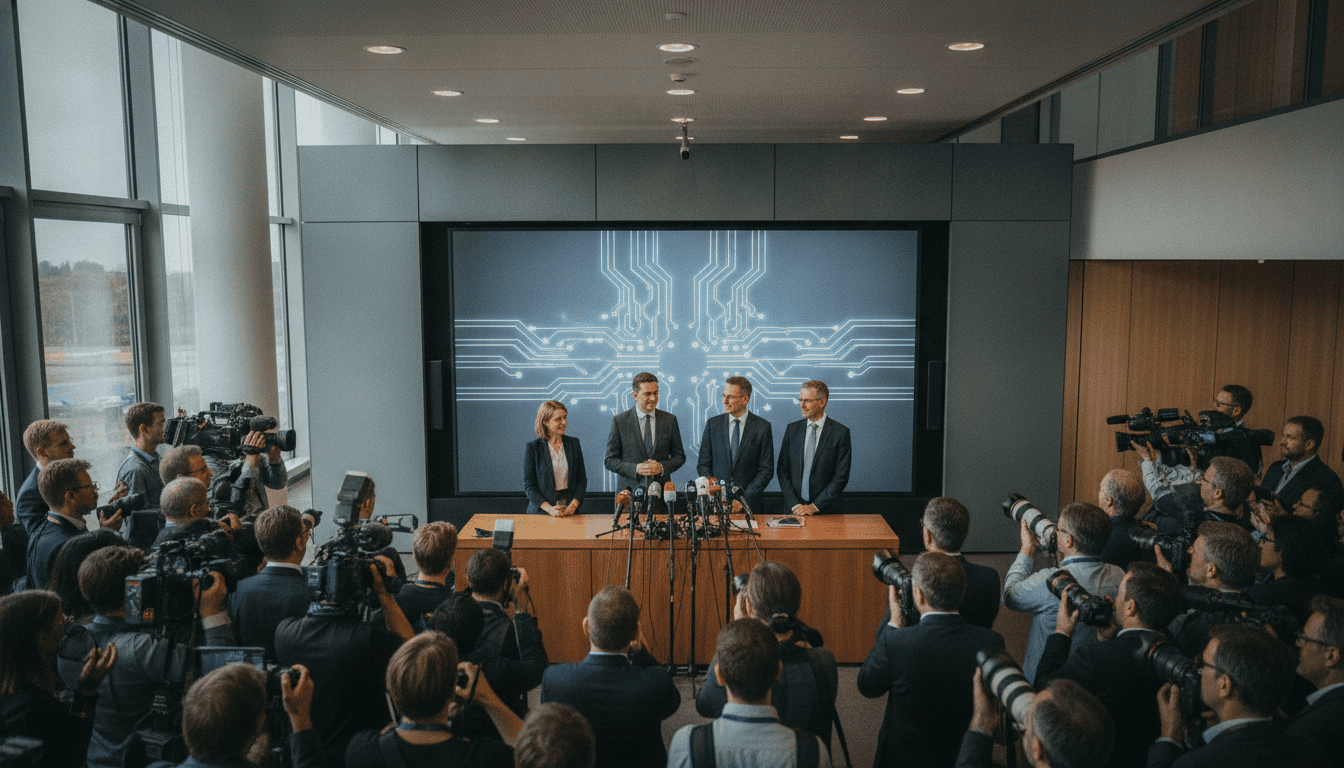
Quantum Systems raises $1.2 billion in funding, valuing the German drone maker at $8 billion
Quantum Systems raises $1.2 billion, valuing the German drone maker at $8 billion. Funding will expand production, AI software and multi-domain systems.
Quantum Systems, the German drone manufacturer founded in 2015, announced a $1.2 billion financing round on Thursday that pushes its valuation to about $8 billion and marks a major milestone for the country’s defense tech sector. The Quantum Systems funding will bankroll expansion of production, secure supply chains and accelerate development of its software and artificial intelligence capabilities. Company leaders said the round more than doubles the firm’s value since its previous financing and is among the largest funding events for a German company in recent years. The deal underscores growing international investor interest in technology-driven defense startups across Europe.
Investor lineup includes Airbus, Blackstone, Advent and Noteus
Airbus joined a group of global investors backing the round alongside private equity firms Blackstone, Advent and Noteus, the company said. Airbus and Quantum recently announced a cooperation at Berlin’s ILA airshow to integrate Quantum’s drone interception systems on Airbus platforms, illustrating strategic industrial ties beyond pure finance. The investor mix signals both financial and operational support, pairing defense-industry expertise with deep-pocketed financial sponsors aimed at accelerating scale.
Quantum declines to set an IPO timetable, commits capital to scaling
Company executives said a public listing is not currently on the agenda, though the board has evaluated the option. Rather than pursuing an immediate IPO, Quantum plans to deploy the fresh capital to enlarge manufacturing footprints, strengthen resilience in its supply chains and scale its delivery infrastructure in allied markets. The funding will also support expanded investment in software, machine learning and autonomous control systems, which executives identified as central to the company’s long-term competitiveness.
Product roadmap broadens to cover air, land and sea operations
Quantum has moved rapidly from civil reconnaissance drones to a wider defense portfolio since Russia’s invasion of Ukraine, adding interceptor drones and an unmanned ground vehicle to its lineup. At the ILA fair the firm showcased the PULSE P19 multipurpose aircraft, a optionally piloted platform slated for a first flight in 2027, reflecting ambitions to enter manned–unmanned hybrid markets. Executives announced plans to unveil a maritime system, likely in September, which would complete the company’s multi-domain offering covering land, sea and air.
Financial performance, profitability and market position
Quantum has now raised nearly $2 billion in total financing to date, and the company reported revenues of €300 million last year. Management said the firm is profitable and expects revenue to double in the current year, positioning Quantum among a small group of defense startups that have reached positive margins. The company’s chief financial officer described the profile as high growth with disciplined scaling, a message aimed at demonstrating commercial traction to both military and investor audiences.
Sector momentum and competitive landscape in Europe
The financing comes at a time of heightened investor interest in European defense technology: nearby competitors have also secured large rounds, with robotics and autonomy firms drawing substantial capital. German and European start-ups such as Neura Robotics and Helsing have recently closed major financings, and Berlin-based Stark Defence disclosed a €500 million round last week. The flurry of deals reflects a broader shift as defense procurement and private capital converge to accelerate autonomous and AI-enabled systems across allied militaries.
Quantum’s co-founder and co-CEO, Florian Seibel, framed the round as validation for German and European defense innovation and said the financing demonstrates that sizeable capital can be raised from Germany. He and co-CEO Sven Kruck have positioned the company to become what they describe as a “Neo-Prime,” a new kind of prime contractor that combines platforms, software and services. Airbus Defence and Space leadership has signaled a desire to deepen collaboration, with the companies highlighting joint work on architectures and data fusion to speed decision-making in complex operations.
The company acknowledged lingering questions about consolidation in the sector, including potential mergers or partnerships with peers such as Stark Defence, but declined to commit to any specific deal. Quantum’s leadership noted complementarity between companies and suggested that combinations remain a possible future path, depending on strategic fit and regulatory considerations.
Analysts and industry figures will likely watch how Quantum directs its new capital into production lines, talent recruitment and international market access, particularly in allied states seeking scalable autonomous capabilities. The company said it is building new facilities in Ukraine and Romania and will prioritize supply-chain security as it scales.
Quantum Systems’ latest funding round cements its status as a leading European player in unmanned systems and underscores broad investor confidence in the commercialization of autonomous defense technologies. The capital infusion gives the company a sizeable runway to pursue multi-domain integration, expand manufacturing, and deepen partnerships with established aerospace firms as it seeks to translate rapid growth into enduring market leadership.
