
Porsche job cuts: Leiters to eliminate 5,000 roles while promising employment until 2035, sparking VW tensions
Porsche job cuts: Michael Leiters will cut 5,000 positions and reduce Baden-Württemberg capacity while offering a workforce guarantee to 2035, prompting unease at Volkswagen.
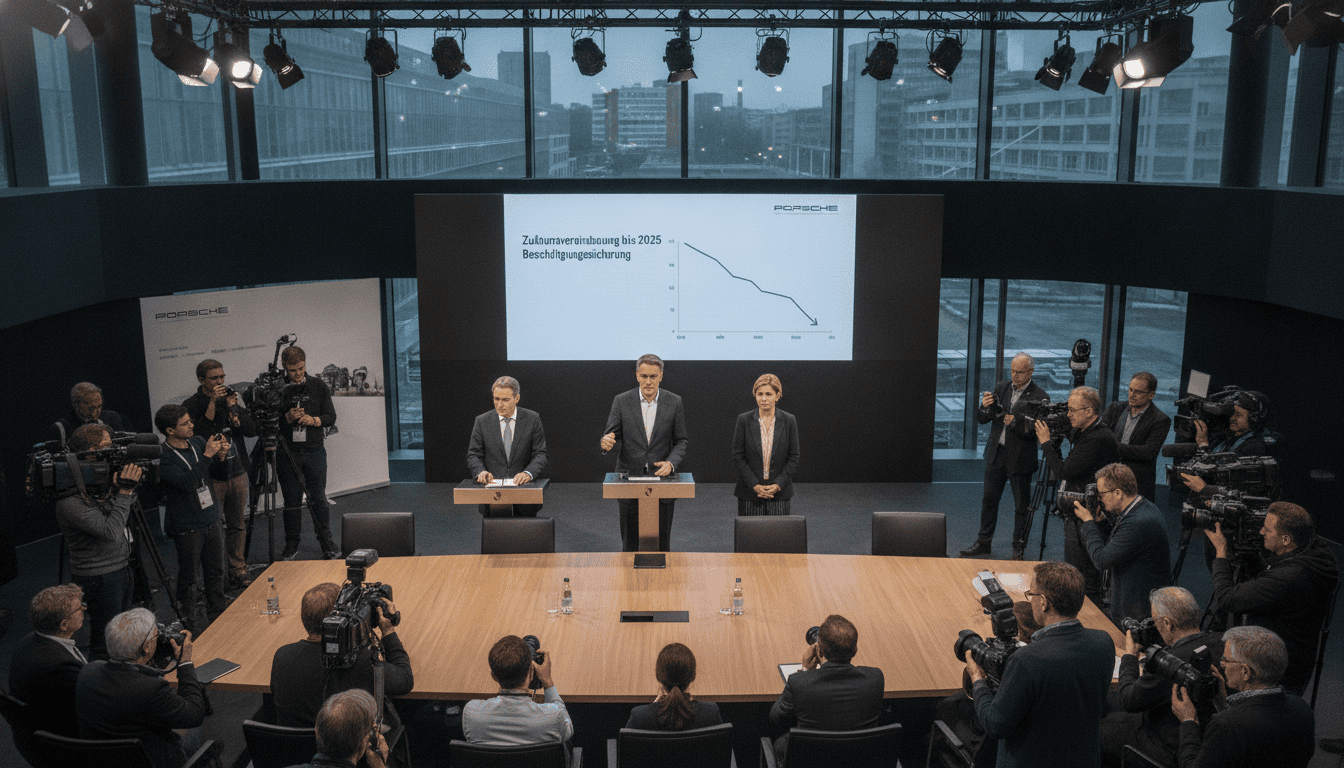
Since taking the helm in January, Michael Leiters has set in motion a restructuring that will cut an additional 5,000 positions at Porsche and scale back production capacity in Baden-Württemberg. The Porsche job cuts come with a firm employment guarantee for the remaining staff through 2035, a concession that has immediately reverberated through the Volkswagen Group. Volkswagen executives and union representatives now face a new bargaining dynamic as the parent company grapples with the implications of Porsche’s deal.
Leiters confirms 5,000 additional positions will be removed
Porsche management says the fresh round of reductions follows earlier measures and will reduce headcount materially across key sites. Taken together with previously announced measures, the total workforce reduction approaches roughly 9,000 jobs, a significant share of staff at Weissach and Zuffenhausen. Company officials argue the moves are aimed at a leaner model lineup and stronger margins, but they acknowledge the human and operational consequences.
Employment guarantee to 2035 fuels unrest at Volkswagen headquarters
The choice to trade job cuts for a binding employment guarantee until 2035 has created friction inside Volkswagen’s central management, where executives see their negotiating leverage weakened. Oliver Blume’s leadership team in Wolfsburg is now confronted with expectations that similar terms should be offered to larger brands within the group. Unions such as IG Metall are already likely to press for equal treatment across Volkswagen and Audi, intensifying collective bargaining pressure on the parent company.
Porsche’s scale differs sharply from the wider VW Group
Analysts caution against direct comparisons: Porsche is a focused sports-car maker with a concentrated German footprint, while Volkswagen operates more than a hundred factories worldwide. Scaled to Volkswagen’s size, cuts of comparable impact would translate into six-figure job losses, a political and social scenario of far greater complexity. Still, Porsche’s approach may serve as a template for concentrated cost reductions combined with social safeguards in the broader group.
Leverage and bargaining power in upcoming union talks
By securing a long-term employment promise at Porsche, management has removed a potential bargaining chip that Wolfsburg might have used in negotiations with works councils. That constrains Volkswagen’s ability to use the threat of job losses as leverage to secure productivity or flexibility gains. At the same time, company leaders retain options: any employment guarantees are likely to come with reciprocal demands on workforce flexibility, retraining, and efficiency measures at other group brands.
Regional implications for Baden-Württemberg and other plant sites
The cuts will disproportionately affect Porsche’s Baden-Württemberg facilities, while factories in Emden, Hannover, Zwickau and Neckarsulm face their own underutilization challenges. Local and regional governments, including major shareholders such as Lower Saxony, will be attentive to the political fallout from further restructuring across the group. For communities where automobile production is a major employer, a managed run-down with compensation and retraining measures may be more politically palatable than abrupt closures.
Outlook: hard negotiations but room for compromise across the group
Volkswagen’s management now enters protracted talks under tighter constraints, but observers say compromise remains possible if social partners accept phased adjustments. The Porsche model—targeted cuts tied to long-term employment security—creates a negotiation corridor that could be adapted for larger divisions with suitable safeguards. Ultimately, whether the Porsche job cuts become a blueprint or an exception will depend on how Volkswagen balances industrial strategy, political pressure, and union demands.
The next months will test whether Porsche’s combination of workforce reductions and a 2035 employment guarantee can deliver the financial improvements Leiters seeks while allowing Volkswagen to manage expectations across its much larger empire. Both sides face difficult trade-offs, and the outcome will shape labour relations and production planning across Germany’s automotive heartland.
