
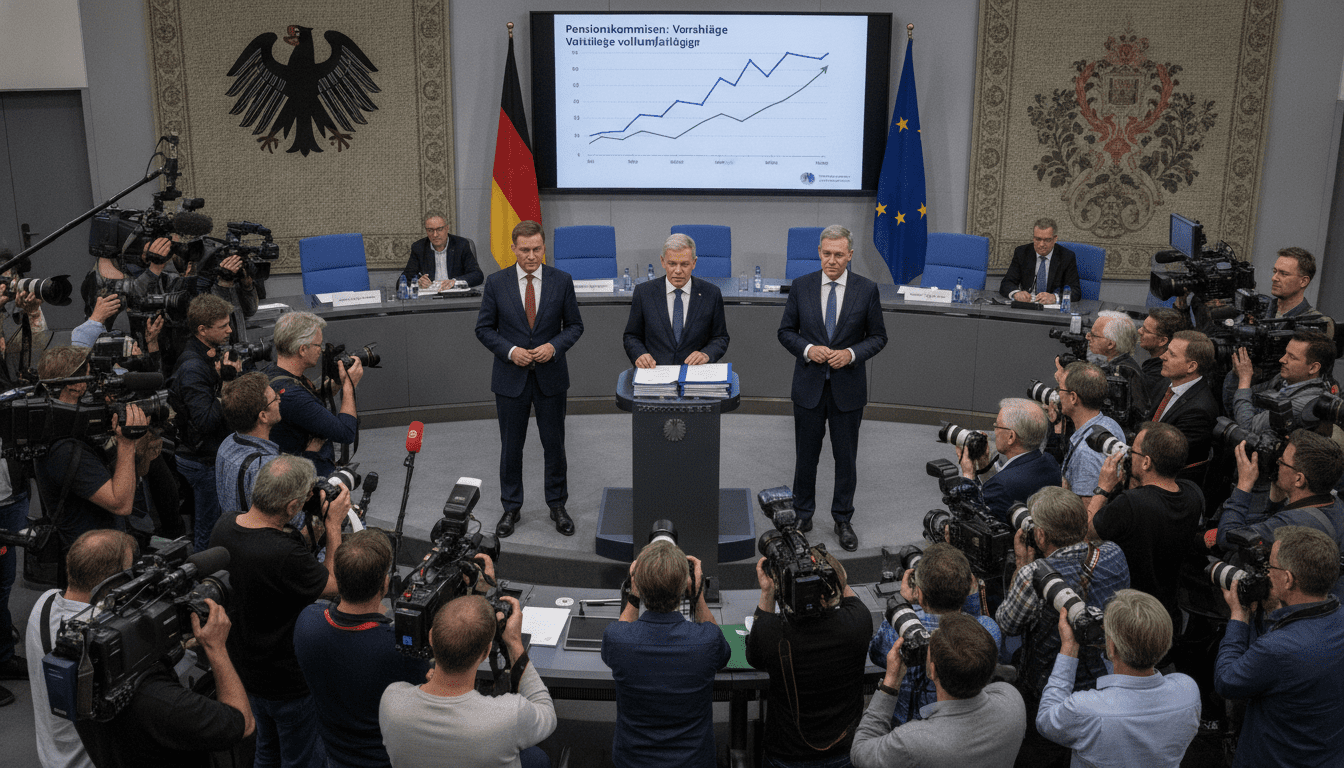
German pension reform: Coalition vows to implement all 33 commission proposals
Coalition vows to implement 33 pension commission recommendations, advancing Germany’s pension reform with lawmaking expected by year-end, officials say.
The federal government’s black-red coalition announced it will move to implement every recommendation from the independent pension commission, signaling a comprehensive push to reshape Germany’s pension system. Chancellor Friedrich Merz and Labor Minister Bärbel Bas said the 33 measures form a single package that must be enacted in full, framing the decision as a decisive step in the broader German pension reform. The coalition emphasized that piecemeal adoption would undermine the integrity of the plan and stressed urgent legislative work to follow.
Coalition pledges full implementation
Chancellor Merz told reporters that the commission’s work “has paid off” and that no citizen should be worried about the continuity of the pension system under the proposed reforms. He and Minister Bas said the government will not accept selective adoption of measures and described the package as an integrated solution to long-term financing and intergenerational fairness.
Both leaders portrayed the recommendations as strengthening the generational contract and reducing future burdens on younger cohorts, with the government presenting the reforms as necessary to preserve stability. Their joint announcement framed the commission’s report as the definitive roadmap for forthcoming pension policy.
Capital-based pension element and phased shift
A core component of the commission’s blueprint is a gradual expansion of the capital-funded portion of pensions, which the coalition plans to raise in stages through 2031. The government argues this shift will allow more workers, not only high earners, to benefit from capital market returns while easing pressure on pay-as-you-go contributions.
Officials said the capital element will be introduced with safeguards and transitional arrangements intended to protect low-income earners and maintain social cohesion. The coalition presents the change as a way to diversify retirement income sources rather than replace the public pension backbone.
Adjustments to pension indexing and retirement age
The commission recommends reintroducing a sustainability factor to temper future pension increases and removing the existing hold-line that anchors pensions to 48 percent of average wages. In addition, it proposes a moderate adjustment of the statutory retirement age linked to rising life expectancy, while abolishing the early “pension at 63” pathway.
Proponents say these adjustments are intended to secure financing and balance benefits across generations, but they also acknowledge that linking retirement age to longevity will be politically sensitive. The package includes measures to broaden coverage—bringing self-employed people and some categories of office-holders into the statutory insurance system—to shore up contributions.
Legislative timetable and implementation mechanism
Merz and Bas announced plans to establish a coalition committee that will map out a detailed timetable for converting the commission’s proposals into law. The Labor Ministry is tasked with drafting the legislative text, and both ministers said they expect initial legislative steps to be taken by the end of the year.
The government indicated it will seek to bundle measures into coordinated bills rather than advance isolated changes, aiming to present a coherent reform package to parliament. Officials warned that technical details, transitional rules and funding pathways will require further negotiation across ministries and with social partners.
Stakeholder responses and opposition from unions
The proposals prompted a mixed response from unions and civil society, with the German Trade Union Confederation (DGB) sharply critical of messages that frame longer working lives as the principal fix. DGB leader Yasmin Fahimi dismissed the notion that raising retirement age is the only way to secure pensions and called for policies that prioritize people’s ability to work healthily into retirement.
Labor representatives urged the government to focus on workplace health, retraining and measures that enable older workers to remain employable, rather than relying primarily on actuarial adjustments. At the same time, some youth and centrist groups welcomed elements intended to strengthen future pension prospects, particularly the diversification through capital-funded components.
The coalition’s commitment to implement the full commission package sets a clear political agenda, but translating recommendations into law will require detailed drafting, cross-party negotiation and public engagement. The next months are likely to see intense debate over technical provisions, funding modalities and social protections as Germany moves from recommendation to statute in its ambitious pension reform effort.
