
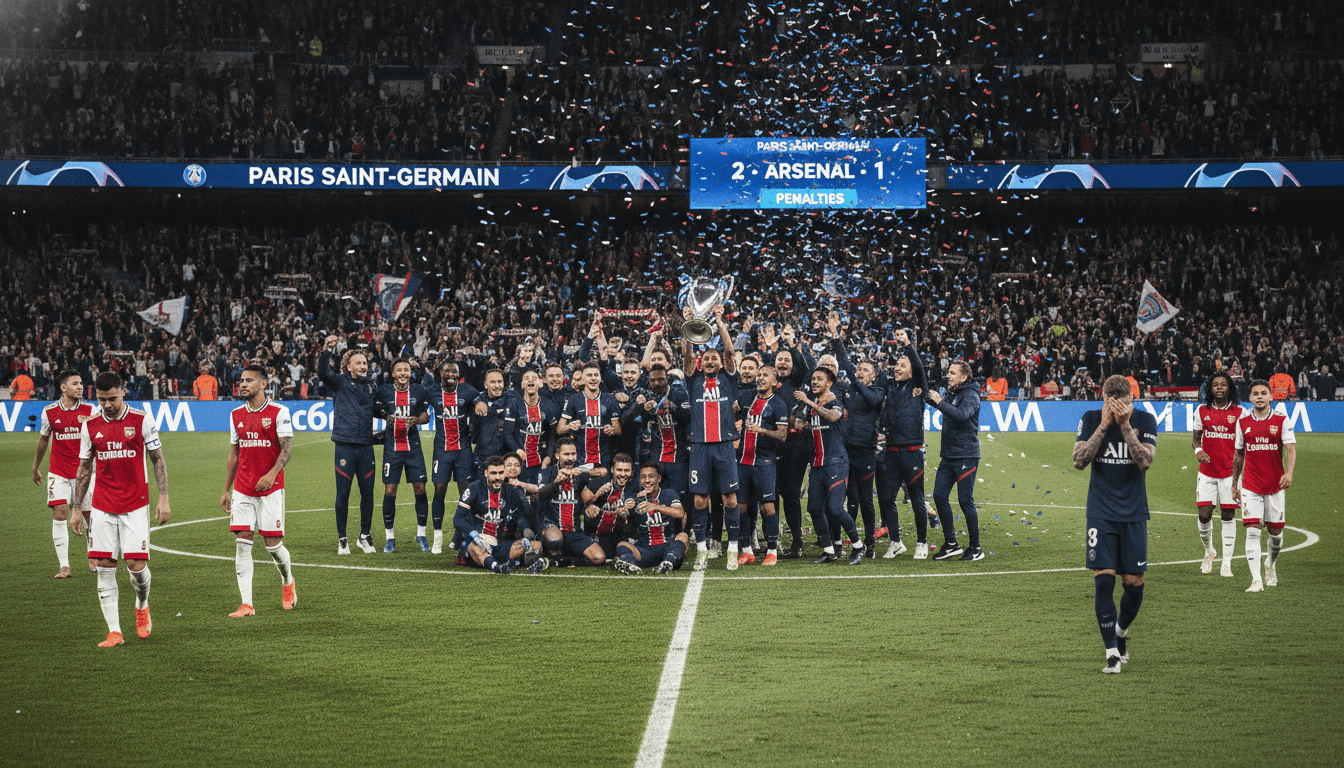
PSG Champions League final: Paris retain title in dramatic penalty shootout over Arsenal
PSG retain the Champions League after a dramatic penalty shootout win over Arsenal, with coach Luis Enrique hailed and Gabriel’s miss dominating headlines.
Paris Saint-Germain retained the Champions League in a dramatic final that ended with a penalty shootout victory over Arsenal, cementing back-to-back continental triumphs for the French club. The match produced late tension and a decisive miss that will be replayed across sports media, while PSG’s coach Luis Enrique received broad praise for guiding the team to consecutive European crowns. The result marks a major moment in European club football and caps a season of high expectations for the Paris side.
Late drama decides title in penalty shootout
The Champions League final was settled from the spot after a tightly contested 90 minutes and extra time yielded no decisive breakthrough. Both teams had chances in open play, but defensive organisation and goalkeeping kept the match level until the shootout. In the end, the outcome hinged on the final Arsenal penalty, which sailed well over the bar and handed PSG the trophy.
The miss brought immediate headlines and intense scrutiny on Arsenal’s players and staff, while PSG celebrated on the pitch amid jubilant scenes. Club officials, players and supporters marked the victory as a historic defense of the European crown, underscoring the significance of winning consecutive Champions League titles.
Gabriel’s penalty miss and Arsenal aftermath
Arsenal’s campaign ended in heartbreak with Gabriel Magalhães stepping up for the decisive spot kick and missing badly, a moment that instantly shaped narratives across British and international outlets. The miss has already prompted debate about technique, pressure management and the psychological aftermath for the player and his teammates. Club sources signalled a period of introspection, with discussions expected about how to respond in the transfer market and on the training ground.
On social media and in commentary rooms, the focus turned to Arsenal’s season as a whole — a campaign that reached the sport’s biggest club stage but ended without the ultimate prize. Players and coaching staff faced inevitable questions about preparation and strategy after the loss, and the club’s leadership will now weigh the next steps to rebuild and challenge again.
Luis Enrique credited as architect of consecutive triumphs
Luis Enrique, PSG’s head coach, was widely credited with delivering a pragmatic and effective game plan that saw the side through to European glory for a second straight year. Observers noted his balance of tactical discipline and the freedom given to key attacking players, which allowed PSG to control vital phases of the match despite Arsenal’s pressure. The trophy adds to Enrique’s managerial legacy and reinforces the club’s investment in experienced leadership.
In post-match remarks, club figures praised Enrique’s ability to steady the squad in high-pressure moments and to make the decisive substitutions and calls that influenced the result. The manager’s approach to squad rotation and match preparation was singled out as a factor in PSG’s ability to reach and win successive finals.
European press and pundits react to Paris triumph
Coverage across France lauded PSG’s achievement, describing the defence of the title as historic and celebrating the club’s status at the pinnacle of European football. French outlets focused on the broader significance for Parisian football and the achievement of winning back-to-back Champions League trophies. Headlines in Italy and Spain echoed similar admiration, highlighting the managerial role and the club’s dominant run in recent European competitions.
British media emphasised Arsenal’s painful loss, with commentary centring on the missed penalty and the emotional toll on the Gunners’ squad and supporters. Pundits contrasted the elation in Paris with the desolation in London, while European analysts debated the tactical shifts that defined the final. The division in tone underscored the match’s drama and the different narratives that emerge following such decisive contests.
Wider implications for European club football
PSG’s successful title defence is likely to have ripple effects across the European transfer market, competition planning and club strategies. Winning consecutive Champions League finals strengthens PSG’s position in recruitment and commercial negotiations, potentially attracting further top-level talent and reinforcing its status among the continent’s elite. Clubs that fell short, notably Arsenal, will examine their structures to identify how to close the gap.
The result also raises questions about competitive balance and the recurring influence of major spending on outcomes in European competition. Governing bodies, rival clubs and media will continue to analyse whether sporting measures and player development pathways need recalibration to ensure sustained competition at the highest level.
The final will be remembered for its high stakes, turning points and the narrow margins that decide elite knockout football, leaving PSG to celebrate while Arsenal contemplates a response.
