
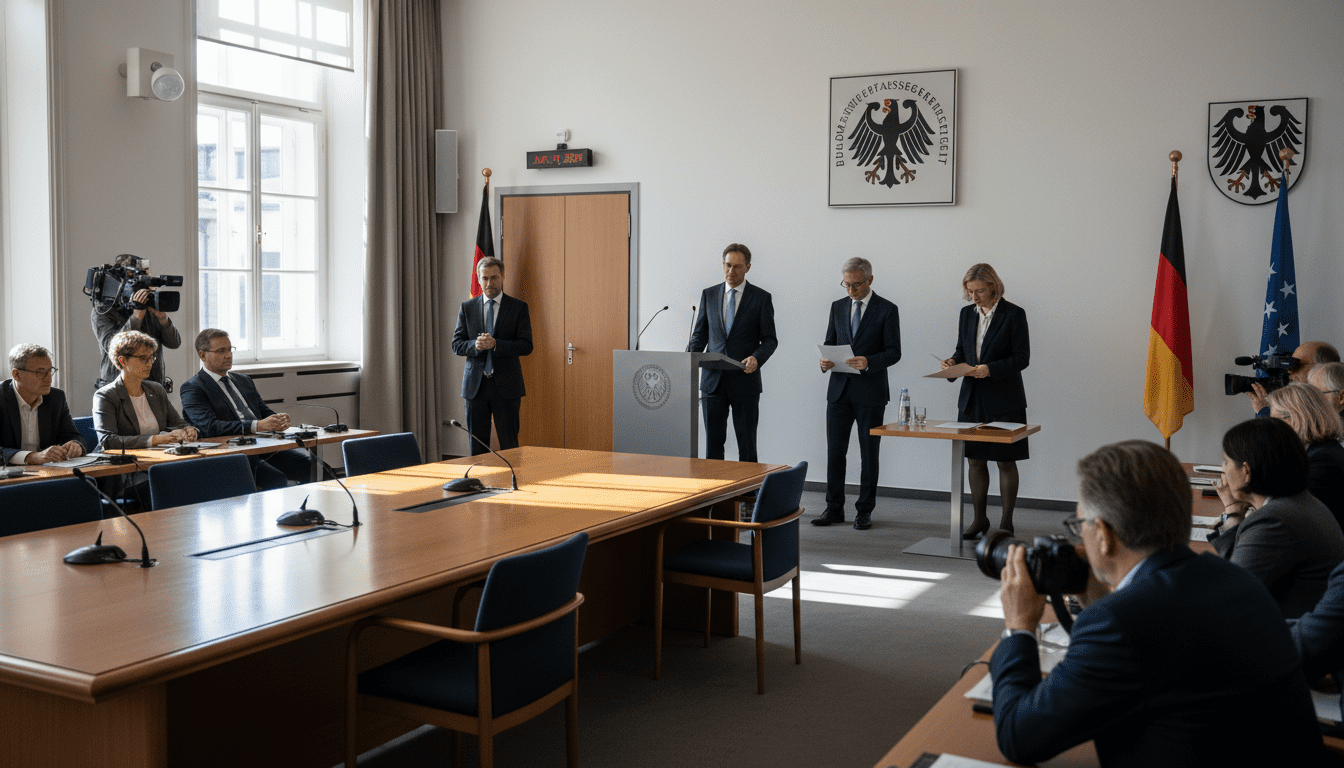
OLG Düsseldorf sends Bundeswehr procurement fast‑track rule to Germany’s Constitutional Court
OLG Düsseldorf has referred a fast‑track procurement dispute to the Federal Constitutional Court, spotlighting Bundeswehr procurement, competition and remedies.
The Higher Regional Court (OLG) in Düsseldorf has ordered that a contested provision of the Bundeswehr procurement acceleration law be examined by the Federal Constitutional Court, setting up a constitutional test of accelerated procurement rules for the Bundeswehr. The dispute raises immediate questions about whether the government’s drive to speed Bundeswehr procurement lawfully curtails the right to effective judicial review. The case stems from a cancelled bid for a multi‑year supply contract and has become a focal point for industry groups and procurement experts.
OLG decision challenges restriction on bidders’ judicial remedies
The OLG’s Vergabesenat wrote that the state’s interest in defence readiness does not override obligations to preserve spending prudence, fair competition and fundamental legal safeguards. The court flagged a provision that would prevent unsuccessful bidders from obtaining an injunction once a procurement chamber has upheld an award in a judicial review, effectively limiting access to independent judicial correction. The panel concluded that the question of constitutional compatibility must be decided by the Federal Constitutional Court and formally referred the matter on 18 May 2026.
Provision at issue in Bundeswehr procurement acceleration law
The contested rule appears in §16(1) of the Bundeswehr‑Beschaffungsbeschleunigungsgesetz, a measure designed to accelerate defence purchases amid heightened security concerns. The provision removes certain suspensive effects of appeals in EU‑threshold procurements for Bundeswehr contracts, meaning awards could proceed despite pending legal challenges. Government proponents argue the measure shortens procurement timelines; critics counter that it sacrifices core principles of the social market economy and the rule of law for marginal time gains.
Dispute revolves around a €8.875 million supply framework
At the center of the litigation is a dispute over a framework agreement to install and operate parcel‑drop stations for Bundeswehr clothing and equipment, with an estimated maximum value of €8.875 million over up to seven years. The complainant, a Berlin‑based procurement firm, alleges the award was made wrongly and sought judicial review in the normal channels. Because of the contested acceleration rule, the firm faces the prospect that the award cannot be stayed, leaving monetary damages as the only typical remedy instead of the contract itself.
Industry associations warn of broader damage to competition
Business groups including the Confederation of German Industry (BDI) and the Chambers of Commerce (DIHK) protested the legislative changes during debate, arguing that reduced legal recourse undermines transparency and competition. They stressed that companies deprived of effective remedies face both lost revenue and diminished capacity to retain staff tied to public contracts. Trade and craft organizations warned that stripping remedies would transfer risk from the contracting authority to bidders and could deter smaller suppliers from participating in public procurement.
Court questions claimed time savings and legislative rationale
The OLG questioned the government’s rationale that the rule would deliver significant time savings, noting the court’s own research indicated a benefit of roughly six months in average processing time. Judges also noted the legislature had not adequately investigated why review procedures were allegedly protracted and whether administrative resourcing might solve the problem. The court suggested that boosting personnel for review bodies would impose negligible fiscal cost relative to large defence expenditures, and thus could reduce delays without sidelining judicial oversight.
Implications for public procurements beyond the defence sector
The case has heightened attention because a related Vergabebeschleunigungsgesetz will extend similar procedural shortcuts to other public procurements above EU thresholds from 1 July 2026. If the Federal Constitutional Court upholds the provision, the decision would effectively endorse a model that curtails interim judicial relief across tens of thousands of high‑value procurement procedures annually. If it strikes the rule down, governments and contracting authorities will need to revisit acceleration strategies and address bottlenecks through administrative reform rather than statutory limitation of remedies.
The referral now places the limits of accelerated procurement firmly before Germany’s highest court, forcing a choice between urgency in defence purchasing and the preservation of effective, court‑based review for bidders. The Federal Constitutional Court’s ruling will determine whether accelerated timelines can be achieved without narrowing the legal protections that underpin competitive public contracting, and it will shape procurement practice for the Bundeswehr and public authorities nationwide.
