
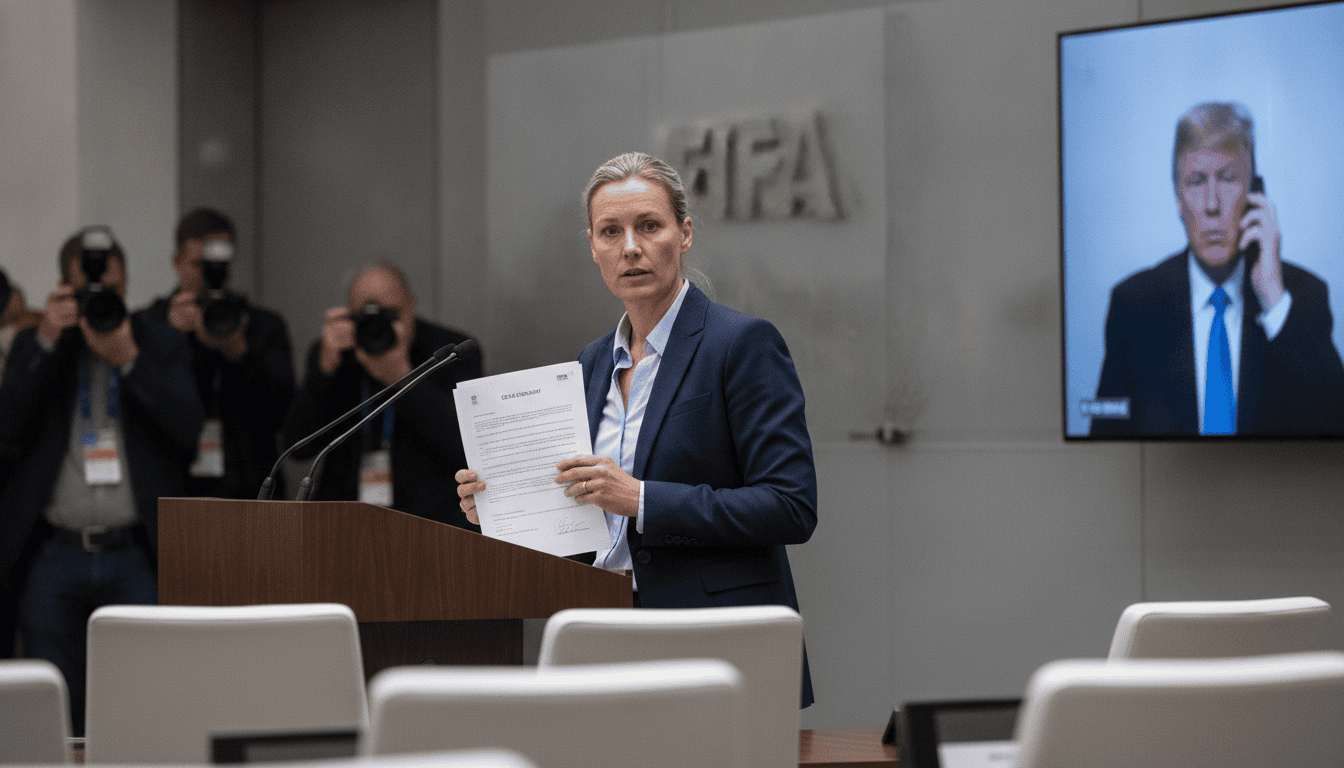
Balogun case escalates as Norway to file formal FIFA complaint over Trump-Infantino call
Norway’s football chief Lise Klaveness will file a formal complaint with FIFA over the Balogun case after the reversal of Folarin Balogun’s suspension following a phone call between FIFA president Gianni Infantino and former U.S. President Donald Trump, raising questions about outside influence on tournament discipline.
The Balogun case has taken a new turn with Norway’s football association announcing a formal complaint to FIFA, saying external interference cannot be ignored. The complaint follows the controversial lifting of a suspension for U.S. forward Folarin Balogun, whose red card for the World Cup round-of-16 match against Belgium was annulled after the intervention. The dispute has intensified scrutiny of FIFA’s disciplinary independence and the conduct of its senior officials.
Norway to submit formal grievance to FIFA
Lise Klaveness, president of the Norwegian Football Federation, said her federation will lodge a formal complaint alleging improper outside influence in the handling of disciplinary matters. The complaint is expected to request a full investigation into the chronology and justification for overturning Balogun’s suspension.
Norway’s leaders argue that the case raises structural concerns about how disciplinary decisions are made and communicated during major tournaments. The federation has called for transparency around the decision-making process and the involvement of senior figures.
Phone call between Infantino and Trump central to probe
At the heart of the controversy is a phone call reported to have taken place between FIFA president Gianni Infantino and former U.S. President Donald Trump before FIFA rescinded the suspension. Critics say the call created the appearance of political interference in a sporting ruling and have demanded documentation and statements explaining why the normal disciplinary procedures were bypassed.
FIFA has faced intensified pressure to publish a full account of communications related to the case, including the timing, participants, and rationale for the reversal. Observers say establishing a public record is essential to restoring confidence in the impartial enforcement of tournament rules.
Sequence of events that led to the overturned ban
Folarin Balogun received a straight red card during the United States’ round-of-16 loss to Belgium, a dismissal that would normally carry a one-match suspension. The suspension was later lifted, allowing Balogun to appear despite the red card ruling, a reversal that tournament officials characterized as exceptional.
The U.S. team played the match in Seattle and lost 1–4 to Belgium, a result unaffected by whether Balogun had been available. Nevertheless, the procedural anomaly of overturning an on-field red card after outside intervention has provoked calls for clearer protocols and limits on who may influence disciplinary outcomes.
Klaveness accuses FIFA officials of attempting to conceal details
Norway’s federation head accused FIFA functionaries of seeking to shield the facts of the case rather than address them openly. She warned that permitting deviations from established rules without accountability places the integrity of the sport at risk and could set a dangerous precedent.
Her statements reflect broader concerns among national associations, players’ unions, and legal experts about the need for consistent application of rules. Several stakeholders have urged FIFA to adopt firmer safeguards to prevent external pressures from shaping sanctions.
Possible consequences and what FIFA may face
If FIFA’s internal review finds procedural irregularities, the organization could confront reputational damage and pressure to reform its disciplinary framework. Sanctions or reforms might include clearer limits on ex parte communications, stricter disclosure requirements, or changes to the appeals process for on-field decisions.
FIFA has not yet released a definitive timeline for responding to Norway’s complaint, but the governing body will likely face calls for an independent inquiry to ensure impartiality. The outcome could influence future handling of disciplinary matters at global competitions.
Reactions from teams and tournament stakeholders
The Balogun case has prompted reactions across the football community, with some arguing that decisive leadership is needed to preserve the credibility of tournament governance. National federations have stressed the importance of consistent enforcement of rules, while commentators have questioned the role of political figures in sporting disputes.
Players and coaches have expressed concern that exceptions to disciplinary norms could undermine fairness on the field and create uneven competitive conditions. Legal analysts are also watching the case for its potential to redefine the boundaries of acceptable influence in football administration.
The formal complaint from Norway marks a significant escalation in the Balogun case and puts FIFA on notice to provide a transparent account of how the suspension was rescinded and who influenced that decision. The federation’s action underscores a growing impatience among national associations for clearer safeguards against external interference in sport.
