
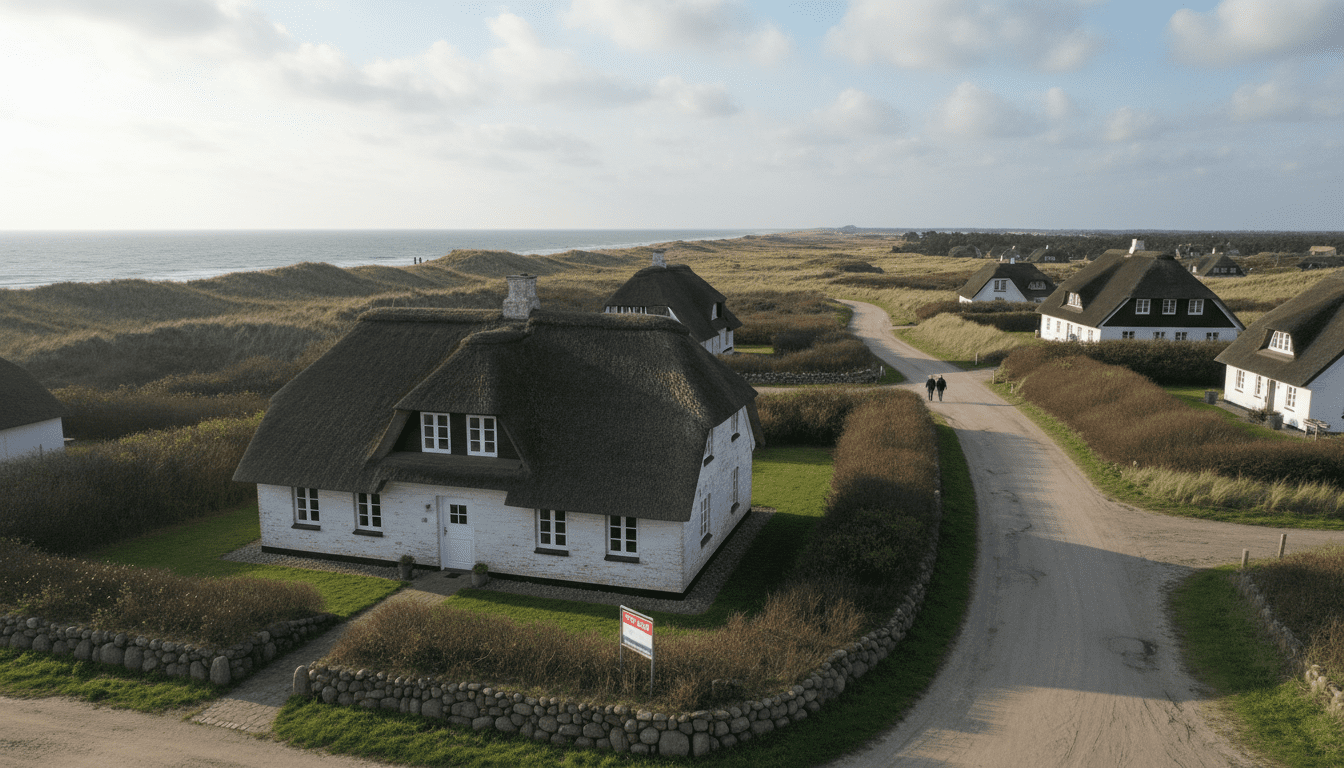
Frisian island house prices ease as buyers grow choosier, Von Poll report shows
Frisian island house prices eased in Q1 2026, with North and East Frisian islands recording year-on-year declines while Sylt remains the costliest, a Von Poll Immobilien coastal report reviewed by dpa finds.
Price moves on North and East Frisian islands
The Von Poll Immobilien coastal report shows average residential prices on the North Frisian islands fell to €9,922 per square metre in the first quarter of 2026, down 4.7 percent year‑on‑year. East Frisian islands such as Juist, Langeoog and Norderney registered an average of €8,294 per square metre, a 5.1 percent decline from the same period a year earlier. Market observers say these shifts reflect a normalization after several years of steep rises rather than a collapse into bargain territory.
Sylt keeps headline prices high
Sylt continued to anchor high valuations among the island group, with average house prices softening only marginally by 1.5 percent to about €12,557 per square metre. The island’s long beaches, exclusive amenities and concentrated wealth still support one of Germany’s most expensive residential markets. Industry sources note that even small percentage moves on Sylt translate to large monetary shifts given the already elevated base.
Mainland North Sea markets remain comparatively affordable
On the mainland, the North Sea coastal belt shows markedly lower price levels than the islands, according to the report. In the district of Nordfriesland, which includes Sankt Peter‑Ording, average prices were close to €2,500 per square metre, while Bremerhaven and the district of Wesermarsch were reported as the region’s most affordable, at roughly €1,900 per square metre. Analysts say mainland locations continue to attract buyers seeking coastal lifestyle at a significantly lower entry cost than island properties.
Ostsee dynamics: Fischland‑Darß‑Zingst leads, Rostock climbs
Along the German Baltic coast, the peninsula of Fischland‑Darß‑Zingst remained the priciest location with an average of €5,138 per square metre, a decline of 5.7 percent year‑on‑year. Rostock bucked the downward trend on the mainland with prices rising about 7.5 percent to roughly €4,011 per square metre. On island markets such as Usedom and Fehmarn, average prices sat near €3,400 per square metre, while the district of Vorpommern‑Greifswald offered the most affordable mainland Baltic housing at about €1,500 per square metre.
Shifting buyer priorities cited by brokers
Daniel Ritter, managing partner at Von Poll Immobilien, told dpa that the price corrections on many North and East Frisian islands reflect a market phase in which supply and demand are beginning to rebalance. He said demand remains solid but buyers have become more selective, placing greater emphasis on location quality, energy efficiency and the sustainable rental potential of properties. Brokers report that purchasers now differentiate sharply between homes suitable for permanent use and classic second‑home investments.
Implications for sellers and local markets
Price adjustments on high‑end island locations are forcing sellers to sharpen marketing, upgrade properties and highlight energy performance and rental prospects. Local economies that depend on seasonal tourism may see transaction volumes moderate as investors reassess yield and regulatory risk. Market participants caution that while declines have been noticeable, average island prices remain far above mainland levels and continue to reflect limited supply and strong lifestyle demand.
The coastal report’s regional breakdown and quoted market commentary suggest the market is entering a more discerning phase rather than a broad downturn. Buyers and sellers in Frisian and Baltic coastal markets are likely to focus increasingly on long‑term usability, efficiency upgrades and verified rental income as determinants of value.
