
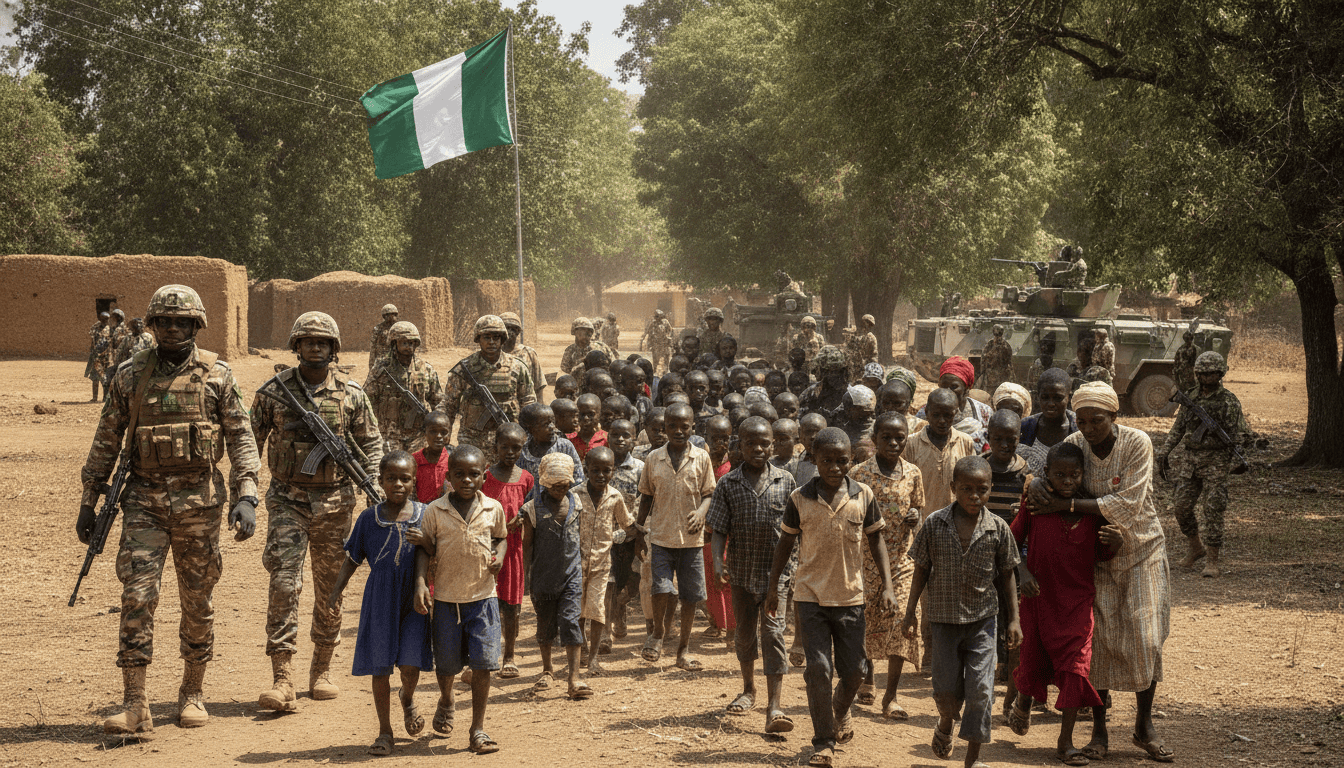
More than 40 schoolchildren freed in Nigeria after nearly two months in captivity
Nigerian military says more than 40 schoolchildren freed after nearly two months in captivity by Islamist militants; families reunited, investigations continue.
On July 11, 2026, the Nigerian military announced that more than 40 schoolchildren had been freed after being held for nearly two months by Islamist militants, marking a rare large-scale release amid a wave of abductions. The military statement described a targeted operation that secured the children’s safety and returned them to authorities for assessment and reunification. The phrase “schoolchildren freed in Nigeria” echoed across local media and prompted a swift response from government and community leaders.
Military announces operation and release
The armed forces said the operation that led to the release was conducted with the specific aim of recovering the abducted pupils while minimizing harm. Officials provided limited operational details, citing security concerns and the need to protect ongoing work to locate any others still missing. The military’s announcement did not immediately name a commanding unit or disclose whether there were casualties among the abductors or security personnel.
Duration of captivity and circumstances of abduction
Authorities reported the children had been held for almost two months before being freed, a period that drew national attention and pressure on security agencies. Initial abductions of school groups in Nigeria have typically involved ambushes on buses, raids on school compounds, or seizures from host communities. Officials did not provide a precise timeline of the original seizure in the statement, but the prolonged captivity underscored the logistical challenges faced by security forces.
Details on the children’s condition and reunification
Military officials said the freed pupils were being medically screened and processed through government channels before being returned to their families, though specific numbers for hospitalizations were not disclosed. Local authorities and humanitarian partners usually conduct rapid health checks and psychological assessments in such cases, and community leaders typically organize reunification once security clearances are in place. The statement emphasized priority on the children’s welfare while noting that full details would be released when appropriate.
Claim of responsibility and identity of the captors
The military described the captors broadly as Islamist militants, but the announcement did not attribute the attack to a named group or indicate whether any faction had claimed responsibility. In past incidents, various armed outfits have been linked to mass kidnappings for ransom or political leverage, sometimes complicating negotiation and rescue efforts. The absence of an immediate claim leaves questions about motives and the network behind the abduction.
Government response and political implications
Federal and regional officials welcomed the rescue and reiterated commitments to bolstering security around schools, transport routes, and vulnerable communities. Government spokespeople frequently face public scrutiny after high-profile abductions, and successful recoveries can temporarily ease pressure while prompting demands for sustained reforms. Lawmakers and civil society representatives called for transparent investigations into how the abduction occurred and what measures will prevent recurrence.
Local communities and reactions from families
In communities affected by similar attacks, releases are often met with relief tempered by anxiety about future safety and the long-term impacts on children. Parents and community elders typically coordinate with authorities to receive children once medical and security checks are complete, and local leaders often call for increased patrols and safer routes to school. The emotional toll on families and peers can be significant, with many children requiring psychosocial support even after physical recovery.
The military’s July 11 announcement arrives amid a backdrop of repeated mass kidnappings in parts of the country, where armed groups have targeted schools and buses to extract ransom or exert pressure on authorities. Security analysts say such abductions highlight persistent gaps in rural protection and the need for coordinated civilian-military strategies to secure education infrastructure and transport.
Details about the operation that freed the children remain limited as authorities complete debriefings and medical examinations, and officials have promised further disclosures once investigations allow. Communities and parents are now focused on the immediate care and reintegration of the freed pupils while pressing for measures that will prevent future abductions of students across the country.
