
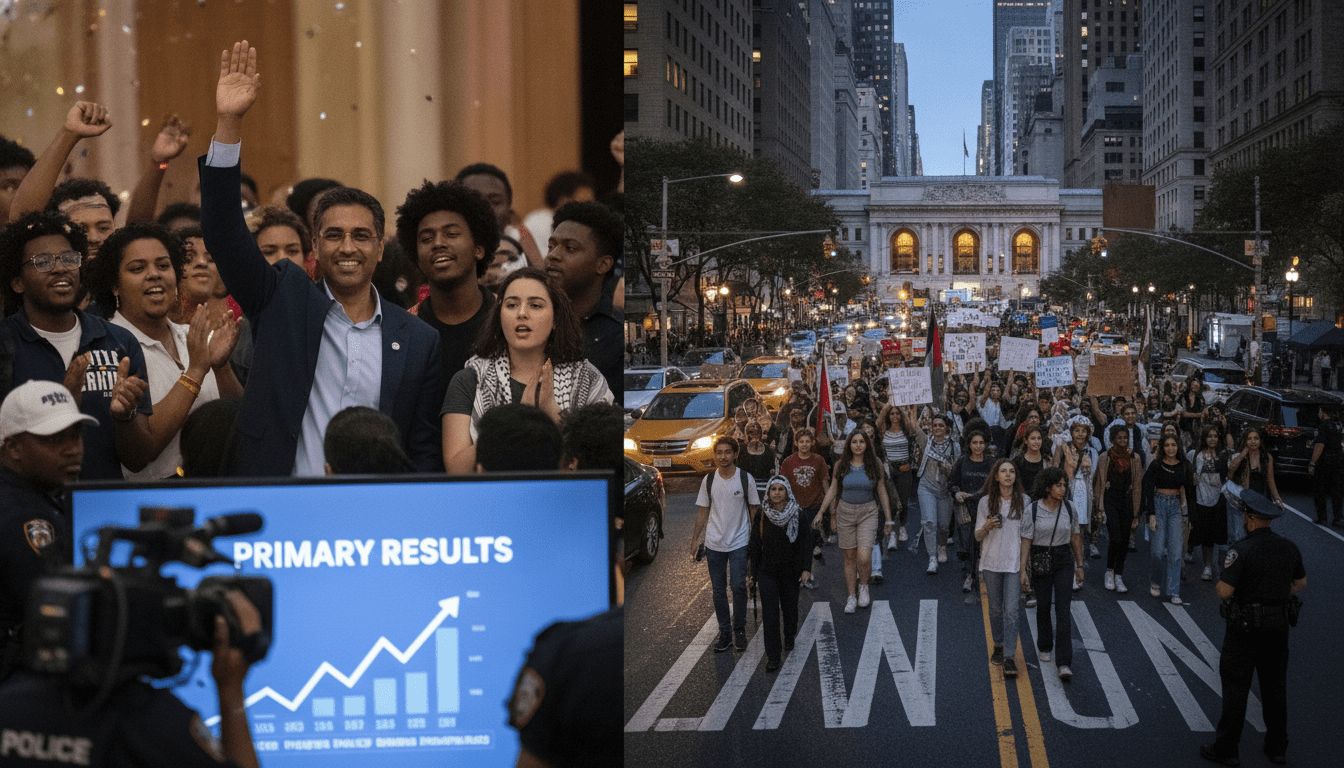
New York primaries see Mamdani-backed DSA surge as Gaza protests drive Gen Z turnout
Mamdani-backed DSA candidates prevailed in the New York primaries as Gen Z voters rallied over Gaza, reshaping city politics and putting AIPAC under scrutiny.
The New York primaries produced a striking shift as candidates endorsed by Mayor Zohran Mamdani and allied with the Democratic Socialists of America won multiple high-profile contests, driven in large part by younger voters mobilized around the war in Gaza. The New York primaries saw Brad Lander, Darializa Avila Chevalier and Claire Valdez defeat established rivals in contests that many voters said turned on candidates’ stances toward Israel. Campaigns and organizers say opposition to Israel’s actions in Gaza — described by many supporters as genocide — was a decisive issue for Gen Z and younger Democratic voters.
Gaza emerges as central issue for young voters
Organizers and voters reported that conversations about Gaza dominated canvassing and phone-banking throughout the primary season. Many younger voters said they were unwilling to back candidates who supported U.S. military funding for Israel or used cautious, establishment language to describe the conflict.
Several activists said the moral urgency of events in Gaza translated into votes, with rallies and protests providing sustained momentum for candidates who took explicit anti-war positions. Field operatives reported that references to the war repeatedly came up in voter contacts, often eclipsing more traditional local priorities.
Mamdani endorsements and DSA momentum
Mayor Zohran Mamdani’s endorsements helped consolidate a progressive lane for candidates who identify with or are supported by the Democratic Socialists of America. The wave included a mix of municipal and congressional-level contests where challengers ousted incumbents or establishment-backed hopefuls.
Campaign operatives described this result as more than a single-issue victory, arguing that opposition to the Gaza war was linked to broader critiques of inequality, public spending and foreign policy. Victory speeches and watch parties on election night frequently tied the campaigns’ success to a combined message of social and foreign policy change.
Shifts inside Jewish electorates
The primary outcomes highlighted changing attitudes among parts of New York’s Jewish population, with DSA-affiliated winners carrying districts that include substantial Jewish communities. Voters in these neighborhoods told reporters that moral concerns about civilian suffering in Gaza had reshaped their calculus at the ballot box.
Polling cited during the campaigns suggested broader fissures: a March 2026 survey by The Mellman Group found skepticism about recent U.S. strikes and waning favorability toward AIPAC among respondents, signaling an evolving relationship between Jewish voters and traditional pro-Israel institutions. Campaign analysts said that these dynamics were especially pronounced among younger Jewish voters.
AIPAC, money and the politics of influence
Throughout the contests, AIPAC’s role became a recurring flashpoint, with critics accusing the group of deploying significant funding and dark-money tactics to protect establishment candidates. Those charges were amplified by campaign rhetoric and visible protests at events and watch parties.
Opponents of AIPAC’s influence argued that large-scale spending and lobbying on behalf of particular positions had skewed representation, prompting voters to back candidates pledged to resist outside influence. Supporters of the establishment contended that national security alliances and long-standing relationships with advocacy organizations remain central to foreign policy decision-making.
Campaign strategy and the anti-war movement
Organizers credited years of anti-war activism with preparing a generation to translate street energy into electoral power, connecting international policy to domestic priorities like housing and public services. Field directors said that framing U.S. foreign policy decisions as tied to domestic resource allocation resonated strongly with younger voters confronting economic pressures.
The campaigns also leaned on grassroots tactics: volunteers emphasized sustained contact, local events and personal storytelling to turn out new and infrequent voters. Several campaign staffers pointed to a deliberate effort to position opposition to military intervention as a continuity of earlier anti-war movements.
Implications for city and national politics
The primary results pose immediate questions for New York’s Democratic establishment about strategy and messaging heading into the general election season. Observers say the victories may embolden progressive lawmakers and shift the terms of debate within the city’s party apparatus.
Nationally, the outcomes could influence how Democrats weigh foreign policy language and how advocacy groups calculate their spending and endorsements. Candidates who campaigned on an explicit anti-war platform will now face the task of broadening their appeal to general-election voters without alienating the progressive base that helped elect them.
The New York primaries underscored a realignment in which younger voters increasingly link foreign policy convictions with local political priorities, signaling that future contests may continue to be shaped by the fusion of anti-war sentiment and traditional progressive economic concerns.
