
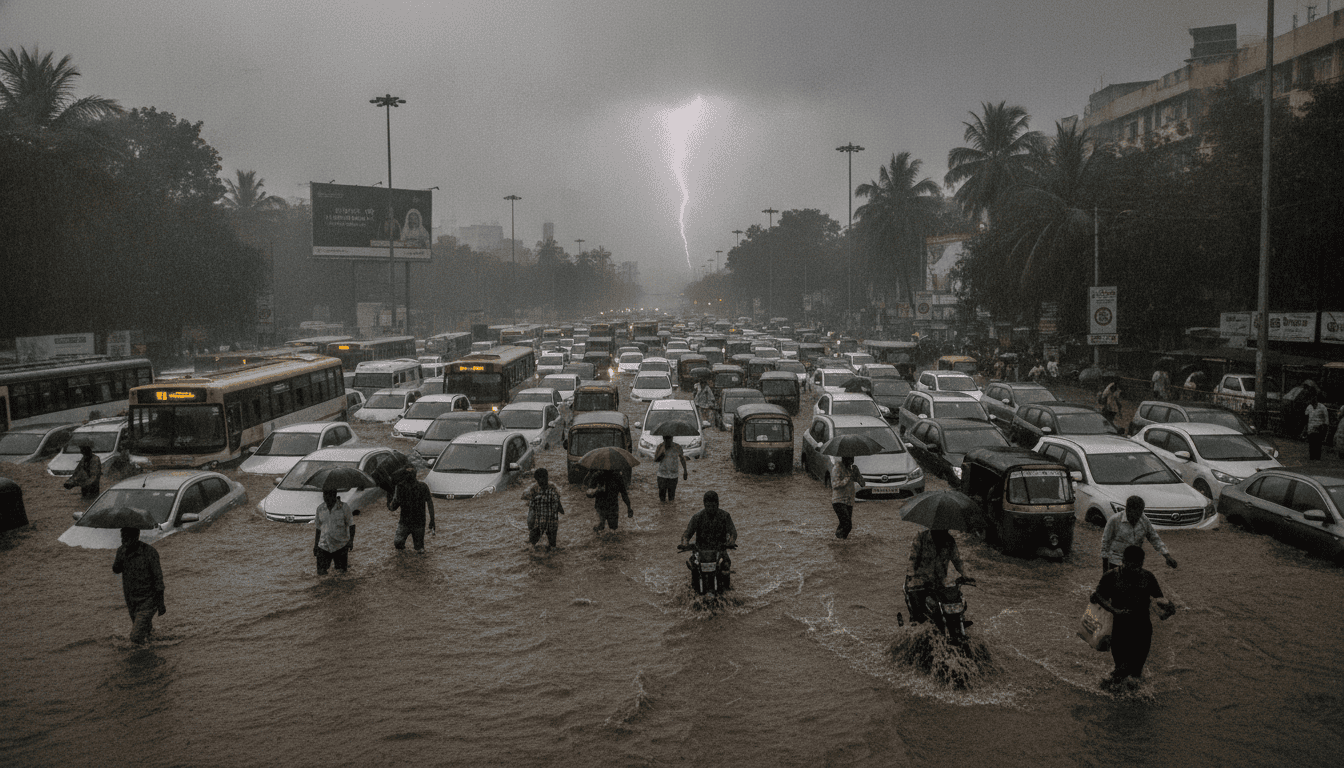
Mumbai floods after heavy monsoon rains inundate parts of the city on July 3, 2026
Mumbai floods on July 3, 2026: heavy monsoon rains inundate neighbourhoods, disrupt transport and services, snarl traffic as IMD warns of further rain.
Mumbai experienced significant flooding on July 3, 2026, as heavy monsoon rains submerged neighbourhoods and paralysed sections of the city’s road network. The India Meteorological Department (IMD) warned that more heavy rainfall was likely through the weekend, raising concerns about further disruption to daily life and commerce. Local authorities reported widespread waterlogging, stranded commuters and several arterial roads rendered impassable during the afternoon peak.
Monsoon downpour floods low-lying neighbourhoods
The monsoon burst early on July 3, 2026, sending torrents of water into low-lying areas across the metropolis. Residential pockets and market precincts reported knee- to waist-deep water in places, forcing residents to evacuate ground floors and move possessions to higher ground. Municipal crews and neighbourhood volunteers worked through the evening to assist families and clear clogged drains where possible.
Roads and rail services hit during evening peak
Traffic congestion intensified as key thoroughfares became submerged, leading to widespread gridlock and multi-hour delays for motorists. Commuter rail and suburban services experienced delays and cancellations where tracks were waterlogged or access roads remained impassable. City authorities urged people to avoid non-essential travel, citing safety risks and limited emergency access on several flooded routes.
India Meteorological Department forecasts continued heavy rain
The IMD issued warnings on July 3, 2026, forecasting further heavy to very heavy rainfall across the Mumbai metropolitan region through the coming days. Forecasters cautioned that isolated extremely heavy spells could occur, increasing the likelihood of further inundation in poorly drained zones. Officials advised residents to monitor flood alerts and follow instructions from municipal and disaster management agencies.
Emergency services and municipal response mobilised
Mumbai’s municipal corporation activated emergency teams to pump water from critical points and to shore up drainage where possible. Fire and disaster response units conducted rescues of stranded residents and assisted in clearing debris from blocked drains. Temporary relief centres were set up in some ward areas to provide shelter and basic necessities for those displaced by rising water.
Commercial activity and healthcare services disrupted
The flooding affected small businesses and daily wage earners, with several markets and street vendors unable to open or forced to close early. Healthcare facilities reported increased footfall from residents seeking treatment for water-related ailments and injuries sustained during evacuations. Authorities urged businesses to prioritise staff safety and to coordinate with local ward offices on relief measures and supply chain disruptions.
Community response and early recovery efforts
Volunteers and local resident associations coordinated deliveries of food, drinking water and essential supplies to the most affected pockets. Social media posts and community hotlines helped identify vulnerable households and areas in immediate need of assistance. Municipal teams began mapping the worst-hit localities to prioritise drainage repairs and targeted pumping operations once the rainfall eased.
Mumbai’s transport authorities advised commuters to check real-time service updates and use alternative routes where possible, noting that restoration work would continue overnight. The IMD’s forecast of sustained rain through the weekend has prompted contingency planning across civic departments and heightened readiness among emergency responders. Residents were reminded to avoid walking through moving water and to report life-threatening situations to emergency services.
Emergency centres and frontline crews remained on duty into the night to support relief efforts and manage incoming calls. Municipal officials said they would assess damage to public infrastructure once the weather subsided and would publish information on temporary closures and relief measures. The unfolding situation underscores the recurrent challenge of intense monsoon spells in Mumbai and the city’s continuing need to expand drainage and flood resilience measures.
