
AI layoffs reshape big tech as Meta, Amazon and Microsoft cut office roles amid massive AI spending
Major tech companies are enacting AI layoffs even as they pour billions into artificial intelligence, with Meta, Amazon and Microsoft trimming office workforces while ramping investment in AI infrastructure.
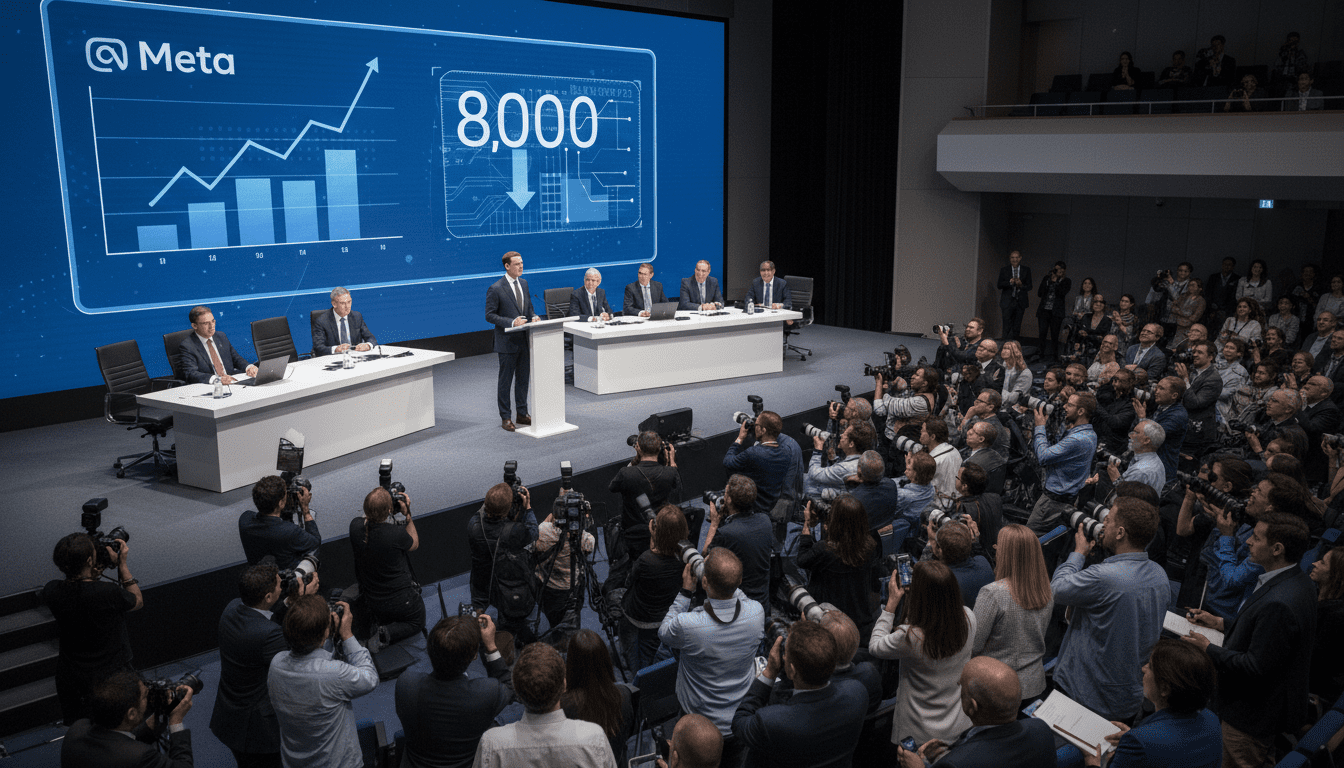
Meta said recent productivity gains from AI allow far smaller teams to deliver projects that once required many employees, and announced about 8,000 job cuts—roughly 10 percent of its staff—while shelving some 6,000 open roles to reallocate resources toward AI spending and other priorities.
Meta announces 8,000 job cuts as AI boosts productivity
Meta attributed the layoffs to efficiency gains tied to AI, with CEO Mark Zuckerberg saying projects now completed by one or two engineers would previously have taken dozens months to finish.
The company reported a 33 percent jump in quarterly revenue to $56.3 billion and said it will raise planned capital spending to $125 billion–$145 billion this year, up from earlier guidance and far above the $72.2 billion it invested in 2025.
Amazon and Microsoft trim office headcount amid investment drive
Amazon posted strong results, led by Amazon Web Services, and said it plans roughly $200 billion in investments this year, yet has announced multiple rounds of office layoffs, including 16,000 roles in January and earlier reductions totaling about 14,000 positions.
Amazon’s leadership framed cuts as steps to flatten hierarchies and move faster, and CEO Andy Jassy warned that AI-driven efficiency gains will likely reduce the company’s office headcount over time rather than staffing in distribution centers.
Microsoft likewise reported rising revenue and profits even as its workforce has shrunk in recent months, and CFO Amy Hood confirmed the headcount fell in the last quarter with expectations that the trend could continue.
Microsoft introduces voluntary exit program in the United States
Microsoft disclosed a voluntary separation program in the United States that could affect up to seven percent of U.S.-based employees, a pool that industry observers estimate would include more than 8,000 workers.
Company executives characterize the initiatives as a way to reshape teams around AI priorities while offering voluntary options to employees, even as revenue tied to AI products has lifted the company’s overall financial performance.
Alphabet expands hiring and doubles down on AI infrastructure
Alphabet diverged from peers by modestly increasing headcount in the first quarter while announcing a sharp increase in planned investment, raising its capital outlook from $91.4 billion to roughly $180 billion–$190 billion for the year.
CEO Sundar Pichai said AI is being integrated across search and cloud offerings and highlighted cloud growth north of 60 percent, signaling that Alphabet sees extensive near-term commercial opportunity even as rivals broaden their chip and cloud capabilities.
Alphabet and Amazon also signaled plans to expand AI-chip efforts, moves that could intensify competition with Nvidia in the specialized hardware market.
Apple posts steady growth and signals executive transition without mass cuts
Apple reported a 17 percent rise in quarterly revenue to $111.2 billion, driven by robust iPhone demand, while notably refraining from large-scale AI spending comparable with other big tech firms and announcing no major workforce reductions.
The company did announce a leadership transition, saying Tim Cook will step down as CEO on September 1, 2026, and that John Ternus, currently senior vice president for hardware engineering, will succeed him; Ternus offered upbeat remarks but few details about strategic shifts.
Apple has lagged peers on high-profile AI product rollouts such as a revamped Siri, yet its consumer hardware franchise continues to produce resilient results.
Market reaction and industry uncertainty over AI investments
Despite broadly better-than-expected quarterly results across major tech firms, stock market responses were mixed, with Alphabet shares rising about 10 percent and Apple up roughly four percent, while Microsoft and Meta saw declines and Amazon’s share price was largely unchanged.
Industry analysts and executives point to ongoing uncertainty about whether the substantial AI investments will yield proportional returns, and recent reporting that OpenAI missed internal revenue and user targets has added to investor caution.
The technology sector now faces a complex balancing act: companies are committing hundreds of billions to AI infrastructure and chip development while using AI productivity gains to reduce office headcount and reshape talent pools.
As firms shift resources, the immediate consequence is a wave of AI layoffs concentrated in corporate functions and product teams, even as those same technologies underpin new growth bets and capital commitments across the industry.
Markets, employees and policymakers will watch whether these AI-driven workforce changes deliver long-term gains in productivity and innovation, or whether the large-scale investments will require further strategic adjustments in the quarters ahead.
