
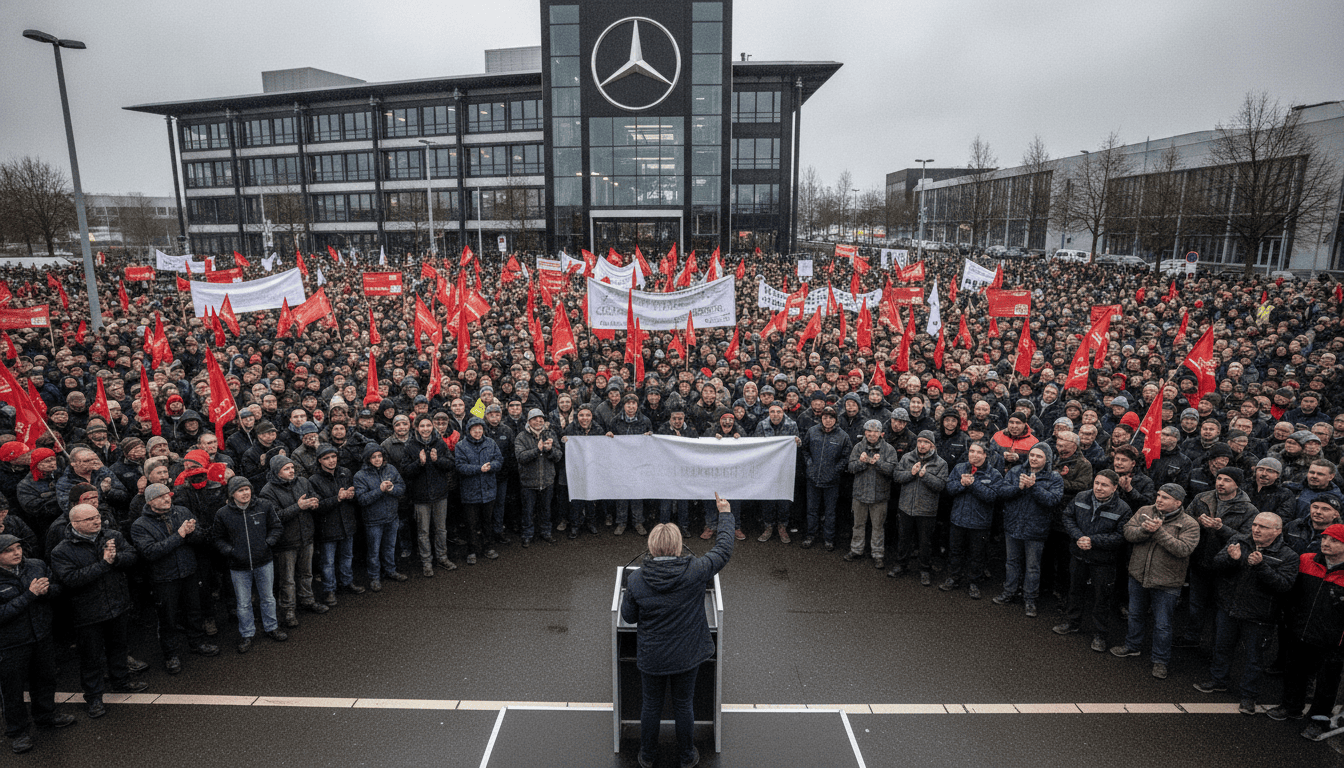
German auto industry rocked as Mercedes workers stage mass protests and VW restructuring looms
Mercedes mass protests and looming VW cuts put the German auto industry under pressure as unions and politicians clash over jobs and costs and reforms.
The German auto industry confronted a week of intense labor unrest as tens of thousands of Mercedes employees marched with red flags, drums and whistles to protest planned cost cuts, while Volkswagen faces proposals that could close plants and cut thousands of jobs. The demonstrations, led by IG Metall, mark a sharp escalation in sector-wide tensions and signal a potentially disruptive “hot summer and autumn” of industrial action. Unions say workers will resist rollbacks of historic benefits, while managements insist deep savings are essential to sustain competitiveness and investment.
Mercedes employees stage mass demonstrations
On Friday, large rallies at Mercedes sites including Sindelfingen saw workers mobilize across multiple locations to protest savings measures proposed by the company. Union banners and coordinated actions underscored the depth of employee anger at proposals perceived to reduce pay, hours or workplace protections.
IG Metall framed the protests as a broader defence of labor standards across the auto sector, warning that any weakening of collective agreements would trigger further escalation. Organizers said the demonstrations are intended to send a clear signal ahead of planned tariff talks and potential employer moves that could affect the whole industry.
Union warns of sustained nationwide actions
IG Metall has publicly forecast a period of prolonged industrial campaigns, describing the coming months as likely to be marked by strikes, blockades and symbolic actions across the sector. The union argues that workers cannot be expected to absorb the costs of restructuring alone, and has linked collective resistance to the protection of the 35-hour week and other benefits.
Employers, for their part, are treating the union strategy as part of a high-stakes bargaining environment where both sides will test limits. The union’s threat of coordinated measures aims not only to protect jobs but to influence the shape of any negotiated reforms so they include social safeguards.
VW’s restructuring plans heighten stakes for jobs
Volkswagen’s internal cost reviews have surfaced proposals that could include the closure of several German plants and the elimination of tens of thousands of roles worldwide. Management argues that the group needs to reduce complexity, shrink overlapping model ranges and cut structural costs to finance electrification and software investments.
Worker representatives and regional politicians warn that such measures would inflict heavy local damage and could accelerate the offshoring of value-added work. The dispute over VW’s plans has become emblematic of the wider dilemma facing legacy manufacturers: reconciling aggressive investment needs with socially acceptable restructuring.
Political resistance in Lower Saxony and beyond
In Lower Saxony, where the state holds a stake in Volkswagen, political leaders reacted swiftly to the announced savings proposals, signaling readiness to block measures perceived as too severe. Statements from regional officials reflected concerns about job losses and the social cost of factory closures in key carmaking towns.
This political pushback complicates management efforts to implement fast, deep cuts and has fueled criticism from business voices that argue such interventions undercut necessary competitiveness measures. The tension between regional political priorities and corporate restructuring plans has emerged as a central friction point in the debate.
Industry faces mounting global competition and investment demands
German carmakers now confront a two-front pressure: accelerating investment needs for electric vehicles and software, and intensifying competition from new, efficient plants established by Chinese rivals in Europe. Executives say those trends require large capital allocations and leaner cost bases to ensure long-term viability.
Analysts point out that without decisive structural reforms and faster simplification of product portfolios, German manufacturers risk losing market share and sourcing more production abroad. The scale of required investment—said to run into the hundreds of billions across companies and suppliers—means difficult choices for managements and policymakers alike.
Calls for reform collide with social concerns
The federal government has introduced measures intended to increase flexibility in the labor market, including proposals to ease certain protections for high earners, but these steps have met mixed reactions from unions and political actors. Proponents argue targeted reforms could help reduce managerial bloat and free resources for investment, while critics fear such moves will not address the core social impact of restructuring.
The interplay between necessary cost-cutting and social protection is now the defining political dilemma for Germany’s industrial policy. Stakeholders on all sides acknowledge the urgency of making the sector sustainable, yet disagree sharply on who should bear the burden and how change should be managed.
The immediate outlook is one of pitched negotiations and potential stoppages, with unions prepared to press their case and firms insisting on hard choices to secure future competitiveness. How those disputes are resolved will shape not only corporate balance sheets but the economic prospects of many communities and the strategic direction of the German auto industry in the years ahead.
