
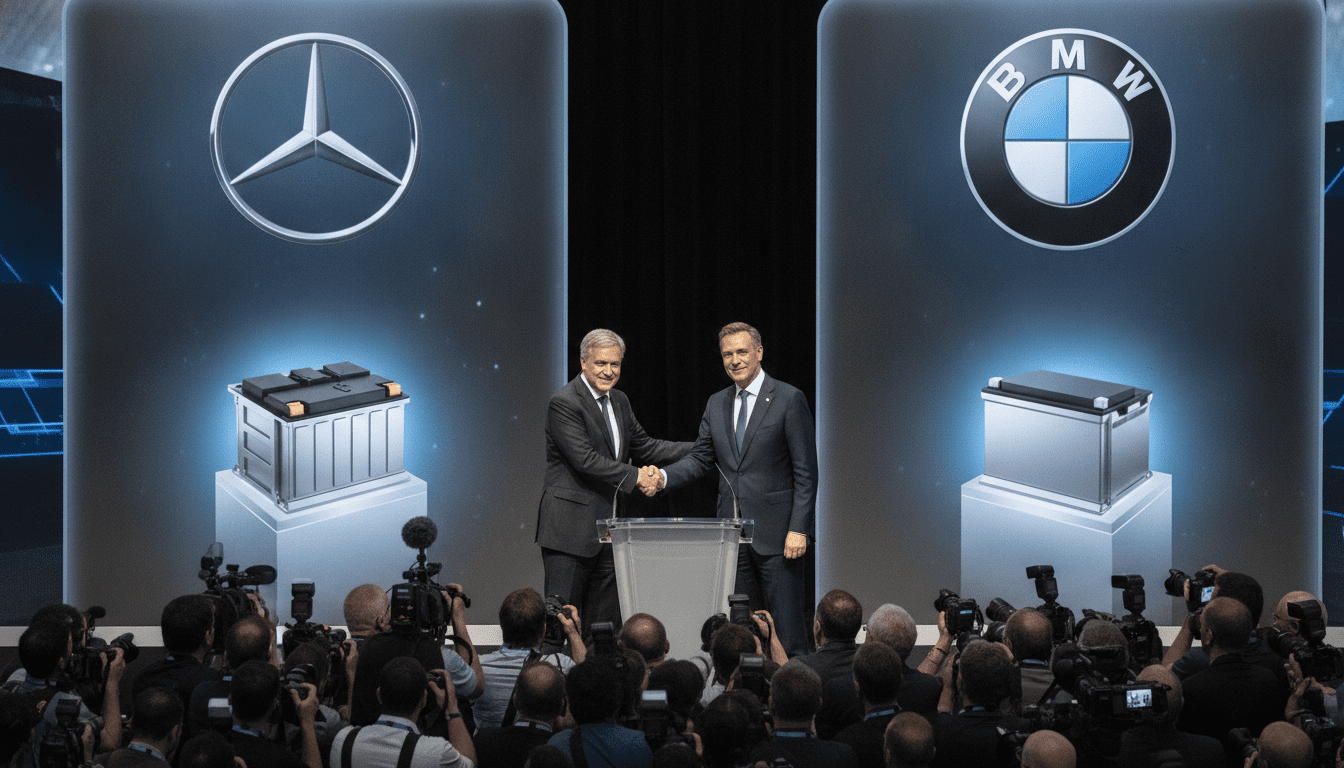
German Premium Automakers Say They’ve Closed EV Battery Gap
German premium automakers claim to have closed the EV battery gap, calling a “new era” as Mercedes and BMW step up cell technology, production, and design.
German premium automakers are publicly asserting that they have narrowed — if not closed — a competitive lead held by foreign rivals in electric-vehicle battery technology. Mercedes-Benz CEO Ola Källenius described the changes as “a new era,” while BMW’s new chief Milan Nedeljkovic said the industry is setting “technologically and emotionally new standards.” Those declarations underline a strategic push by Germany’s luxury brands to accelerate cell development, manufacturing capacity and vehicle integration.
Manufacturers Say They Have Closed the Battery Gap
Mercedes and BMW framed their announcements as evidence that German premium automakers can now match global rivals on core battery performance. Executives emphasized gains in energy density, thermal management and battery-pack integration that they say deliver improved range and durability.
Industry leaders presented these developments as outcomes of higher R&D budgets, revised supply contracts and manufacturing scale-ups. The companies positioned the progress as part of a coordinated effort to keep European EV leadership within the premium segment.
Mercedes Frames Transition as “A New Era”
Ola Källenius used the phrase “a new era” to convey a broader strategic shift beyond incremental product changes. Mercedes intends to reshape how battery systems are engineered, assembled and serviced across its vehicle lineup, executives said in statements accompanying the remarks.
The company highlighted investments intended to accelerate domestic cell manufacturing and to integrate cell chemistry and software more tightly with vehicle controls. That strategy is designed to reduce dependencies on distant suppliers and to speed time-to-market for next-generation models.
BMW’s Claim of Technological and Emotional Advances
Milan Nedeljkovic described the firm’s ambitions as delivering “technologically and emotionally new standards” for drivers, signaling that BMW aims to pair technical performance with brand experience. The emphasis blends improved range and charging with the tactile and design cues expected from a premium automaker.
BMW’s messaging focused on battery packaging that enhances interior space and driving dynamics, along with software layers that manage energy and user interaction. The company suggested that those combined gains would strengthen its competitive position in the luxury EV market.
Industrial Investments and European Cell Capacity Plans
Both manufacturers pointed to a wave of industrial investment intended to boost European cell production capacity. Executives cited factory expansion, joint ventures and targeted capital deployment as central to securing long-term supply of critical cells and components.
Policy incentives and regional manufacturing commitments were framed as supporting factors that make local cell production economically viable. The companies argued that increasing domestic capacity could shorten supply chains, lower freight and logistics risk, and improve quality control for premium vehicles.
Remaining Challenges in Supply Chain and Scale
Despite the optimistic messaging, a number of structural challenges remain for German premium automakers as they scale battery operations. Securing sufficient, responsibly sourced raw materials and managing rising production volumes without cost inflation will be essential to delivering competitive models at scale.
Manufacturers still face the technical task of translating laboratory gains in cell chemistry into robust, high-volume production lines. Regulatory approval processes, recycling infrastructure and the development of a skilled industrial workforce are additional hurdles that will influence how quickly the touted advances reach showrooms.
Market Implications for Competition and Consumers
If German premium automakers sustain the momentum they describe, European buyers could see faster improvements in EV range, charging speed and vehicle refinement. Stronger domestic cell production could help stabilise supply and reduce lead times for new models, benefiting dealer networks and end customers.
On the competitive front, a sustained push by luxury German brands would intensify pressure on global rivals to innovate across the full battery and vehicle stack. Consumers may benefit from accelerating innovation, but the pace of cost reductions and the distribution of benefits across different price tiers will shape market outcomes.
The assertions by Mercedes-Benz and BMW signal a concerted attempt by German premium automakers to reassert technological leadership in electric mobility, but translating those claims into durable market advantage will depend on steady investment, supply-chain security and successful scale-up of new battery technologies.
