
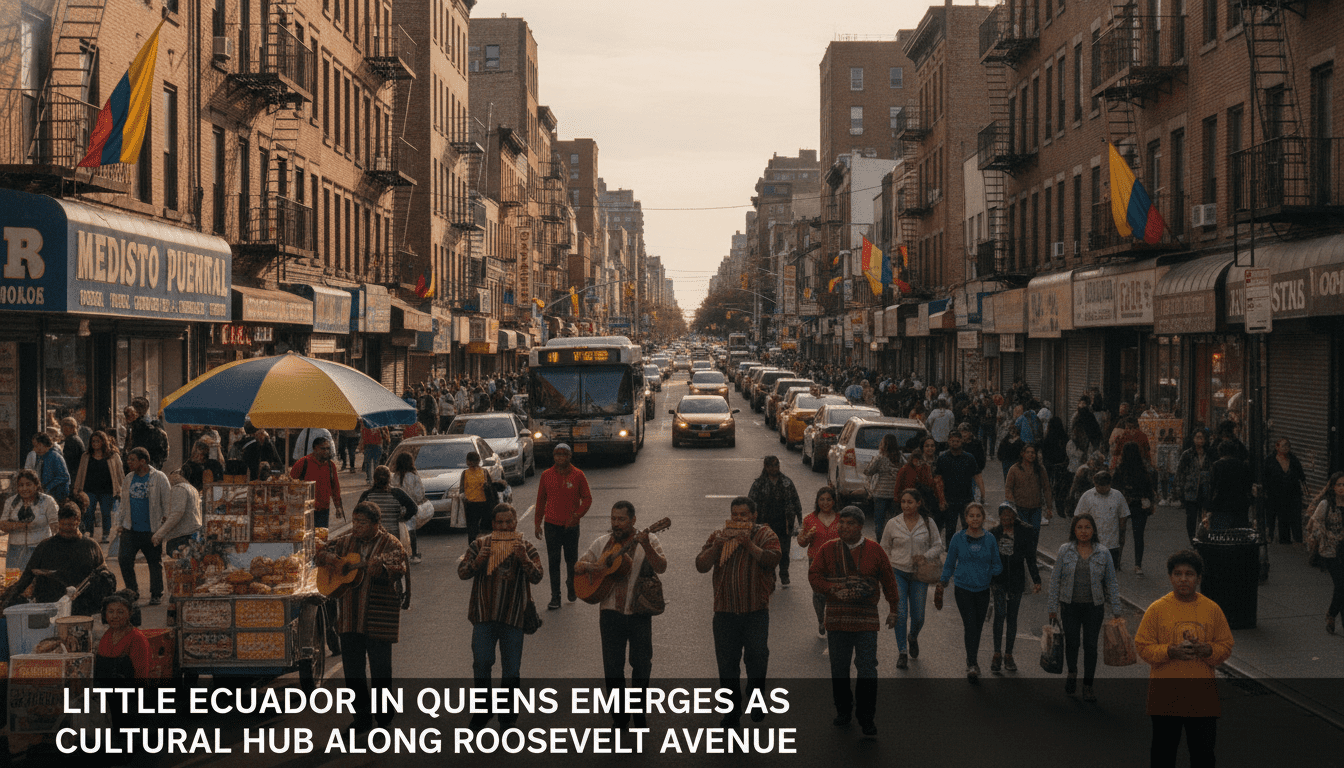
Little Ecuador Thrives Along Roosevelt Avenue in Queens
Little Ecuador in Queens is a vibrant enclave anchoring Ecuadorian culture, commerce and community life along Roosevelt Avenue since the 80s. This neighborhood, often called Little Ecuador, mixes storefronts, restaurants and community institutions in one of New York City’s most international corridors. Locals also refer to the strip as “La Rusebelt,” a nickname that signals long-standing ties between place and population. The enclave’s identity is shaped by daily commerce, cultural ritual and sustained transnational connections.
Roosevelt Avenue Anchors Little Ecuador
Roosevelt Avenue functions as the commercial spine of Little Ecuador, with small businesses clustered tightly along the corridor. Grocery stores, bakeries, travel agencies and restaurants operate side by side, serving both first‑generation immigrants and younger, U.S.‑born residents. The streetscape is marked by bilingual signage, Ecuadorian flags and a steady flow of shoppers that keeps the neighborhood active from morning through late evening.
The avenue’s businesses are both cultural markers and economic engines for the community. Many shops are family‑run and have operated for decades, passing ownership across generations. Their presence gives local residents access to goods and services that reflect home country tastes and practices.
Cultural Life and Community Rituals
Cultural institutions and festivals punctuate daily life in Little Ecuador, maintaining ties to Ecuadorian traditions. Restaurants and street vendors specialize in staples such as hornado, ceviche and llapingachos, creating a culinary corridor that draws visitors from across Queens. Religious processions and community celebrations, often centered around parish churches and social clubs, preserve seasonal rhythms and collective memory.
Music and dance also play visible roles in neighborhood life, with small venues and restaurants hosting events that feature Andean and coastal Ecuadorian styles. These cultural practices reinforce a sense of belonging that many residents describe as essential to maintaining identity in a dispersed city.
Immigration Patterns and Family Networks
Migration from Ecuador to Queens accelerated in the late 20th century and created dense family networks that continue to shape the enclave. New arrivals have historically been drawn by existing social ties, language familiarity and job opportunities in service and construction sectors. Chain migration has reinforced neighborhood cohesion, with relatives sponsoring newcomers and sharing housing, childcare and information.
These family‑centered networks extend across borders; remittances and regular travel maintain economic and emotional links with towns and cities in Ecuador. That transnational dynamic affects local spending patterns and community priorities, as residents balance life in New York with obligations and connections abroad.
Small Businesses and Economic Resilience
Small businesses in Little Ecuador have shown resilience amid broader economic shifts in New York City. Owners often operate on thin margins yet sustain steady customer bases through specialized offerings and personalized service. Informal economies such as street vending and home‑based catering supplement storefront income and provide flexible options for entrepreneurs.
Challenges persist, including rising rents, competition from large chains and occasional enforcement actions against informal vendors. Nonetheless, business owners frequently adapt by diversifying services, opening second locations or leveraging social media to reach wider audiences.
Community Institutions Provide Social Support
Nonprofits, churches and mutual‑aid groups play a central role in delivering social services to the neighborhood. These institutions offer immigration assistance, bilingual education programs and emergency aid during periods of economic strain. Local schools and health clinics also serve as access points for services tailored to immigrant families.
Volunteer networks and civic centers help newcomers navigate housing, employment and language barriers. Their work not only addresses immediate needs but also contributes to longer‑term integration by offering classes, legal clinics and youth programming that bridge cultural and generational gaps.
Political Engagement and Local Influence
Ecuadorian residents in Queens have increased their civic presence through voting, advocacy and public events. Community organizations coordinate voter registration drives and candidate forums, while neighborhood leaders press elected officials on issues such as tenant protections and immigrant legal services. Local political influence is often channeled through coalitions that include other immigrant groups in the borough.
Civic engagement has translated into tangible gains on some fronts, including expanded social programs and recognition of cultural events. Still, political mobilization remains uneven, and community advocates continue to call for broader access to resources and representation.
Little Ecuador’s future will be shaped by how residents, business owners and local institutions navigate pressures of development, economic uncertainty and demographic change. The neighborhood’s cultural vibrancy and dense social networks are assets that many see as essential to preserving its character.
The corridor along Roosevelt Avenue remains more than a collection of shops; it is a lived landscape where Ecuadorian heritage is negotiated and reproduced daily. Residents describe Little Ecuador as a place of memory and opportunity, where links to home and hopes for the future coexist on the same block.
