
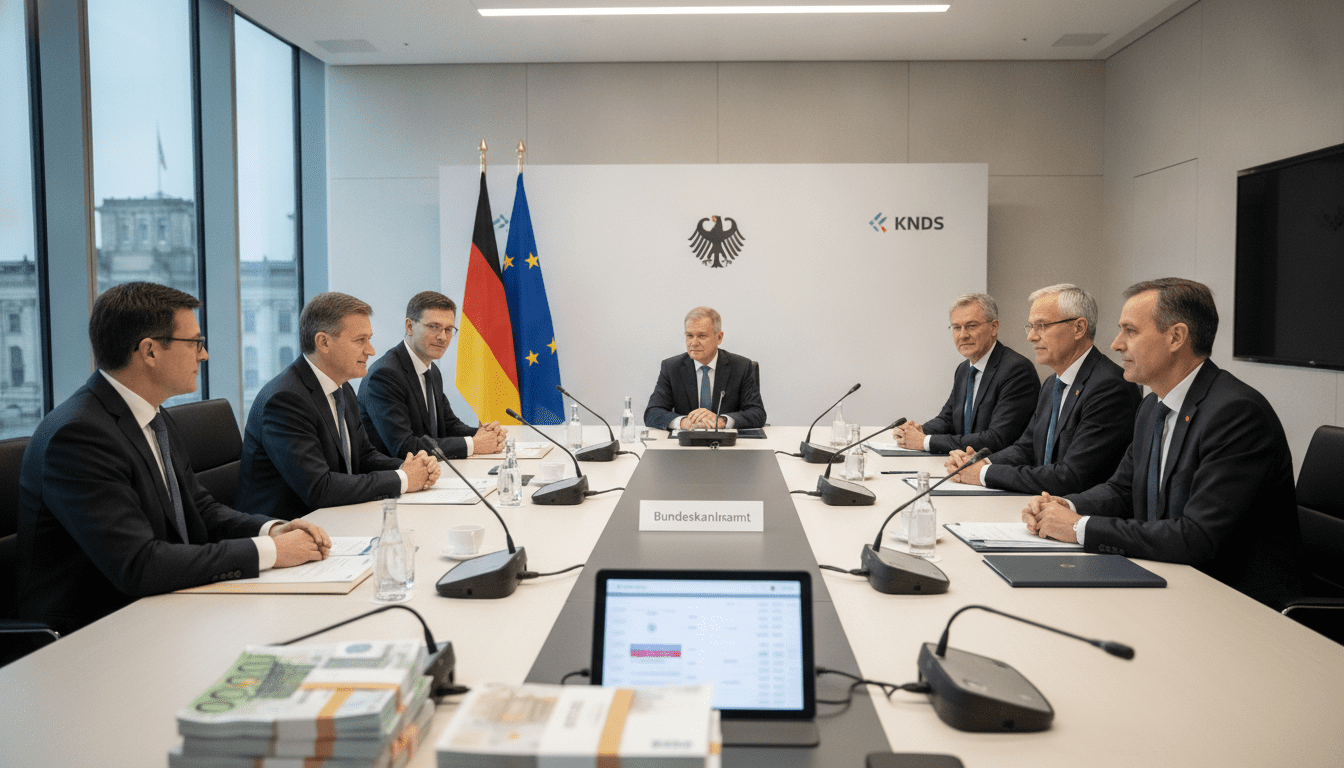
Germany to Buy Up to €7.2bn Stake to Secure KNDS Ownership
Bundestag committee approves up to €7.2bn via KfW for a 40% German stake in KNDS with France; IPO set before July 13 as Greens express reservations and €33bn orders.
Bundestag clears funding for KNDS stake
The Bundestag budget committee approved an extraordinary appropriation of up to €7.2 billion to enable the federal government to acquire a 40% stake in KNDS, the German-French defence group. Lawmakers said the acquisition will be carried out through state development bank KfW and was endorsed in committee votes reported to news agencies Reuters and dpa. The measure aims to keep strategic defence manufacturing capacity in both countries while addressing an imminent change in KNDS ownership. Officials framed the move as a defensive intervention to preserve industrial know-how and supply chains critical to the Bundeswehr.
Deal structure and ownership changes
Under the arrangement, Germany and France will each hold 40% of KNDS, together controlling 80% of the company’s shares once the transaction completes. France currently owns roughly half of KNDS, while the remaining 50% is held by a private holding associated with the Wegmann family, which has signalled its intent to sell. Initially, both major shareholders plan to float 20% of the company through an initial public offering, with each selling a 10% tranche to investors. The state purchases are structured to prevent a single foreign majority owner from controlling facilities that supply key armaments to German forces.
Parliamentary debate and Green reservations
The vote prompted a sharp parliamentary debate over industrial sovereignty, fiscal discipline and political risk. Proponents from the governing coalition argued the intervention is necessary to protect jobs, preserve defence expertise and ensure secure supply of systems such as the Leopard 2 main battle tank and Boxer armoured personnel carrier. Members of the Bundestag’s budgetary and defence delegations stressed that a German stake would allow Berlin to assume responsibility for capabilities central to national security. The Green Party budget rapporteur abstained, citing significant risks tied to the timing of the sale and the parallel listing, and warned the federal purchase places the government in a politically sensitive negotiation position with private sellers.
Planned IPO timetable and market implications
KNDS has announced an initial public offering slated before the August summer break in France, with media reporting the latest possible listing date as July 13. The IPO is expected to offer only 20% of shares to the market initially, limiting the immediate free float and leaving a substantial majority in public and strategic hands. Markets will be watching valuation parameters and investor appetite for defence equities amid elevated geopolitical tensions across Europe. Analysts say the timing — ahead of the French market’s summer pause — reflects an effort to complete the corporate restructuring quickly, but also raises questions about pricing pressure and the negotiability of the private sale.
KNDS business profile and strategic importance
Formed in 2015 from the merger of Krauss-Maffei Wegmann and France’s Nexter, KNDS has grown into one of Europe’s largest defence manufacturers, with last year’s revenues reported at €4.4 billion. Company guidance points to an ambition to expand midterm sales toward as much as €12 billion annually, supported by a reported order backlog of approximately €33 billion. KNDS’ product range includes main battle tanks, armoured vehicles and artillery systems that are integral to European land forces and to shared Franco-German procurement programmes. Stakeholders in government and industry underline that control over these assets touches both industrial policy and operational readiness for the Bundeswehr.
Economic and political implications for Germany and France
The joint Franco-German arrangement reflects a broader push to align defence industrial policy between the two countries while balancing national interests. For Germany, the purchase via KfW signals willingness to use public finance to secure strategic capabilities and to limit concentration of ownership. For France, maintaining a substantial stake preserves influence over production and exports that are central to its defence industrial base. The arrangement also raises questions about state involvement in sensitive sectors and the precedent it sets for future cross-border consolidations in European defence supply chains.
The Bundestag committee’s approval now clears one major parliamentary hurdle, but the transaction will still require implementation steps including the formal share transfer, coordination with French authorities and the execution of the planned IPO. Observers will also track any conditions attached to the state purchases, such as governance arrangements, industrial guarantees or export controls that could affect KNDS’ commercial flexibility. As the process moves from committee approval to practical execution, market participants and defence customers alike will assess how the new ownership mix influences procurement, investment and long‑term industrial strategy.
The final phase of this deal is likely to hinge on the exact terms negotiated with the selling family holding and on the reception of KNDS’ shares by institutional and retail investors in the coming weeks.
