
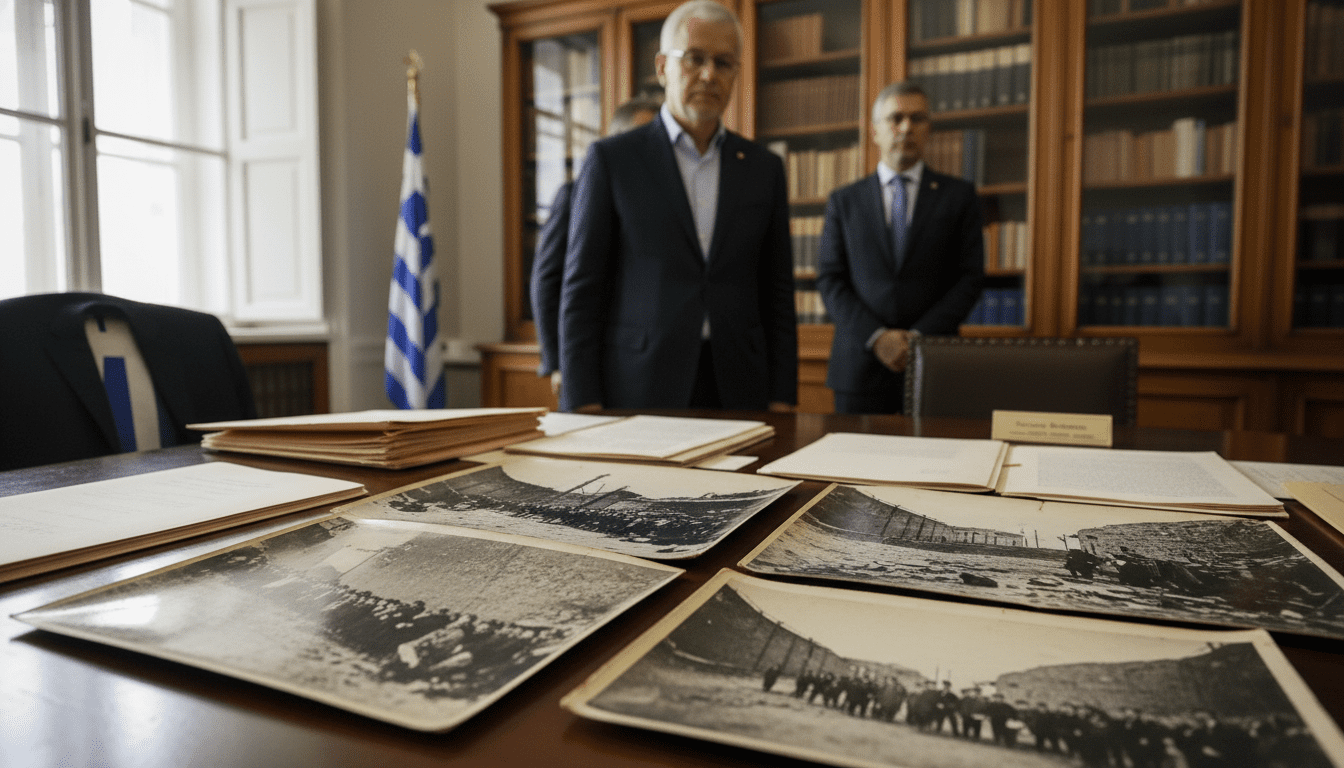
Kaisariani massacre photos ignite dispute in Athens ahead of German foreign minister visit
Greek recovery of long-lost Kaisariani massacre photos and a canceled Friedrich-Ebert-Stiftung event have intensified debate about memory and German-Greek reconciliation ahead of Johann Wadephul’s trip. (en.wikipedia.org)
Kaisariani massacre and the May 1944 executions
The executions at the Kaisariani shooting range are a central element in modern Greek memory of the Nazi occupation. On 1 May 1944, German occupation authorities executed around 200 political prisoners in reprisal for resistance attacks; the event has been commemorated in Greece for decades. (en.wikipedia.org)
Survivors’ families and local memorials have kept the killings in public view, even as photographs from the day remained unknown until early 2026. The sudden appearance of images showing men being led to the firing squad has reawakened debates over evidence, accountability and how nations preserve wartime memory. (en.wikipedia.org)
New photographs spark public and government action
In February 2026 previously unseen photographs reportedly tied to the Kaisariani executions surfaced on an online sales platform, prompting an immediate reaction from Greek authorities and historians. Experts sent by the Greek Culture Ministry examined the material and concluded the images are likely authentic, prompting the state to move to secure the collection for archives. (apnews.com)
The images, some marked with dates and presumptive Wehrmacht identifiers, were traced to a larger trove of wartime photographs. Their public emergence prompted intense coverage in Greek media and a swift campaign to prevent further private sales of what many see as national historical patrimony. (apnews.com)
Friedrich-Ebert-Stiftung event becomes flashpoint
The Athens office of the Friedrich-Ebert-Stiftung had scheduled a public discussion on the newly surfaced photographs, aiming to place the images in scholarly and civic context. The planned program drew criticism from a range of Greek organizations that accused the foundation of overstepping by framing the material in ways some found insensitive. (athens.fes.de)
Amid mounting objections and reports of threatening commentary in parts of the press, the foundation announced it could not guarantee participants’ safety and canceled the Athens event. The cancellation itself became a subject of controversy, with critics arguing that open debate about the images should proceed under appropriate security arrangements. (athens.fes.de)
Diplomatic timing and Johann Wadephul’s visit
The controversy unfolded in the days before a scheduled visit by German Foreign Minister Johann Wadephul, heightening diplomatic sensitivity. Berlin has faced repeated calls in Athens for clearer acknowledgment of wartime atrocities and for gestures that recognize Greece’s historical losses during the occupation. (auswaertiges-amt.de)
German officials have in recent years taken symbolic steps at sites of wartime atrocities in Greece, and the resurfacing of photographic evidence has renewed demands for comprehensive archival access and further state-level engagement. The timing of the controversy has pressed both governments to manage memory politics alongside routine diplomatic business. (theguardian.com)
Divergent public memories in Greece and Germany
For many Greeks, the Kaisariani killings remain a vivid element of family histories and local identity; descendants of the executed continue to mark the site and to press for preservation of evidence and commemoration. The photographs have been framed by local activists and political groups as necessary testimony that counters forgetting. (theguardian.com)
In Germany, awareness of specific atrocities in Greece is less widespread in public discourse, and the issue of how to teach or commemorate these events continues to vary by region and generation. Observers say that the photos—and the debate over them—offer an opportunity for more sustained public engagement with the full scope of occupation-era crimes. (en.wikipedia.org)
Vandalism, state response and archive plans
Shortly after the photographs became public, memorial plaques at the Kaisariani site were vandalised, an act local authorities attributed to extremist elements that opposed renewed attention to the killings. The incident intensified pressure on national institutions to secure and restore the memorial and to move more swiftly to acquire the photographic collection. (apnews.com)
Greek officials and cultural experts have emphasized the need to house the images in state archives and museums where they can be studied and displayed with proper context. The government’s pursuit of the photographs from private collectors signals an intent to treat the material as part of the national historical record rather than private memorabilia. (apnews.com)
The reappearance of the Kaisariani photographs has reopened old wounds and raised practical questions about how democracies handle traumatic evidence from the past.
Public and state institutions in both countries now face decisions about access, preservation and discourse that will shape how the Kaisariani massacre is understood by future generations.
