
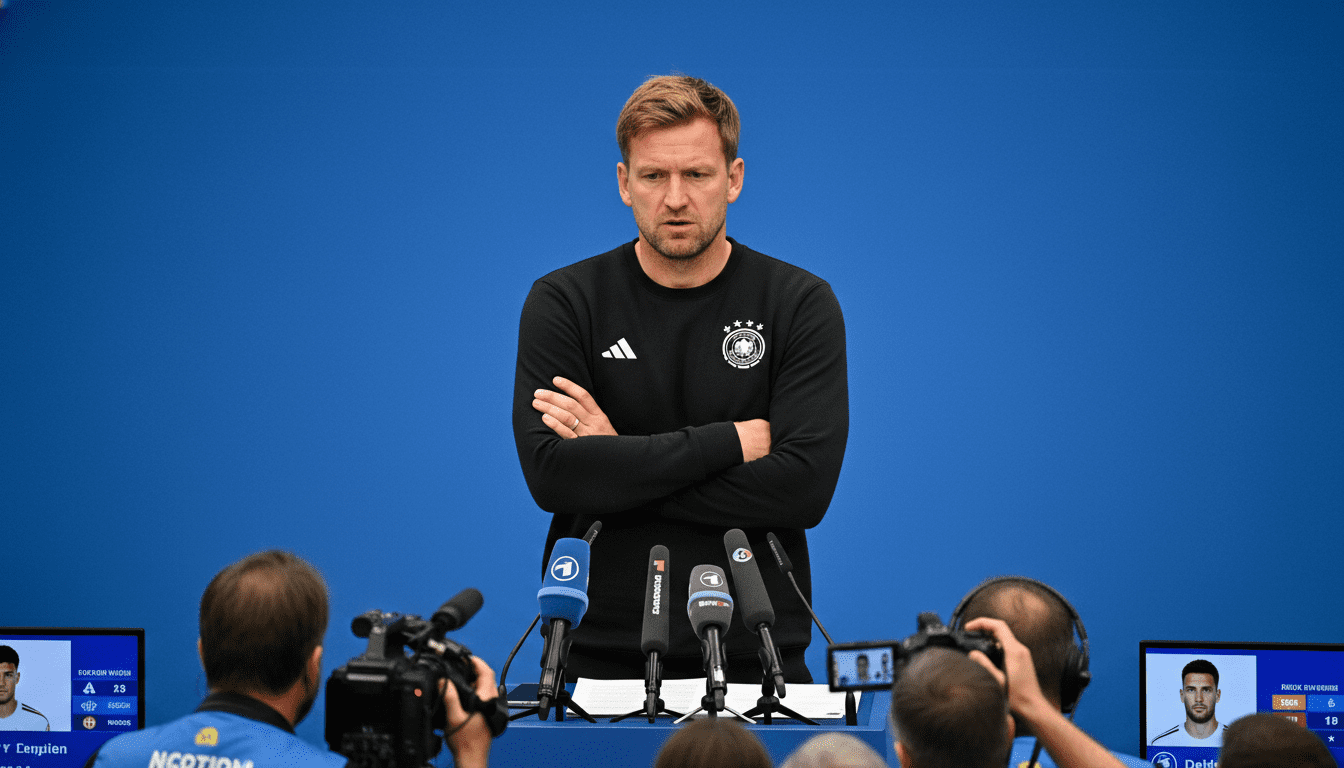
Julian Nagelsmann’s World Cup squad win draws praise while his communication sparks criticism
Julian Nagelsmann’s World Cup squad choices are broadly accepted, but his public communication and media handling have provoked criticism and debate ahead of tournament.
Bundesnationalmannschaft coach Julian Nagelsmann announced a selection that most analysts and many former players judged defensible, choosing a mix of established internationals and emerging talents aimed at balancing experience with dynamism. While the team list itself has generated little sporting controversy, attention has shifted sharply to Nagelsmann’s statements and the tone of his public appearances. Critics argue that those communication choices risk distracting from preparation at a moment when focus and clarity are crucial.
Squad composition met with professional approval
The final roster named by Julian Nagelsmann reflects a clear tactical profile and several pragmatic decisions aimed at tournament stability. Veterans with proven international experience sit alongside promising younger players expected to inject pace and technical variety into the side. National team analysts noted that, on balance, the selections align with the coach’s declared game plan and do not contain the surprise omissions that historically fuel long-running public disputes.
Public messaging has become the central issue
Observers say the problem is not selection but how Nagelsmann has spoken about his choices in recent briefings and interviews. A pattern of defensive phrasing and what some commentators call simulated self-criticism has created an impression of evasiveness rather than accountability. That lack of straightforwardness has been amplified by social media and round-the-clock sports coverage, intensifying scrutiny on relatively minor tactical and personnel matters.
Players and DFB offer cautious, qualified backing
Members of the squad have publicly expressed support for their coach, emphasizing readiness and unity ahead of the tournament. The German Football Association (DFB) has also signalled internal confidence in Nagelsmann’s sporting work while urging discipline around communications. Insiders describe a professional environment in training camps but acknowledge that mixed messaging from the leadership can complicate locker-room dynamics if not addressed.
Media debate contrasts tactical clarity and rhetorical ambiguity
Press coverage has split between endorsement of Nagelsmann’s tactical blueprint and criticism of his media handling. Commentators who support the coach point to coherent selection patterns and a credible plan for defensive solidity combined with counterattacking flexibility. Critics counter that ambiguous public remarks about player roles and readiness have made it harder for fans and pundits to interpret the coach’s true intentions, creating avoidable controversy in the run-up to the tournament.
Potential risks for team cohesion and match preparation
Sporting directors and former internationals warn that off-field distractions can erode focus during crucial final weeks of preparation. Consistent, transparent communication from the coaching staff is seen as an important tool to manage expectations and maintain morale. If unresolved, persistent media friction could subtly influence individual player confidence and the clarity of tactical instructions under pressure.
Next steps and the calendar before the tournament
Nagelsmann and his staff have a series of warm-up fixtures and internal training sessions in the weeks ahead that offer opportunities to reset the narrative. Tactical work on the training ground and clearer, more direct public briefings would likely reduce external speculation and help concentrate attention on match preparation. The DFB will monitor developments closely, while supporters and media will judge whether the coach’s subsequent conduct restores a sense of calm around the squad.
Germany goes into the World Cup with a roster that, on paper, meets sporting expectations, but the effectiveness of that squad will depend in part on whether the coach can translate tactical clarity into equally clear communication. Maintaining focus in the final weeks and presenting a unified public message will be essential if Julian Nagelsmann and his players are to convert selection approval into competitive success on the world stage.
