
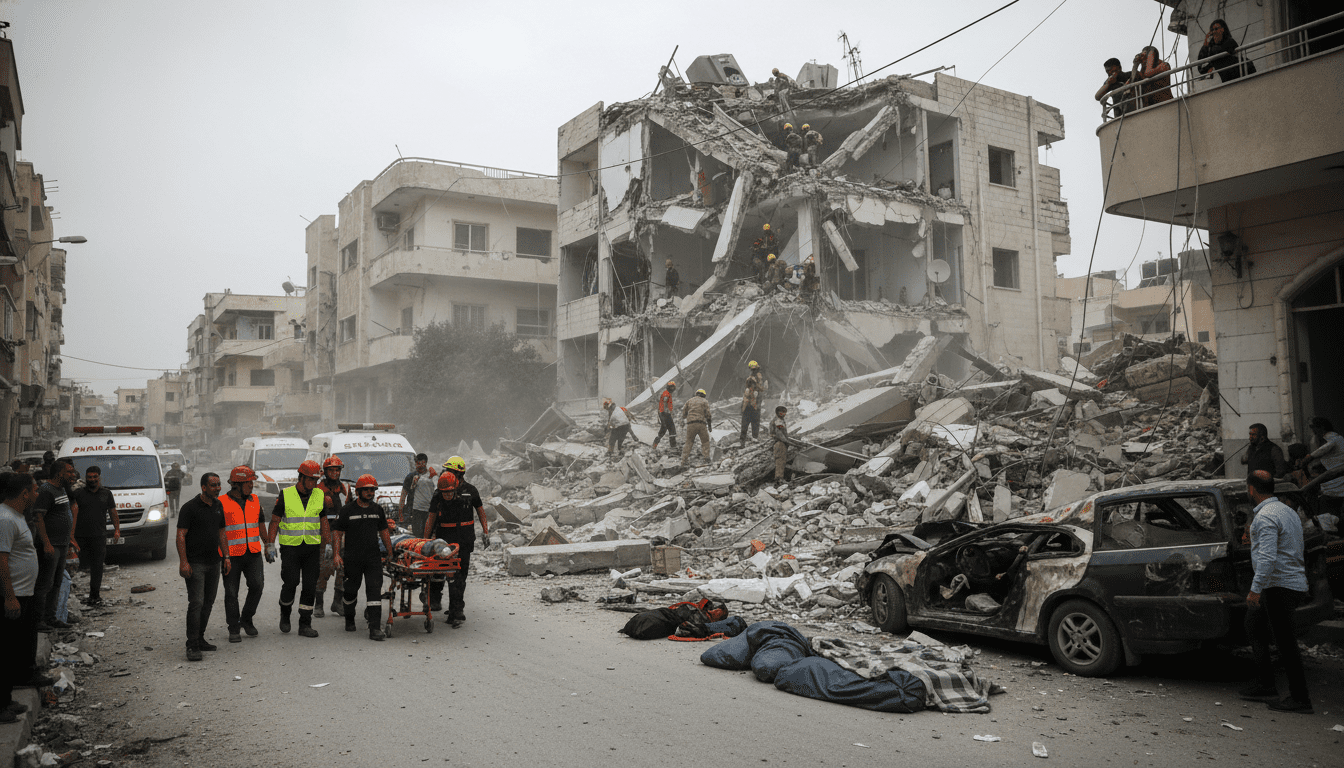
Israeli attacks on southern Lebanon kill three and wound more than a dozen, state media reports
Israeli attacks on southern Lebanon killed three people and wounded more than a dozen early Saturday, Lebanon’s state-run National News Agency reported, hitting homes, roads and the approach to a major hospital. The strikes, which NNA said struck residential areas near Tyre and roads around Nabatieh, raised immediate concerns about civilian harm and access to medical care. Lebanese health authorities and local sources gave the casualty figures, while details remain limited as officials continue to assess the damage.
Three killed and multiple wounded in early-morning strikes
The state-run NNA reported that Israeli attacks on southern Lebanon killed three people in the early hours of Saturday morning. More than a dozen others were wounded, with initial reports indicating a mix of civilian victims caught in residential and transit areas.
Local agencies said emergency responders were mobilized to treat and evacuate the injured to nearby medical facilities. NNA described the timing as early morning, when residents in the affected neighborhoods were most vulnerable to sudden strikes.
Father and son from Ansar identified among the dead
NNA identified two of the fatalities as Zuhair Ahmad Hashim and his son Ali, saying they were killed when an Israeli strike struck their home in the al-Marj neighbourhood of Ansar, near the city of Tyre. The agency reported that seven other members of the family were wounded in the same strike.
The deaths underscore the risks to civilians in populated southern Lebanese towns when residential structures are hit. Local sources described shock and grief in Ansar as relatives and neighbors gathered near the damaged home.
Strike on Sharifa-Habbouch-Nabatieh road kills one civilian
Authorities reported a separate strike on the Sharifa-Habbouch-Nabatieh road that killed one civilian and left another person critically wounded. The attack on the roadway added to the toll on non-combatants and complicated movement for residents and first responders.
Road strikes can disrupt transport and hinder emergency response, health officials warned, as families and ambulances seek safe routes to hospitals and clinics. NNA’s account emphasized deaths and serious injuries resulting from the roadway strike.
Access to Nabih Berri Governmental Hospital impacted by nearby strike
An air strike was reported to have struck the road leading to the Nabih Berri Governmental Hospital in Nabatieh, wounding at least three people, according to the state news agency. The proximity of the strike to a major medical facility heightened concerns about patients’ and staff members’ safety.
Hospital access is critical in any conflict, and damage or danger on routes to care can delay treatment for the wounded. Local medical sources conveyed alarm that an approach to the hospital had been hit, complicating travel for ambulances and patients.
Official reporting and verification remain limited
NNA provided the casualty figures and location details in its early reporting, but independent verification of the full scope of the strikes and their consequences remained limited at the time of the report. Lebanese authorities and local responders were cited as sources for the incident descriptions and numbers of wounded.
Detailed assessments of damage and a full accounting of casualties typically take time as search-and-rescue operations proceed and hospitals record admissions. Until fuller reports are available, the NNA figures stand as the primary public account of the morning strikes.
Humanitarian implications for residents in southern Lebanon
The reported strikes on homes, roads and an approach to a hospital highlight the humanitarian risks faced by civilians in southern Lebanon during cross-border hostilities. Disruption of transport and damage near medical facilities can exacerbate injuries and impede urgent care for those hurt in the attacks.
Local community leaders and health workers often warn that repeated strikes on populated areas increase displacement, interrupt livelihoods, and strain already limited medical resources. The latest incidents are likely to add pressure on clinics and emergency services in the region.
Broader security context and potential for further escalation
The attacks reported by NNA form part of a pattern of intermittent cross-border exchanges that have periodically escalated in recent months, particularly in southern Lebanon. Residents and officials in the affected towns said they were bracing for additional strikes and monitoring developments closely.
Analysts and local observers note that continued attacks on populated areas risk further civilian casualties and deepen humanitarian needs, while complicating prospects for de-escalation. For now, Lebanese authorities and emergency services are focused on treating the wounded and documenting the human cost of the latest strikes.
The state-run National News Agency’s account remains the principal source for the early casualty figures and locations, and further information from hospitals and local authorities is expected as officials complete assessments of the damage and casualties.
