
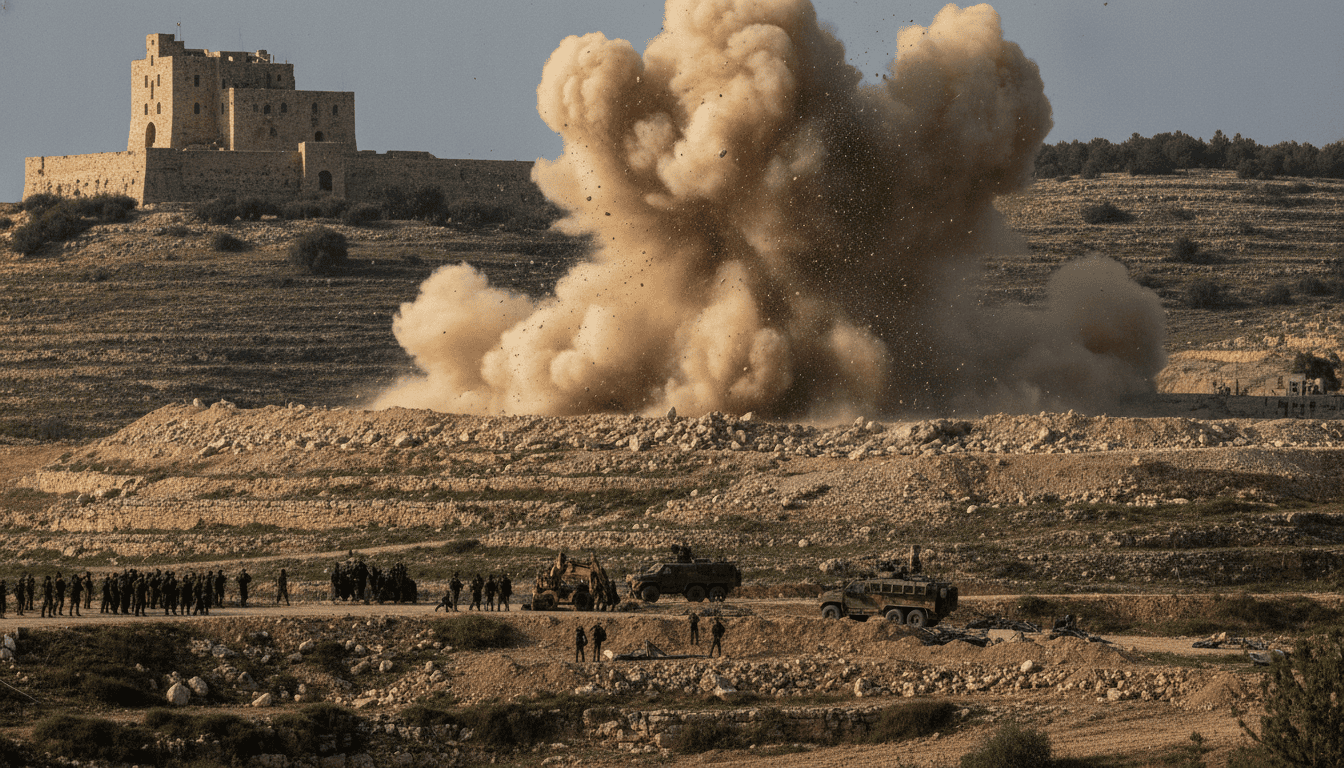
Israel says it blew up Hezbollah tunnels near UNESCO-listed Beaufort Castle
Israel says it blew up Hezbollah tunnels near UNESCO-listed Beaufort Castle with about 700 tons of explosives, causing damage and sparking regional protests.
Israeli forces detonated a network of what they described as Hezbollah tunnels near the UNESCO-listed Beaufort Castle late Friday, saying the explosions were intended to destroy infrastructure they claim was aimed at infiltrating Israel’s Galilee. The operation, announced by Prime Minister Benjamin Netanyahu and Defence Minister Israel Katz, was said to have used roughly 700 tons of explosives and followed weeks of heightened activity along the Israel-Lebanon frontier.
Explosions reported near UNESCO-listed Beaufort Castle
Lebanon’s National News Agency reported “very powerful explosions” around midnight close to the Crusader-era Beaufort fortress, which was added last week to UNESCO’s List of World Heritage in Danger. Witnesses and local correspondents said the blasts shattered windows in nearby homes and sent shockwaves across towns such as Qlayaa.
The site sits within a southern zone where Israeli forces have maintained a presence during operations that, according to Lebanese officials, have included demolition of caves and housing in al-Mansouri and Majdal Zoun. The UNESCO designation underscores concerns about cultural and civilian damage amid the fighting.
Israeli officials describe tunnel destruction as security measure
Israeli leaders framed the detonations as a targeted effort to dismantle what they called a “key part” of Hezbollah’s infiltration capabilities into northern Israel. Both the prime minister’s office and the defence ministry released statements asserting the tunnels posed a direct threat to Galilee communities and therefore warranted large-scale demolition.
Independent verification of the tunnels and the exact quantities of explosives used remains limited; regional journalists and officials rely on military statements and state media dispatches for immediate details. The Israeli account is being weighed alongside Lebanese reports of widespread blasts and property damage.
Civilian impact and local damage documented
Local reporting by the National News Agency detailed blown-out windows and residents shaken by the force of the night-time explosions, with shockwaves reported across southern Lebanese towns. NNA also said very large detonations were heard in areas including Yohmor al-Shaqif, Arnoun and Kfar Tebnit, compounding fears among civilians already displaced by months of conflict.
Lebanon’s Health Ministry reports, cited by local authorities, indicate that since early March the fighting has caused thousands of casualties, a figure that reflects a broader humanitarian toll as military operations extend into populated districts. Humanitarian and cultural protection concerns were amplified by the reported proximity of blasts to the newly listed Beaufort site.
International and regional political fallout
The latest detonations came despite a US-brokered framework agreement signed in Washington on June 26, intended to ease tensions and reduce cross-border hostilities. Lebanese officials have said the agreement did not halt all military actions, and critics in Lebanon argue the deal leaves substantial issues unresolved.
Lebanese President Joseph Aoun traveled to Ankara this week for talks with Turkish President Recep Tayyip Erdogan, reiterating demands for a full Israeli withdrawal and the return of displaced communities. Erdogan affirmed Ankara’s continued support for the Lebanese Armed Forces and offered assistance for reconstruction in southern Lebanon.
Domestic Lebanese responses and political criticism
Prominent Lebanese figures expressed scepticism about the Washington framework, with Druze leader Walid Jumblatt criticizing the pact as a “major trap” that speaks of redeployment rather than a complete Israeli withdrawal. His comments reflect widespread unease in Lebanon about the terms and implementation of any agreement with Israel.
Lebanese officials and political leaders are pressing for clearer guarantees on territorial withdrawal and civilian protections as Israeli operations persist. The domestic debate is likely to shape Lebanon’s diplomatic posture in the coming days, even as on-the-ground incidents continue.
Military movements and casualty figures
Israeli forces have reported advancing more than 10 kilometres into parts of southern Lebanon during recent operations, a movement that Lebanese authorities say has coincided with heavy bombardment and targeted demolitions. Those advances and the detonations have further complicated efforts to stabilise the frontier.
According to figures cited by Lebanese authorities, attacks since March 2 have resulted in 4,333 deaths and 12,236 injuries, marking a steep human cost to the months-long confrontation. Both sides continue to present contrasting narratives about the causes and objectives of recent actions.
The detonations near Beaufort Castle underline the fragility of tentative diplomatic arrangements and the continued risk to civilians and cultural heritage in southern Lebanon. International mediators and regional partners face pressure to translate framework agreements into concrete measures that prevent further escalations and protect non-combatants.
