
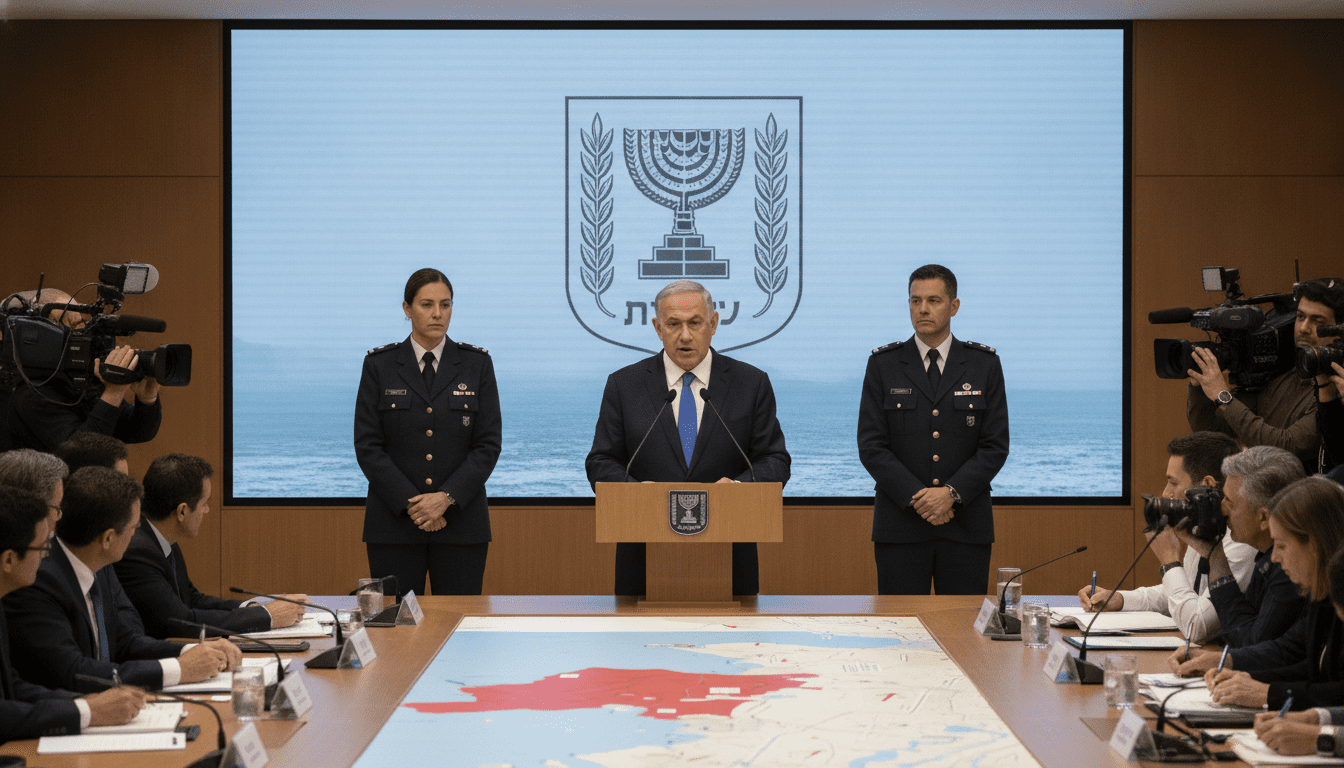
Israeli Officials Doubt U.S.-Iran Agreement Will Hold as Netanyahu Orders Military Preparations
Israeli officials tell Maariv they believe the U.S.-Iran agreement is unlikely to hold; Prime Minister Netanyahu has ordered military contingency planning and refused a proposed Lebanon withdrawal. (158 characters)
Israeli officials told the newspaper Maariv they believe the U.S.-Iran agreement is unlikely to endure, prompting Prime Minister Benjamin Netanyahu to order expanded contingency preparations across the security establishment.
Though Israel does not have full access to the agreement’s contents, the government has instructed the military and intelligence services to continue developing potential targets and planning for a range of scenarios.
The move reflects growing concern in Jerusalem about the deal’s durability and its implications for Israeli security in the region.
Officials tell Maariv they doubt the U.S.-Iran agreement will last
Sources cited by Maariv said senior Israeli officials judged the U.S.-Iran agreement to be fragile and vulnerable to breakdown in the months ahead.
Those officials expressed skepticism even as the full text has not been made available to Israeli authorities, a point that has fueled mistrust inside the government.
The assessment underscores a gap between U.S. diplomacy and Israeli expectations on Iran’s behavior and the mechanisms that would secure compliance.
Netanyahu orders military and intelligence preparations
The Prime Minister’s office directed the security establishment and the Israel Defense Forces to continue developing operational plans and potential target lists, according to the report.
Officials said the work includes contingency plans for rapid escalation, with the military refining strike options, intelligence collection priorities and logistical preparations.
The instructions indicate that, regardless of diplomatic developments, Israel intends to retain the capacity to act independently if it perceives an imminent threat.
Foreign minister stresses Israel was excluded from negotiations
Israeli Minister Zeev Elkin told reporters that Israel was not a party to the U.S.-Iran negotiations and therefore could not insist on seeing a memorandum of understanding that is not binding on it.
“Elkin emphasized that because Israel was not directly involved in the talks it cannot demand access to an agreement to which it is not a signatory,” the report said, reflecting a broader frustration in Jerusalem over limited input.
The comments reflect a diplomatic reality: close allies can still diverge on strategy and access, particularly where national security prerogatives are at stake.
Netanyahu rejected calls to approve withdrawal from Lebanon, sources say
Efforts were reportedly made to secure Israeli approval for a proposed withdrawal from Lebanon as part of related diplomatic discussions, but Netanyahu refused to endorse such a step.
Government sources said the prime minister viewed a premature withdrawal as a security risk amid ongoing hostilities and uncertain guarantees; the refusal highlights internal debate over risk management along Israel’s northern border.
An image circulated by news agencies showing a flag bearing the image of slain Hezbollah leader Hassan Nasrallah amid rubble in southern Lebanon on June 16, 2026, illustrates the heightened tensions that underpin such calculations.
Security analysts warn of wider regional consequences
Analysts say Israel’s decision to continue contingency planning reflects the judgment that the U.S.-Iran agreement — even if implemented — may not neutralize Iran’s regional proxies or its longer-term nuclear ambitions.
The possibility of gaps between the written terms of any accord and on-the-ground enforcement raises concerns in regional capitals and could spur parallel preparations by Israel and other states.
Diplomats and military planners in Jerusalem are reportedly preparing for scenarios ranging from renewed Iranian support for proxy attacks to direct violations of nuclear restrictions.
Israeli officials face a diplomatic balancing act: pressing allies for stronger guarantees and verification while preserving independent deterrent options.
The reported split — limited access to the agreement’s details alongside continued military readiness — highlights the tension between reliance on international diplomacy and the perceived need for unilateral security measures.
How Washington and Tehran respond to Israeli concerns, and whether further consultations with Jerusalem will be arranged, will shape the immediate strategic environment in the region.
The coming weeks are likely to test whether the U.S.-Iran agreement can withstand political pressures and whether Israel’s preparations will serve as deterrence, a hedge, or a source of further diplomatic friction.
