
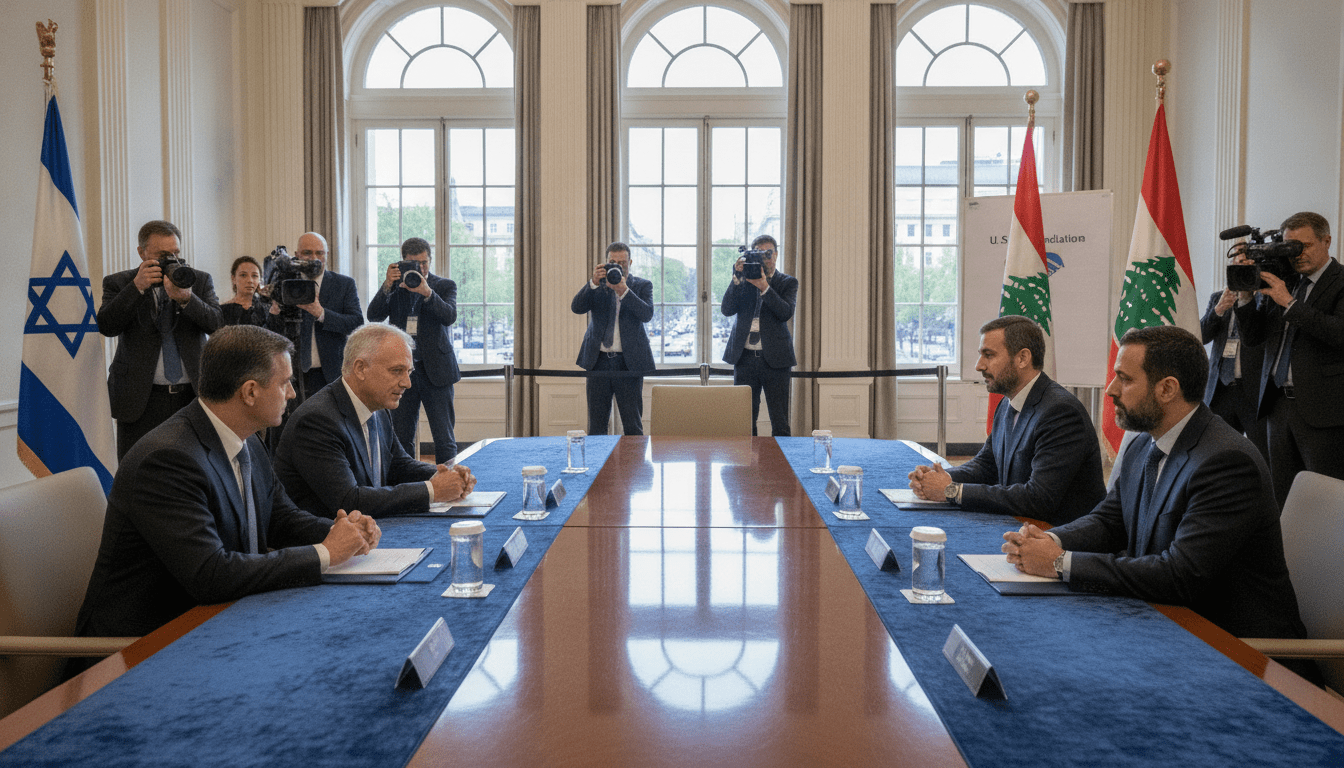
Israel-Lebanon talks set for Washington on June 23 and 25 after renewed ceasefire
U.S. hosts Israel-Lebanon talks in Washington on June 23 and 25, 2026, to cement a ceasefire and salvage the US-Iran memorandum amid renewed fighting.
The United States announced on June 19, 2026, that Israel-Lebanon talks will resume in Washington, D.C., with delegations scheduled to meet on June 23 and June 25, 2026, after both sides reported a fresh ceasefire.
The State Department framed the meetings as an opportunity for the two sovereign governments to advance negotiations aimed at reconstruction, stability and an end to recurrent hostilities.
U.S. announcement and diplomatic framing
The State Department said Secretary of State Marco Rubio held a telephone conversation with Lebanese President Joseph Aoun on June 19, 2026, stressing that bilateral talks represent the most viable path to recovery and peace.
U.S. officials portrayed the Washington sessions as follow-ups to a series of direct contacts between Israel and Lebanon that began with the first talks since 1993, held in April and continued in June.
Schedule and participants
The meetings are planned for June 23 and June 25, 2026, and will bring official Israeli and Lebanese representatives to Washington for bilateral negotiations.
Hezbollah is not a formal party to these talks, a factor U.S. and Lebanese officials acknowledge has complicated efforts to reach a comprehensive settlement on security and arms control in southern Lebanon.
Ceasefire developments and recent violence
The announcement came shortly after Israel and Hezbollah said they had agreed to a renewed ceasefire that followed days of intensified cross-border exchanges.
Despite ceasefire declarations, Israeli strikes in the most recent episode reportedly killed dozens in southern Lebanon, underscoring how fragile the pauses in fighting remain on the ground.
Lebanese demands and Hezbollah’s role
Lebanon’s government has repeatedly said it will seek measures to reduce armed non-state actors’ capacity, including moves to disarm Hezbollah as part of a U.S.-backed roadmap introduced after the November 2024 agreement.
At the same time, Beirut has pressed for Israeli withdrawal from positions in southern Lebanon; a June agreement text referenced withdrawal of Hezbollah forces north of the Litani River but did not demand a full Israeli pullback.
Impact on the U.S.-Iran memorandum of understanding
U.S. officials have warned that continued fighting threatens the broader U.S.-Iran memorandum of understanding designed to de-escalate the wider regional war involving Israel and Iran.
The MoU commits to protecting Lebanon’s territorial integrity and sovereignty, and diplomats say stabilizing the Israel-Lebanon front is essential to preserving that framework.
Regional reactions and political pressure
Iran’s foreign ministry spokesperson Esmaeil Baghaei accused Israel of seeking “permanent war,” comments that came as Tehran and Washington seek to maintain the broader MoU.
Meanwhile, the fighting has drawn rare public rebuke of Israel from U.S. President Donald Trump, reflecting mounting pressure in Washington to show progress toward de-escalation and tangible outcomes from the upcoming meetings.
Diplomatic hurdles ahead
Observers note several persistent obstacles: Hezbollah’s exclusion from formal talks, divergent Lebanese and Israeli demands on territorial withdrawals, and high domestic political stakes for leaders in Beirut and Jerusalem.
Analysts say success in Washington will likely require concrete confidence-building measures on the ground, an agreed timeline for security arrangements, and clarity on reconstruction financing.
The upcoming Washington meetings on June 23 and 25, 2026, are being pitched by U.S. officials as a chance to translate recent pauses in violence into durable agreements, but participants and regional observers caution that the path to lasting stability remains narrow and uncertain.
