
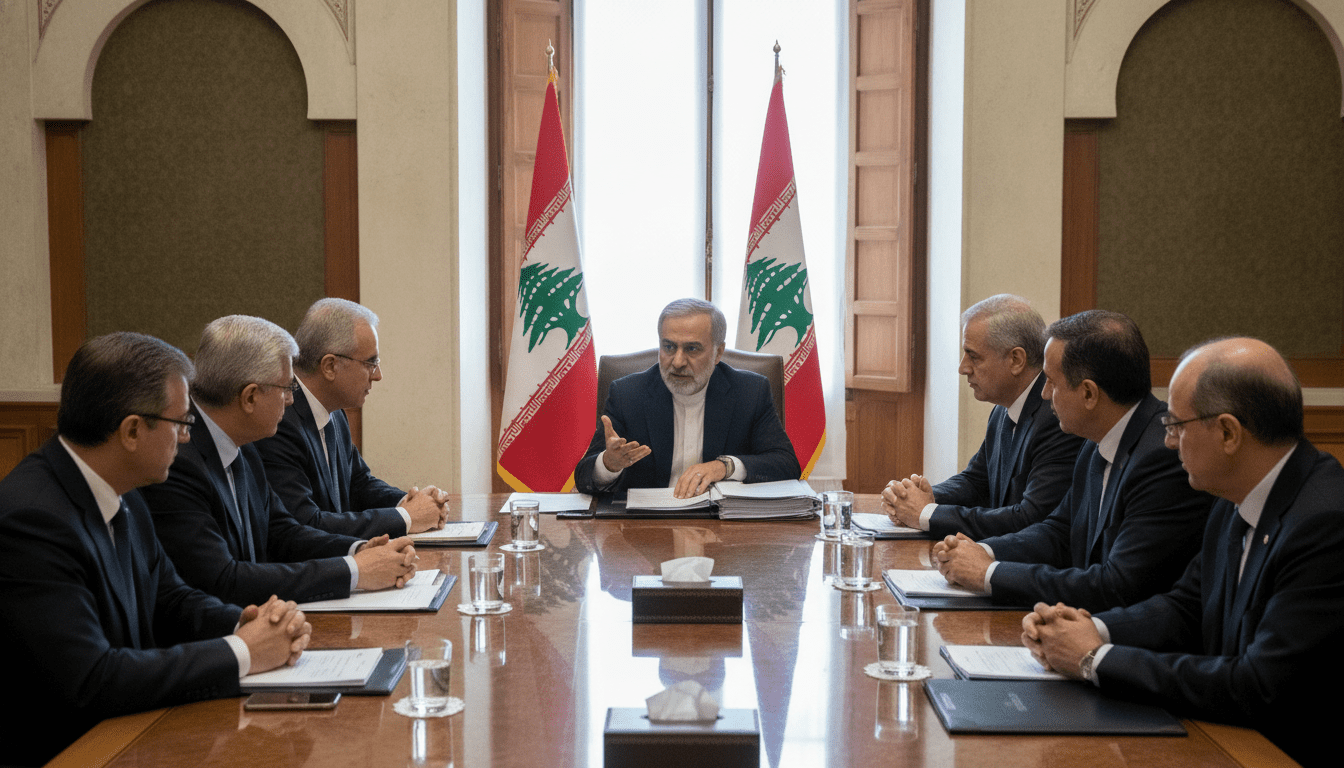
Araghchi says he discussed Lebanon provisions of US-Iran agreement with Lebanese leaders
Iran’s Abbas Araghchi says he discussed Lebanon-related provisions of the US-Iran agreement with Lebanese leaders amid conflicting reports on the pact’s scope.
Araghchi says he raised Lebanon provisions with Aoun and Berri
Iranian Foreign Minister Abbas Araghchi said on Monday, June 15, 2026, that he discussed the Lebanon-related provisions of the US-Iran agreement on Lebanon with Lebanon’s president and parliament speaker.
According to a post on Araghchi’s Telegram account, he held separate phone calls with President Joseph Aoun and Parliament Speaker Nabih Berri to convey Tehran’s interpretation of the deal.
Araghchi’s statement did not include a full text or detailed extracts of the Lebanon provisions, leaving key questions about implementation and scope unresolved.
The announcement follows several days of reporting and official comment that offered divergent accounts of whether the agreement explicitly addresses Lebanon or limits Israel’s operations there.
Telegram post leaves key questions unanswered
Araghchi’s Telegram message described the calls but provided no verbatim quotes from the Lebanese leaders or specific language from the agreement.
That paucity of detail has widened the factual gap between Iran’s public comments and media accounts that have described the pact in varying ways.
Analysts said the lack of a publicly released text of the Lebanon provisions makes independent verification impossible at this stage.
Observers also noted that reliance on social media posts for diplomatic announcements can complicate efforts by third parties to establish a consistent record of what was agreed.
Conflicting reports on linkage to Israeli actions
Media and regional officials have offered competing narratives about whether the US-Iran agreement ties its Lebanon clauses to Israel’s presence and ongoing cross-border attacks.
Some reports suggest the pact conditions certain measures on Israeli behavior, while other accounts portray the Lebanon language as more limited or advisory.
Because the different accounts vary on whether the agreement curbs or ignores Israeli operations, the status of protections for civilians and forces in southern Lebanon remains contested.
That uncertainty has practical consequences: troop deployments, rules of engagement, and United Nations monitoring in the area may hinge on how signatories interpret the same text.
Lebanese leaders’ responses and domestic politics
It was not immediately clear from Araghchi’s post whether President Aoun or Speaker Berri issued separate public statements confirming the substance of the calls.
Lebanese political figures often weigh external diplomatic undertakings against domestic balances of power, where positions on relations with Iran and Israel are politically sensitive.
Lebanon’s internal political alignment and security concerns could influence whether its leaders endorse, reject, or seek to modify any Lebanon-related measures.
If the Lebanese government or parliament requests clarifications, that could prompt further bilateral or multilateral discussions involving Washington, Tehran, Beirut and international organizations.
Regional implications and likely next steps
If the US-Iran agreement’s Lebanon provisions are interpreted broadly, they could affect Hezbollah’s posture, Israeli military planning, and the mandate of UN peacekeeping forces in southern Lebanon.
A narrower interpretation, by contrast, might limit the pact’s practical influence and leave existing security arrangements largely unchanged.
Diplomats and legal experts will likely press for a formal, published text or an authoritative joint statement to resolve divergent readings of the agreement.
Absent such clarification, military commanders and international monitors will face operational uncertainty that could increase the risk of miscalculation along the Israel-Lebanon frontier.
The immediate diplomatic trail is expected to include follow-up communications among Tehran, Beirut and Washington, as well as inquiries by European and United Nations interlocutors seeking to reconcile conflicting public accounts of the US-Iran agreement on Lebanon.
