
Iran Says Israeli Attacks on Lebanon Would Violate US-Iran Interim Agreement as Talks Open in Switzerland
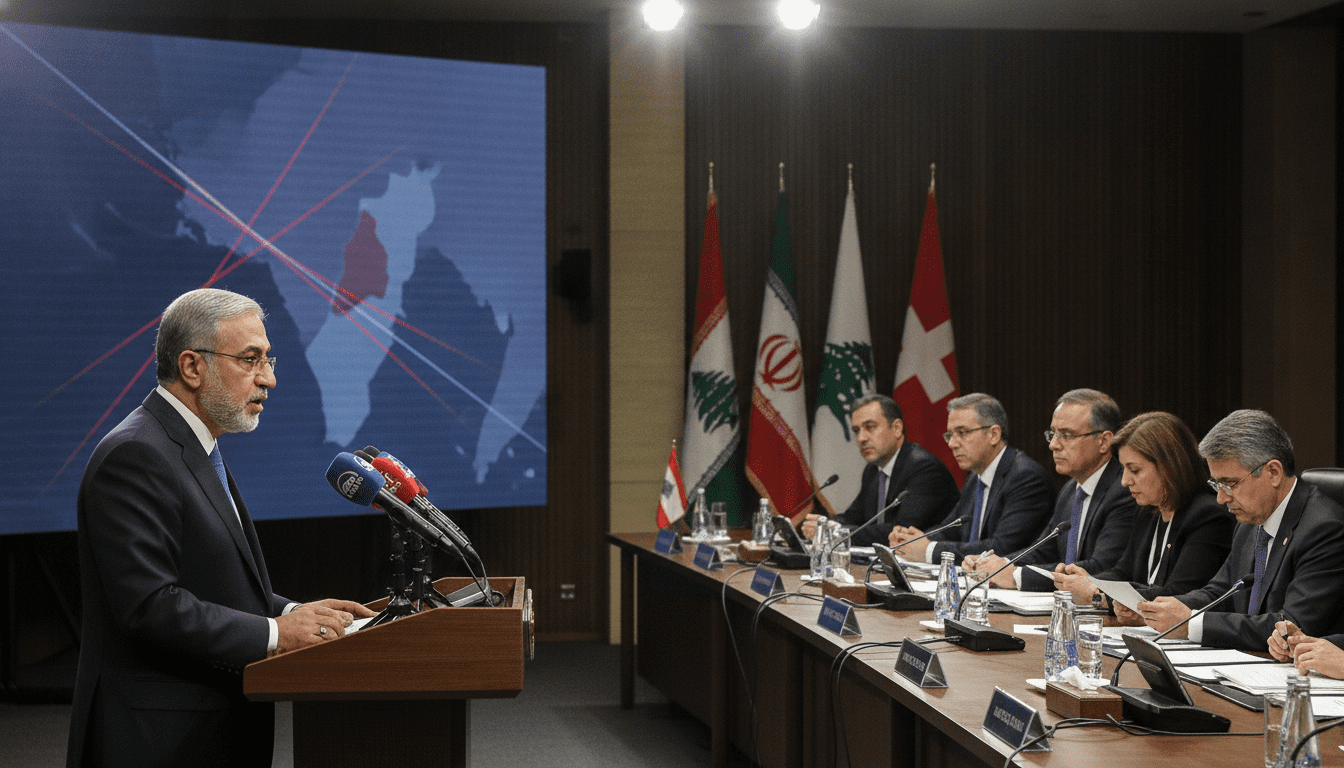
Iran warns Israeli strikes on Lebanon would breach the US-Iran interim agreement as new two-stage negotiations begin in Switzerland on Friday, June 19, 2026.
Iranian Foreign Minister Abbas Araghchi told reporters that any Israeli attack on Lebanon, or continued Israeli presence on Lebanese soil, would constitute a violation of the US-Iran interim agreement, a pact he described as defining reciprocal obligations between the parties. Araghchi framed the memorandum as a bilateral understanding that binds the United States and Israel on one side, with Iran and Hezbollah on the other, and he announced a resumption of talks to move toward a final settlement.
Araghchi Says Israeli Attacks Would Breach US-Iran Interim Agreement
Araghchi’s statement positions the interim agreement as immediately relevant to regional military activity and asserts that actions by a third party can trigger its breach provisions. He spoke amid heightened tensions in the region, signaling Tehran’s intent to treat Israeli operations in Lebanon as falling within the remit of the accord.
The declaration links security dynamics in the Levant to the broader diplomatic process between Washington and Tehran, raising the stakes of any military escalation. By publicly associating Israeli conduct with the agreement, Iran appears to be pressing the United States to exercise leverage over its regional ally.
Memorandum Framed as US-Israel Versus Iran-Hezbollah
According to Araghchi, the memorandum’s parties should be read as the United States together with Israel, and Iran together with Hezbollah, a framing that underscores Tehran’s view of the agreement as involving regional alignments rather than solely bilateral state-to-state commitments. This interpretation reflects Iran’s emphasis on its strategic partnerships and the role of non-state actors in regional security.
That framing may complicate diplomatic calculations: Washington has historically treated Hezbollah as a terrorist organization and Israel as an independent actor, while Tehran treats Hezbollah as a political-military partner. The differing categorizations could affect how obligations are enforced and who is held responsible for specific actions under the agreement.
Talks in Switzerland to Begin on Friday, June 19, 2026
Araghchi said the United States and Iran will begin a new round of negotiations in Switzerland on Friday, June 19, 2026, marking the official start of the interim agreement’s implementation phase and the launch of talks aimed at a final accord. He described the process as divided into two stages and said negotiators would initially focus on immediate security and reconstruction issues before moving to nuclear and sanctions matters.
The Swiss venue has frequently hosted sensitive diplomacy between Tehran and Western delegations, offering a neutral setting for complex bargaining. The announcement sets a clear timetable for both capitals and signals that Tehran expects tangible diplomatic engagement within days.
First Negotiation Phase to Address Hormuz and Naval Blockade
Araghchi said the first stage of talks will address security issues including the status of the Strait of Hormuz and the United States’ naval blockade, topics that have featured prominently in recent confrontations at sea. He also identified reconstruction demands tied to what he described as damage from US and Israeli bombardments of Iranian infrastructure.
Those maritime and blockade concerns raise immediate operational questions for both navies and for commercial shipping, given the strategic importance of Hormuz for global energy flows. By prioritizing these items, Iran appears intent on securing rapid practical measures to reduce the risk of kinetic incidents and to seek remediation for infrastructure losses.
Reconstruction Demands and Regional Security Implications
Araghchi’s reference to reconstruction reflects a broader Iranian insistence on addressing material and humanitarian consequences of military actions as part of any comprehensive settlement. Compensation, rebuilding and the restoration of services in damaged areas are likely to be key bargaining chips in the early phase of discussions.
Including reconstruction alongside maritime issues signals Tehran’s strategy to link immediate relief and security guarantees with longer-term political negotiations. The approach could broaden the agenda beyond narrow military de-escalation to encompass economic and civilian recovery measures.
Later Talks to Cover Nuclear Issues and Sanctions Relief
A second, later stage of negotiations will, according to Araghchi, focus on nuclear-related matters and sanctions relief that must be resolved to reach a final agreement. That sequencing places technical and legal issues on the agenda only after initial security and reconstruction concerns have been addressed.
This two-stage format suggests Tehran and Washington hope to build mutual confidence through early, tangible steps before tackling the most contentious topics. Negotiators will face complex technical, verification and legal questions when they transition to nuclear frameworks and the phased lifting of international sanctions.
Final talks will need to reconcile differing timelines, verification mechanisms and the sequencing of sanctions relief, and analysts say progress will hinge on sustained diplomatic engagement and clear enforcement measures.
The diplomatic calendar now centers on the Swiss meetings beginning June 19, 2026, and on whether the two sides can convert the interim agreement’s promises into enforceable steps that reduce regional tensions and set the stage for a comprehensive settlement.
