
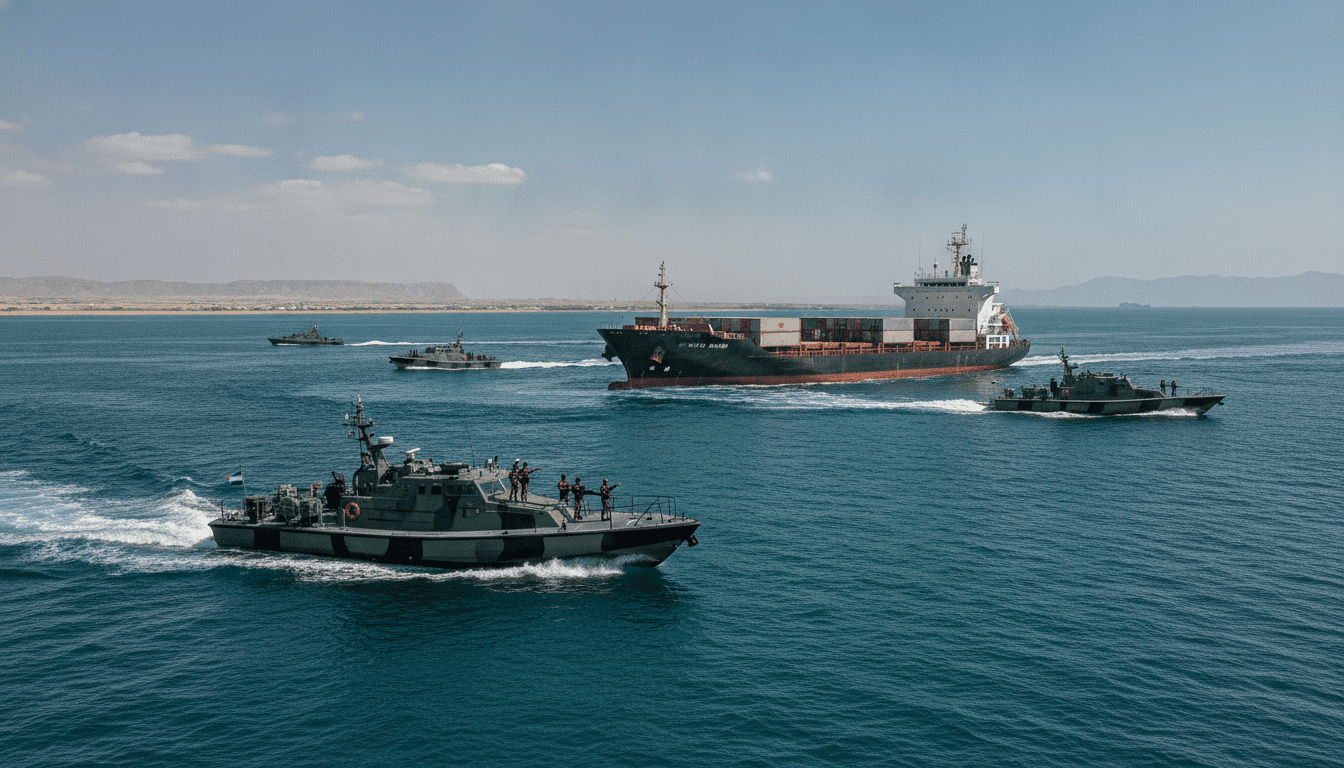
Iran Revolutionary Guards Assert Control Over Passage Through Strait of Hormuz
IRGC warns ships not to transit the Strait of Hormuz without Iran’s permission, stoking concerns over Tehran’s proposed maritime fees and navigation rights.
Iran’s Islamic Revolutionary Guard Corps issued a warning on Thursday that any vessel attempting to cross the Strait of Hormuz without prior authorization will face action, a declaration that puts the strategically vital waterway at the center of renewed international scrutiny. The statement emphasized that Tehran has designated an official passage for transits and described unauthorized crossings as dangerous and unacceptable. The announcement comes as talks continue over Iran’s plan to impose maritime service fees, a step the United States and other countries contest as incompatible with the strait’s status under international law. Shipping firms, regional governments, and energy markets responded quickly to the declaration, noting the potential consequences for global oil and gas flows.
IRGC Declares Authorized Route for Transit
Iran’s Revolutionary Guards said the only approved route for passage is the corridor announced by Tehran, indicating tighter control over movements through the strait. The statement framed the requirement as a safety and sovereignty measure and warned that teams would respond to vessels that fail to seek clearance. Analysts say the language signals an intent to enforce national rules more aggressively than in recent years. The declaration does not specify the operational procedures for authorizing individual transits or the penalties for noncompliance.
Tehran Frames Charges as Maritime Service Fees, Not Tolls
Iran has described its proposal as a set of maritime service fees intended to cover patrols, search-and-rescue and navigational assistance in its territorial approaches. Tehran rejects the label “toll,” arguing the charges relate to services provided in waters it controls, whereas the United States and many maritime lawyers maintain that the Strait of Hormuz functions as an international waterway. That legal disagreement lies at the heart of diplomatic friction and complicates any effort to reach an operational compromise. Observers note the distinction matters because it affects whether Tehran may lawfully require payments from foreign-flagged commercial ships.
Potential Disruptions to Global Energy Shipments
The Strait of Hormuz is a choke point for a significant share of seaborne oil and liquefied natural gas exports, and any escalation in controls or interdictions could ripple through global energy markets. Traders and shipping companies monitor the passage closely for signs of delays, rerouting or increased insurance premiums that raise shipping costs. Past incidents and periodic closures during regional conflict underscore how sensitive supply chains are to changes in passage rules. Shipping industry representatives have urged clear, predictable rules to avoid logistical bottlenecks and price volatility.
U.S.-Iran Negotiations and Legal Dispute Over Navigation Rights
The warning arrives amid ongoing negotiations between Tehran and Washington where the status of the strait and any Iranian charges have been a sticking point. U.S. officials have long maintained that the strait is an international waterway through which ships enjoy the right of transit passage, and they oppose any levy that would impede that principle. Iranian officials counter that their security concerns and coastal jurisdiction justify regulation and fees for services within their claimed maritime zones. Diplomatic channels are exploring whether a limited operational arrangement can be negotiated without conceding on the underlying legal positions.
Regional Security and Responses from Neighboring States
Countries bordering the Persian Gulf and broader Middle East maritime partners are closely following Iran’s pronouncement and assessing its implications for naval deployments and convoy operations. Several Gulf states rely heavily on the strait for their exports and have called for assurances that commercial traffic will remain free and safe. International naval coalitions that have previously escorted merchant ships through the area have signaled readiness to maintain freedom of navigation, while also urging de-escalation. Maritime insurers and classification societies are revising risk assessments as states and companies weigh alternative routing and contingency plans.
The Revolutionary Guards’ warning over unauthorized transits of the Strait of Hormuz underscores how maritime rules and geopolitical tensions remain deeply intertwined in the region. With talks between Tehran and Washington unresolved on the question of fees and legal status, commercial shippers and governments face a period of heightened uncertainty that could influence operations, insurance costs and energy markets in the weeks ahead.
