
Iran World Cup exit sealed as Austria’s stoppage‑time equaliser sparks fresh controversy
Iran World Cup exit confirmed after Austria’s late 3-3 draw with Algeria; players and officials decry visa, travel and logistical hurdles that marred the campaign.
Iran World Cup exit was confirmed in dramatic and contentious fashion after Austria’s stoppage‑time equaliser in Kansas City left Iran eliminated from the 2026 tournament. The result in Group J — a 3-3 draw between Austria and Algeria on Saturday night — combined with Iran’s earlier 1-1 draw with Egypt in Seattle to end Tehran’s hopes of reaching the knockout phase. Players and officials immediately linked the on‑field disappointment to a series of off‑field problems, including restricted travel, visa delays and limited local support that they say undermined the team’s preparation.
Late goal in Kansas City decides Iran’s fate
Algeria looked set to take a result that would have boosted Iran’s chances when they scored in the 93rd minute against Austria. That dramatic lead threatened to eliminate Austria and to hand Iran a path into the last 16, but Austria levelled in the sixth minute of stoppage time to make the match a 3-3 draw. The swing of fortune in Kansas City meant that Iran, which had already drawn with Egypt and Neuseeland and held Belgium to a scoreless game, could no longer advance despite fighting through its group fixtures.
Players attribute failure to logistical and visa problems
Iranian captain Mehdi Taremi and coach Amir Ghalenoei publicly criticised the tournament’s handling of their team’s travel and accreditation. They said Iran was permitted to enter the United States only for its first two group matches and that the squad was forced to return overnight to its base in Tijuana after the Egypt game. Taremi said key staff — including logistics personnel, media officers and a vice‑presidential figure from the federation — were still unable to obtain visas, a situation the players argued left them without essential support during crucial recovery and media duties.
Fifa’s role and Infantino’s assurances questioned
The squad also pointed to commitments from Fifa president Gianni Infantino, who had publicly pledged support before and during the tournament. Players said Infantino visited the dressing room after Iran’s opening match and promised assistance, but that practical remedies did not materialise. The criticisms highlight a gap between diplomatic assurances and the concrete logistical arrangements required to support a national team competing across multiple venues and countries.
Protests and politics coloured matches in Seattle
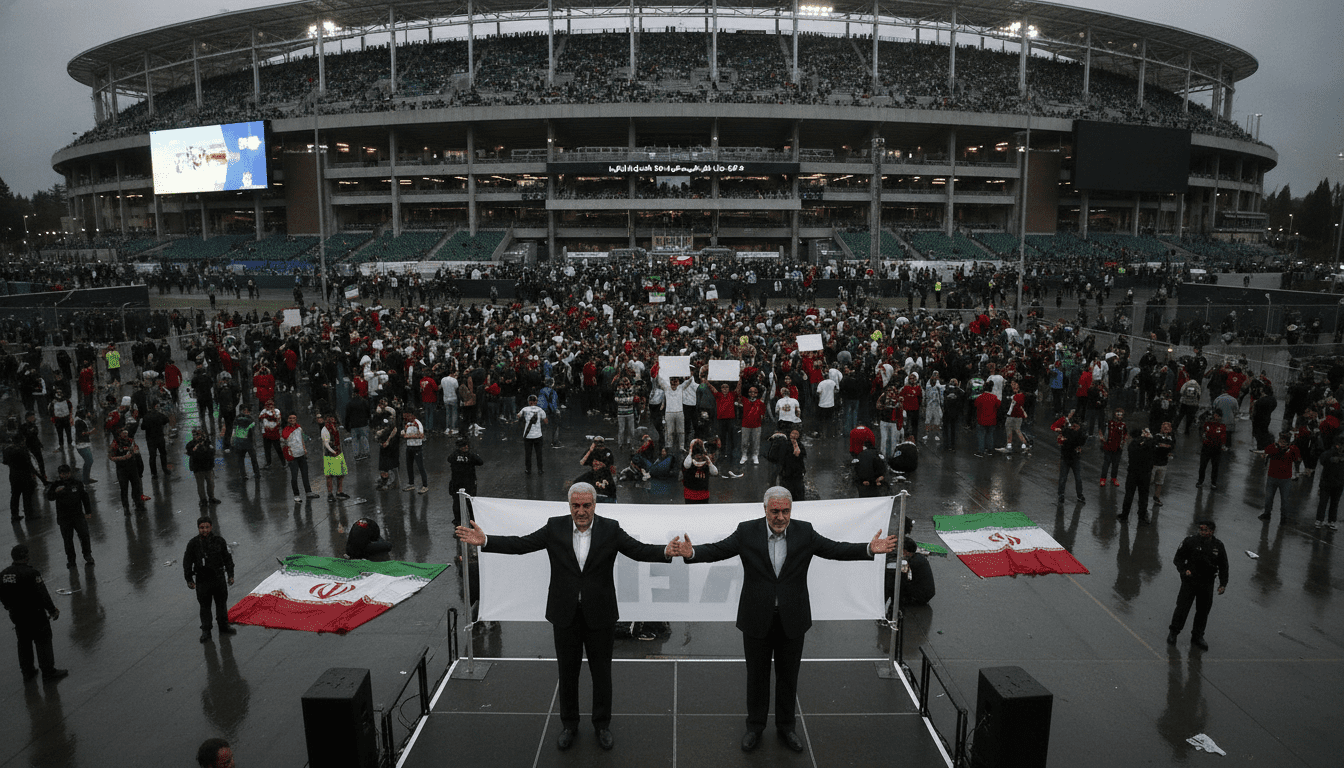
The political backdrop to Iran’s campaign was visible around stadiums, particularly in Seattle, where Iran drew 1-1 with Egypt. Crowds included pro‑regime flag‑bearers and vocal protesters who booed the Iranian anthem and displayed placards highlighting detained and killed athletes and activists. Diaspora communities and local demonstrators used the match as a stage for political expression, complicating the atmosphere for players who largely avoided public political statements while on the field.
Key players and missed moments in Iran’s campaign
On the pitch, Ramin Rezaeian emerged as one of Iran’s stronger performers, scoring and being named player of the match against Egypt, but he and others lamented late misfortune. Mehdi Taremi missed a penalty in the same game and later described the tournament as “a disaster,” reflecting the emotional toll of narrow margins and controversial decisions. Iran’s three draws — against New Zealand, Belgium and Egypt — showcased resilience but not the decisive finishing needed to secure progression.
Team reaction and wider football implications
Coach Ghalenoei’s description of his squad as “the most oppressed team at the World Cup” encapsulated the players’ frustration with perceived external obstacles. The combination of restricted movement, uncertain staffing, and politically charged environments raised questions about how tournament logistics and host nation policies can disproportionately affect teams from politically sensitive states. The complaints are likely to prompt further scrutiny of visa arrangements and matchday support for delegations in multi‑host tournaments.
Iran leaves the 2026 World Cup having shown competitiveness on the field but left with deep dissatisfaction off it. Players emphasised their desire to bring joy to supporters at home, a goal that went unmet amid late‑game drama in Kansas City and a campaign overshadowed by non‑sporting issues. The federation and Fifa will face pressure to account for the logistical breakdowns and to ensure that future tournaments provide equitable conditions for all teams, regardless of political context.
