
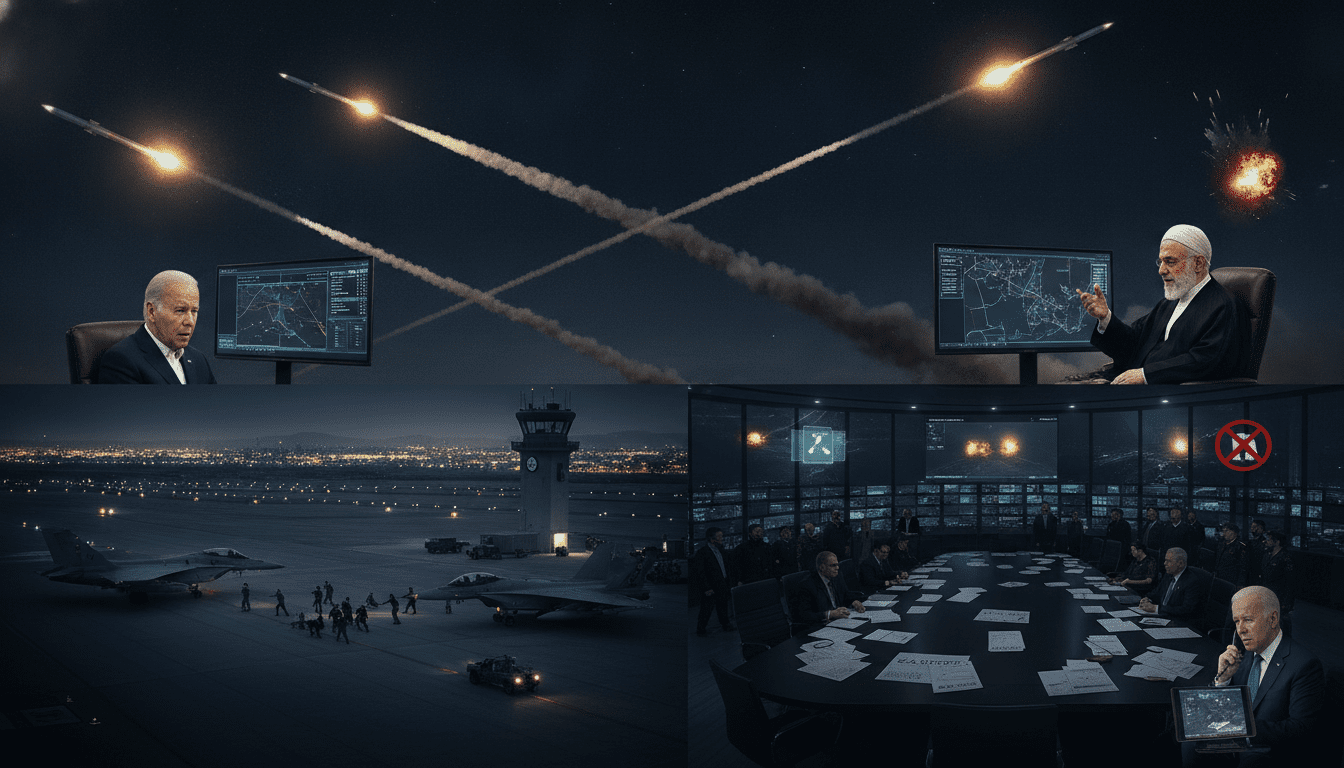
Iran attacks Israel as ceasefire unravels; Israel strikes back overnight
Iran attacks Israel in first bombardment since April ceasefire, prompting Israeli air strikes and fresh regional threats as global leaders urge de-escalation.
The fragile ceasefire in the Iran war fractured on Sunday as Iran launched the first direct missile barrage at Israel since an April agreement, prompting Israel to carry out overnight air strikes inside Iran and triggering new threats from Iran-backed militias across the region. U.S. President Donald Trump reportedly urged Israeli restraint in private calls, but Israeli forces nonetheless struck targets in Iran in the early hours of Monday, raising alarms about a rapid return to wider hostilities. The exchanges came amid ongoing diplomacy aimed at extending the ceasefire and reopening strategic waterways, deepening doubts about whether talks can survive the latest salvo. (apnews.com)
Iran launches missiles at northern Israel late Sunday
Iranian forces fired multiple missiles toward northern Israel late on Sunday in what officials described as the first such attack since a ceasefire took effect in early April. Tehran’s state-affiliated outlets and statements from the Islamic Revolutionary Guard Corps framed the action as retaliation for earlier strikes attributed to Israel in Lebanon, including operations around Beirut. The strikes hit near military installations and civilian areas, prompting air-raid warnings and localized damage in northern communities. (aljazeera.com)
Israel conducts night air strikes on Iranian targets
Hours after the Iranian barrage, Israel reported an operation targeting Iranian military infrastructure, including air defence systems and a petrochemical facility in Khuzestan province, according to Iranian media and Western reporting. Israeli officials described the strikes as limited but precise, aimed at degrading Iran’s ability to sustain missile launches toward Israeli territory. International monitors cautioned that such counterstrikes risk a tit-for-tat escalation that could expand fighting beyond contested border zones. (axios.com)
U.S. appeals for restraint while pressing to preserve the ceasefire
Washington moved quickly to contain the fallout: President Trump told U.S. media he had urged Prime Minister Benjamin Netanyahu to avoid broad retaliatory actions, and later publicly called for both sides to stop shooting immediately. U.S. officials have been mediating an extension of the April ceasefire and seeking Tehran’s cooperation to reopen the Strait of Hormuz, goals that are now jeopardized by the renewed exchanges. Diplomats warned that any further strikes could undercut months of back-channel negotiations and hamper efforts to stabilise energy markets. (axios.com)
Hezbollah and Houthi statements widen the risk of regional contagion
Alongside the Iran–Israel exchange, Iran-aligned groups issued fresh threats. Lebanon’s Hezbollah reportedly fired at northern Israel earlier in the day, and Houthi rebels in Yemen signalled support for attacks on Israeli targets, raising the prospect of a multi-front confrontation across the eastern Mediterranean and Red Sea corridors. Analysts said the involvement of proxy forces increases the unpredictability of the conflict and complicates efforts by third-party mediators to broker a longer-term pause. (apnews.com)
Ceasefire agreed in April now appears precarious
The ceasefire that took effect in early April had briefly tamped down large-scale exchanges after weeks of intensive strikes between Iran and a coalition that included U.S. and Israeli operations. That truce was central to U.S. efforts to de-escalate and to proposals to reopen Iran’s shipping lanes, but incidents since April had already strained its terms. Sunday’s missile salvo and subsequent Israeli response mark the most serious breach of the ceasefire framework and raise questions about whether negotiators can quickly repair the agreement. (en.wikipedia.org)
International reaction: calls for de-escalation and diplomacy
European capitals and other global actors urged restraint and immediate dialogue to prevent broader war, with several leaders calling for renewed mediation and humanitarian protections for civilians caught near front lines. Energy market watchers warned that a sustained reopening of hostilities could push oil and shipping prices higher if the Strait of Hormuz becomes contested again. Humanitarian organisations reiterated concerns about civilians in Lebanon, Iran and northern Israel as the fighting threatens to reverse fragile relief efforts. (apnews.com)
The coming days will be decisive: diplomats say whether leaders can curb retaliatory impulses and return to negotiations will determine if the April truce can be preserved or whether the region slides back toward a larger, more destructive confrontation.
