
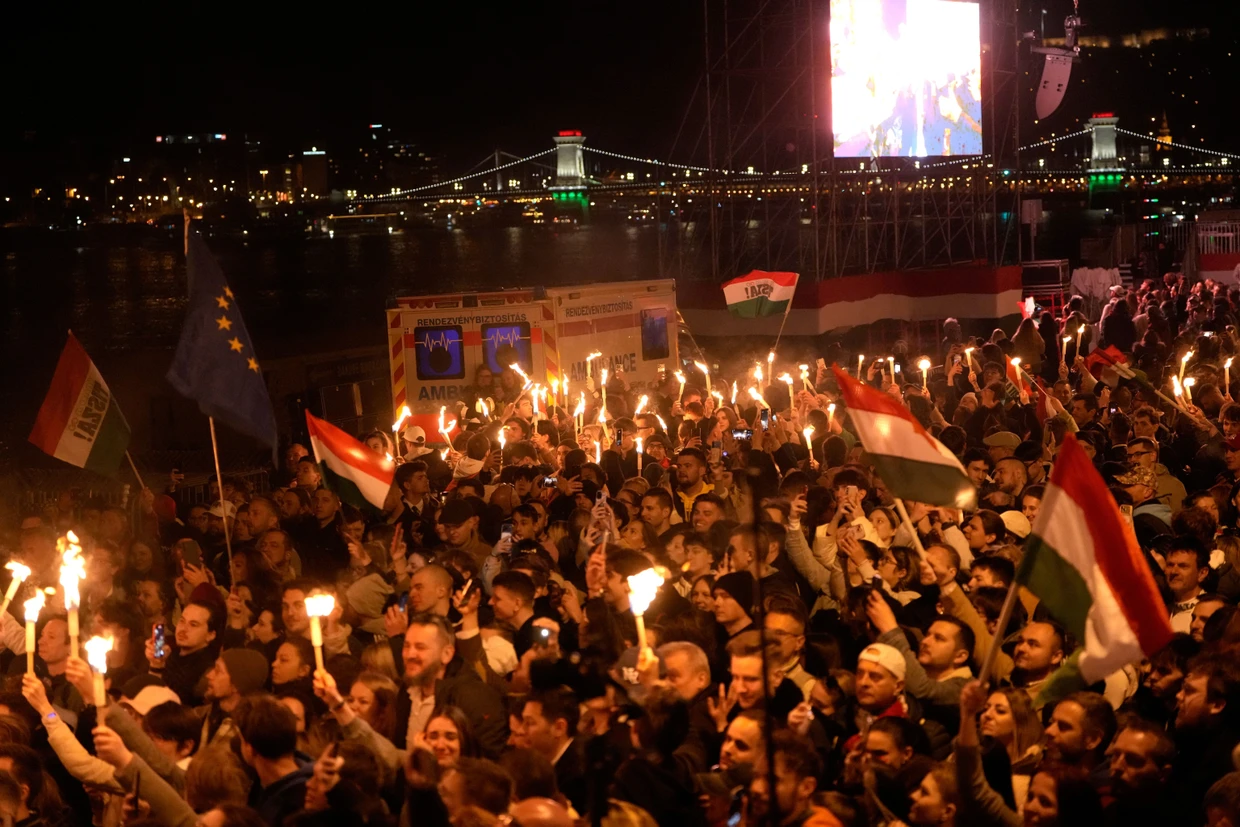
EU funds for Hungary at stake after Magyar win as €17bn remains frozen
Péter Magyar’s unexpected victory raises fresh hopes that EU funds for Hungary could be released, but Brussels insists on concrete reforms and deadlines before unfreezing the blocked €17 billion.
Péter Magyar’s election has thrust the fate of EU funds for Hungary into the spotlight, with Brussels signalling readiness to engage but setting firm conditions for unlocking financial support. The European Commission has kept roughly €17 billion suspended over concerns about rule-of-law breaches under the previous government, and officials say progress on reforms will determine whether those payments flow again.
Brussels signals conditional engagement
The Commission’s leadership has publicly offered to work closely with Hungary’s new government to expedite any release of frozen funds. Commission President Ursula von der Leyen said the bloc would move swiftly if Budapest delivers the measures Brussels requires. However, the overture is conditional: officials expect verifiable legal and administrative changes before funds tied to rule-of-law safeguards are reinstated.
European diplomats and Commission staff stress that procedural benchmarks must be met, not merely announced. That leaves the new administration with the task of translating political pledges into concrete legislative and institutional steps acceptable to EU watchdogs.
Poland’s example raises expectations
Supporters of Magyar point to the precedent set in Warsaw after the 2023 government change as a reason to be optimistic. When the government in Poland shifted in late 2023, the European Commission moved relatively quickly to announce the release of hundreds of billions in withheld support, in part as a reward for the incoming administration’s initial reform moves.
Those events are being cited in Budapest as evidence that a credible government change can prompt a rapid thaw in EU relations and funding. Yet Brussels framed the Polish case as a trust-building decision tied to reforms already under way, suggesting Budapest will need to show similar concrete momentum.
A looming August deadline
Time is pressing for Magyar’s team. Around €10 billion of the frozen funds is tied to deadlines that expire at the end of August unless required reforms are formally adopted. EU officials and diplomats say achieving the necessary legal changes in a matter of months will be a formidable task, given the procedural steps and political negotiation required in both Budapest and Brussels.
That calendar raises the prospect of a politically charged autumn if deadlines are missed. For the new government, missing the cutoff could mean prolonged financial constraints that would complicate early economic policy objectives.
Markets respond to pro-EU signals
Financial markets have already reacted to the altered political landscape in Hungary. The forint strengthened notably after the election outcome, joining a broader rally in Hungarian equities and sovereign debt driven by investor expectations of a more EU-compatible policy stance. Analysts at Raiffeisen Capital Management noted the currency’s gains and improved sentiment in bond markets as indicators of increased investor confidence.
Banks and brokerage houses including Citi have flagged that unlocking EU funds would likely boost growth, shrink budget deficits and create room for eventual monetary easing, assuming fiscal discipline accompanies any inflows.
Credit agencies warn on fiscal consolidation
Despite the upbeat market response, rating agencies urge caution. S&P and other credit-watchers emphasize that restoring fiscal credibility is essential to sustain any improvement in sovereign risk metrics. Hungary’s public finances showed elevated borrowing early in the year, bringing debt and deficit trajectories closer to concerning thresholds, and agencies have warned that without a credible medium-term consolidation plan a downgrade remains possible.
Analysts say that unlocking EU transfers would help Hungary’s fiscal picture only if the government resists new structural increases in spending that could offset the temporary relief from external funds.
Reform priorities set by the new government
Magyar’s platform signals a mix of continuity and change: he has pledged to tackle corruption, recover misused public assets and recalibrate state-business relations while preserving politically sensitive measures such as subsidised household energy prices. His team has proposed ramping up investment in health care, education, infrastructure and research — areas officials say suffered neglect.
On the business climate, Magyar has indicated a shift away from punitive, ad hoc measures against foreign firms, aiming to restore predictability and investor confidence. That policy pivot is presented as central to re-engaging foreign capital and reinvigorating long-term growth.
German industry calls for predictability
Germany’s corporate representatives, a key investor group in Hungary, have welcomed the prospect of a more stable and market-friendly environment. The vice president of the German Eastern Committee underscored that German firms want legal certainty, rule-based regulation and a level playing field, all prerequisites for renewed investment flows.
Business leaders argue that a return to predictable rules and fair competition could position Hungary as an industrial hub that complements wider European competitiveness goals, mirroring the transformation seen in neighbouring markets after policy shifts.
The immediate horizon for Budapest will test whether political momentum can be converted into institutional reforms meeting Brussels’ standards. Success would free substantial EU support and ease short-term financial strains; failure would keep Hungary mired in funding restrictions and heighten fiscal scrutiny.
