
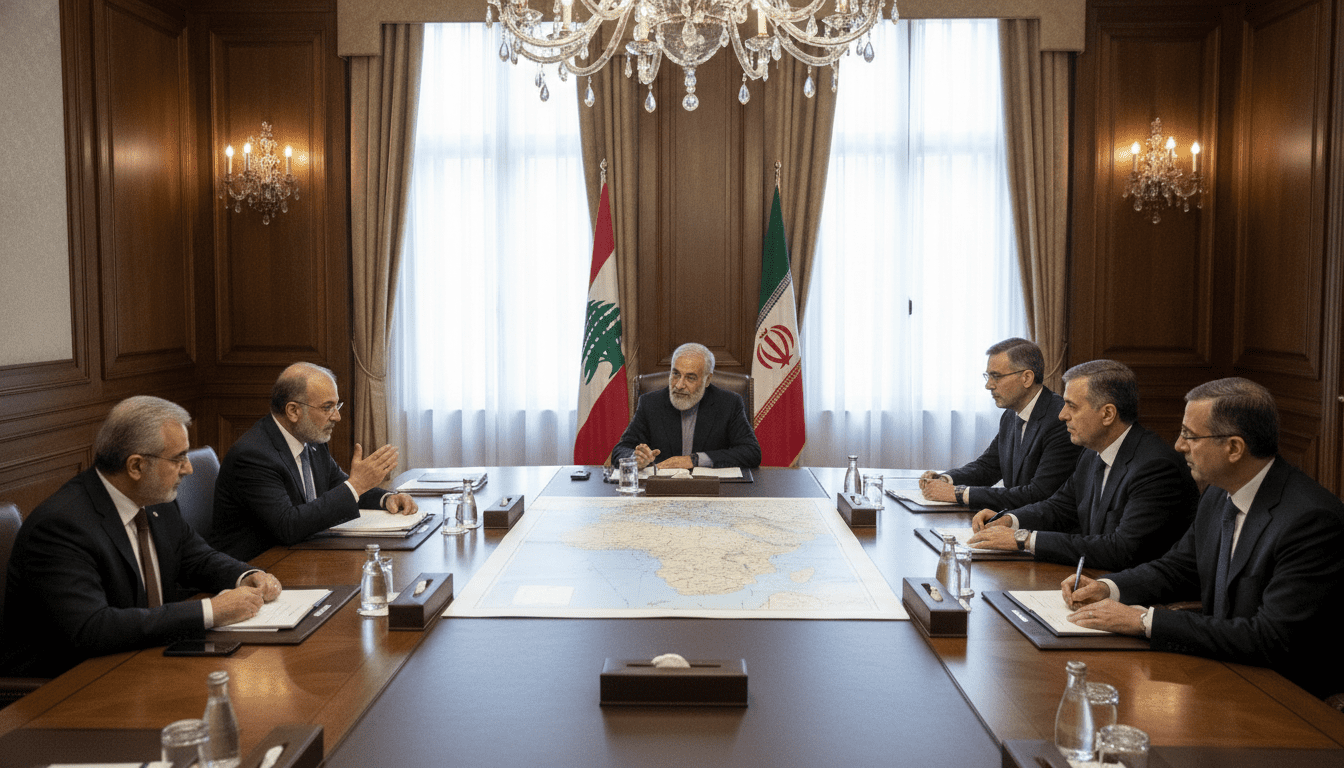
Hezbollah says Iran pledged to press for Israeli withdrawal from Lebanon in US talks
Hezbollah told Reuters on June 16, 2026 that Iran has pledged to push for an Israeli withdrawal from Lebanon during its negotiations with the United States, a move that could link the status of southern Lebanon to wider US‑Iran talks.
Hezbollah’s claim that Iran will demand an Israeli withdrawal from Lebanon in discussions with Washington marks a potentially significant escalation in diplomatic bargaining over the region. The group told Reuters on Tuesday that Tehran has made assurances it will insist Israel remove its forces from Lebanese territory as part of any broader negotiations with the United States. Hezbollah also said there would be “no nuclear deal between Iran and the United States unless the Israelis withdraw,” a formulation that connects nuclear diplomacy to battlefield outcomes.
Hezbollah statement and Iran’s pledge
Hezbollah relayed the assurances to Reuters, presenting Iran’s commitment as a formal demand it expects will be raised in US‑Iran negotiations. The group framed the pledge as a condition for progressing toward any agreement with Washington, signaling that military and territorial disputes could become bargaining chips in diplomatic talks. Reuters reported the comments on June 16, 2026, citing Hezbollah sources.
Hezbollah’s announcement did not include verbatim documents of the pledge or independent confirmation from Iranian or US officials. Both Tehran and Washington have historically been cautious in publicly linking separate negotiations to territorial terms, so the claim introduces a new, contested element into already complex diplomacy.
Text of the demand and public quotes
In its remarks to Reuters, Hezbollah quoted a stark formulation that tied a possible nuclear deal directly to Israel’s withdrawal from Lebanon. The group said there would be “no nuclear deal between Iran and the United States unless the Israelis withdraw,” framing withdrawal as a precondition rather than a parallel objective. That language, as reported, escalates the rhetoric by converting a local security issue into a potential condition of international agreement.
Analysts caution that public declarations by armed groups can serve multiple purposes, from domestic messaging to influencing negotiators. Without corroboration from Iranian or US negotiators, the exact status of any such pledge — whether tactical, conditional, or formally adopted into a negotiating mandate — remains unclear.
Damage and displacement in southern Lebanon
The announcement comes against the backdrop of heavy damage and civilian displacement in southern Lebanon. Photographs from June 15, 2026 show residents returning to the ruined historic market in Nabatieh, a town that has suffered from recent fighting. The scene, captured by AFP photographer Mahmoud Zayyat, underscores the local humanitarian toll that informs political demands over territorial control.
Civilians in border areas have faced repeated disruptions, with infrastructure damaged and many families displaced. Humanitarian organizations have repeatedly warned that continued hostilities and military presences complicate relief delivery and prolong civilian suffering.
Diplomatic context: US‑Iran talks and regional linkages
The claim links two parallel diplomatic tracks: negotiations between Washington and Tehran, and the local ceasefire and force posture in Lebanon. Reports in mid‑June 2026 indicated a flurry of diplomatic movement in the region, with multiple actors seeking to capitalise on de‑escalatory openings. If Iran were to insist on Israeli withdrawal as a negotiating term, it would represent an attempt to broaden the scope of talks beyond nuclear or sanctions issues.
US and Iranian priorities have not publicly aligned on such territorial outcomes, and Washington has historically worked through international institutions and regional partners to address cross‑border security concerns. Any linkage that conditions an Iran‑US agreement on Israeli troop movements in Lebanon would therefore reshape the negotiation agenda and raise concerns among other regional stakeholders.
Israeli military posture and statements
Israeli officials have signalled a continuing commitment to military operations and presence in neighbouring territories in recent days. On June 15, 2026, Israel’s defence minister said Israeli forces would remain in Lebanon, Syria and Gaza indefinitely, remarks reported by AFP that reflect a cautious approach to redeployment. Those statements contrast sharply with Hezbollah’s reported expectation of a withdrawal.
Israel has cited security threats from armed groups across its borders to justify extended deployments, arguing that control of particular areas is necessary to prevent renewed attacks. Any diplomatic push for withdrawal would therefore confront firm political and military objections inside Israel.
Regional implications and possible scenarios
If Iran formally makes an Israeli withdrawal from Lebanon a negotiating demand, the ripple effects could be substantial. Such a linkage would force regional and international mediators to reconcile competing priorities: Iran’s strategic aims, Israel’s security demands, Lebanese sovereignty concerns, and US diplomatic objectives. The complexity could slow progress at the negotiating table or, alternatively, create leverage that produces broader concessions on multiple issues.
Observers note several possible outcomes: the demand could be rejected outright by Washington, prompting further entrenchment; it could be relegated to separate talks focused on troop withdrawals and security arrangements; or it could be used as a negotiating card to obtain concessions on sanctions or nuclear-related issues. The practical implementation of any withdrawal would also raise questions about verification, timelines and the role of international monitors.
Hezbollah’s public account of Iran’s pledge adds a new and volatile element to already fraught diplomacy, projecting local battlefield dynamics into the arena of great‑power negotiations and underscoring the interdependence of military, humanitarian and diplomatic concerns in the region.
