
Green Party men’s paper ignites internal debate over “modern masculinity” and outreach to young men
Green Party men’s paper on ‘modern masculinity’ ignites internal row after Spiegel report, exposing splits over feminism, party image and outreach to young men.
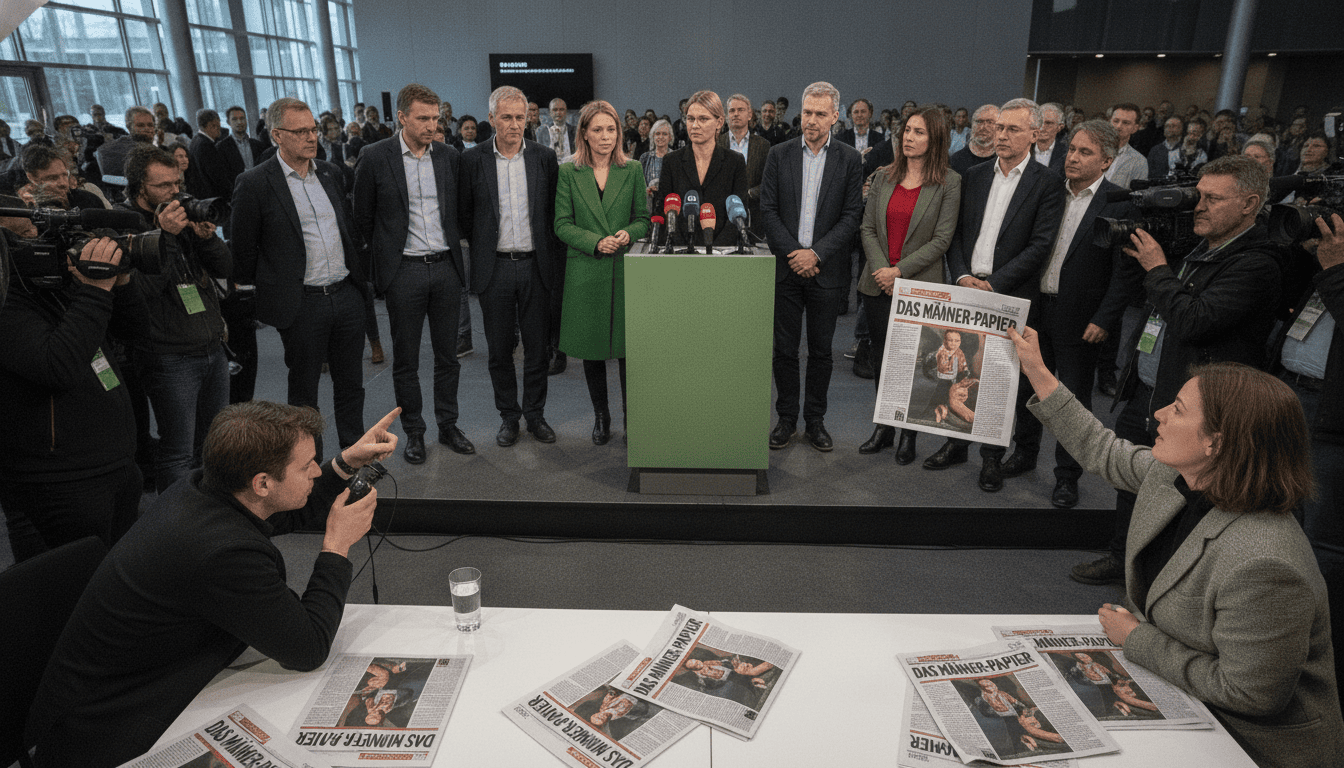
The Green Party men’s paper — a manifesto titled “Strong men take responsibility — An invitation for modern masculinity” — has provoked a heated dispute within the party after coverage by Der Spiegel. The document, authored and signed by 15 Greens, argues that feminism has successfully defined what men must not be but has failed to offer a positive vision of masculinity, a point that the paper’s authors and critics alike now debate. The Spiegel article, which combined reporting on the text with staged photographs of several male politicians at gyms and boxing rings, amplified tensions and pushed the controversy into the parliamentary group meeting. Party officials are racing to contain the fallout ahead of regional elections, even as the substantive questions about outreach to young men remain unresolved.
Spiegel coverage and public staging
The magazine’s report did more than reproduce the text; it visually framed the conversation by shadowing politicians at fitness sessions and publishing striking portraits. Julian Joswig, one of the paper’s initiators, is shown lifting weights and recounting a personal narrative about gaining confidence through muscle-building. Anton Hofreiter was photographed at a boxing workout and contributed trenchant remarks about progressive discourse and male identity. Several members say the editorial presentation turned a policy contribution into a performative statement that distracted from any sustained, evidence-based debate.
Fraktion meeting exposed sharp divisions
An emergency discussion in the Bundestag parliamentary group revealed the depth of the split. Deputies present for the final plenary week before the summer recess set aside a portion of time to address the men’s paper, and participants describe a heated exchange in which critical voices dominated. Specialist politicians who have long worked on gender issues took issue with the paper’s framing and timing, arguing that it undercut the party’s credibility on equality while diverting attention from pressing national issues. Colleagues from regions with impending local contests warned that the controversy risked harming electoral prospects.
Signatories and party leadership caught between message and optics
The list of signatories mixes senior figures and backbenchers, and it includes both current and former leaders such as Franziska Brantner and Ricarda Lang, as well as members from Germany and Austria. Coordination roles reportedly fell to figures including Julian Joswig, Tim Achtermeyer and MEP Rasmus Andresen. At the same time, co-leader Felix Banaszak declined to sign while offering sympathetic comments about the need to avoid casting all men as inherently problematic. Several signatories have since pulled back from public comment, citing busy schedules or asking that their remarks not be quoted, a retreat that critics portray as inconsistent with the provocation the paper initially represented.
Experts warn of Manosphere influence and identity gap
Outside commentators invited by the parliamentary group highlighted wider societal forces that the paper attempts to address. Swiss men’s psychologist Markus Theunert pointed to surveys showing rising anxieties among young men about marginalization and argued that a gap in constructive, identity-forming narratives has allowed the Manosphere and far-right influencers to gain traction. He praised the aim of offering alternatives to violent or dominant role models but criticized the paper for lacking gender-theoretical depth and for underplaying entrenched patriarchal structures. The expert view offered at least partial justification for why some Greens believe a targeted outreach strategy toward young men is necessary.
Internal critics cite theory gaps and poor timing
Many within the party expressed frustration not only with content but with procedure and tone. Some deputies called the text superficial, claiming it lacked rigorous engagement with feminist scholarship and the structural roots of gender inequality. Others said the authors bypassed internal channels and specialist spokespeople, creating a perception of attention-seeking rather than substantive policy work. The juxtaposition of muscular imagery and language about “responsibility” alarmed members who feared the gestures could be read as pandering to conservative talking points instead of advancing a credible equality agenda.
Defence from signatories and proposed outreach tactics
A number of paper signatories defend the initiative as a deliberate conversation starter rather than a full program. Jeanne Dillschneider, who contributed her name but not to the drafting, argued the document seeks to reach audiences that current feminist outreach fails to engage and framed the paper as an intervention against the Manosphere rather than a critique of feminism. Supporters point to practical steps such as low-threshold engagement in spaces where many young men gather — fitness communities, online platforms, and local groups — and stress the need for positive, nonviolent models of masculinity that do not undermine equality.
The Green Party men’s paper controversy has forced a reckoning inside a party long associated with feminist policies, exposing tactical and intellectual rifts about how to win back young male voters without diluting core commitments to gender equality. As party and parliamentary leaders work to defuse public criticism before upcoming regional ballots, the underlying questions the paper raises — about identity, outreach and the influence of online radicalization — are likely to persist and shape internal debates in the months ahead.
