
Giro d’Italia Sprint Safety Under Scrutiny After Multiple Crashes and Aggressive Finishes
Giro d’Italia sprint safety questioned after early mass crashes and risky finishes as riders and experts call for urgent measures to reduce dangerous aggression.
The Giro d’Italia’s opening stages, which began for the first time in Bulgaria, have reignited debate over sprint safety after a string of high-speed incidents in the race’s early days. Mass pile-ups and risky final-kilometre maneuvers left riders and team staff alarmed, while a high-profile clash in a last corner highlighted a widening generational dispute in the peloton. Sprint safety is now a front‑and‑centre concern for riders, teams and race organisers as the race moves on.
Mass crash in opening stage raises alarm
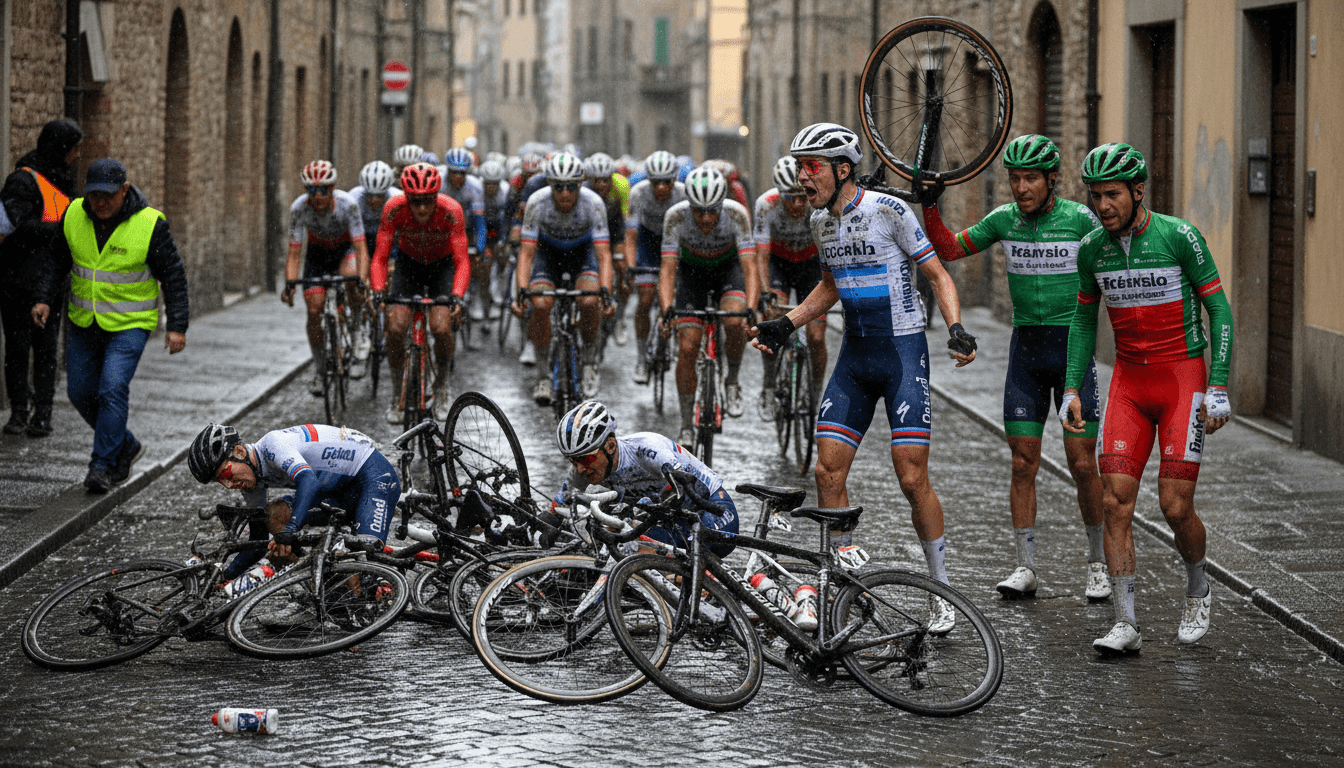
The first stage of this year’s Giro saw a major mass crash in the sprint into the finish, with dozens of riders affected and television images showing bodies and bikes strewn across the road. A number of competitors were unable to continue, and the incident set the tone for heightened scrutiny of race-day conduct. Organisers and team doctors were immediately confronted with logistical and medical challenges in the aftermath.
Multiple falls on a fast descent compound concerns
A subsequent stage featured several riders crashing on a high-speed descent well before the finish, underscoring that the risk is not limited to bunch sprints. Those incidents involved tight lines and split-second decisions that turned dangerous when margins were small. The accumulation of crashes across different race situations has amplified calls for a reassessment of how sprint safety is managed throughout race routes.
Ackermann and Mihkels collide in decisive corner
On the third stage, German sprinter Pascal Ackermann — 32 years old — was involved in a heated final-corner collision with Estonian champion Madis Mihkels, 22, that cost both positional momentum in the run to the line. Ackermann, who finished seventh while Mihkels was placed fourth, publicly expressed frustration at the move and said he was relieved to have escaped more serious harm. The exchange has become a focal point in debates about acceptable risk and tactical aggression in last‑kilometre contests.
Veterans and commentators describe a changing risk calculus
Former professional riders and television analysts have framed the incidents as part of a broader shift in attitude toward risk in sprinting. One prominent ex‑rider observed that older sprinters often become more conservative as careers progress, while younger competitors appear more willing to gamble for the win even when the payoff is uncertain. That assessment ties directly into the sprint safety conversation, suggesting the issue blends tactics, temperament and career stage.
Historical context shows sprints have always been perilous
Observers stress that dangerous sprints are not a new phenomenon; cycling’s archive contains numerous severe crashes from previous decades and race footage often illustrates the sport’s inherent peril. Still, several voices argue that if success increasingly requires riders to risk bodily harm, the sport faces a structural problem that cannot be dismissed as mere nostalgia. This historical lens complicates calls for reform, but also strengthens arguments that targeted measures could reduce harm without eliminating competitive intensity.
Teams, organisers and juries face pressure to act
With pressure mounting, stakeholders are being pushed to consider concrete steps to improve sprint safety, from clearer enforcement of dangerous riding rules to changes in race design and team responsibilities. Potential measures under discussion include stricter penalties for hazardous manoeuvres, expanded use of race commissaires in the final kilometres, and technical changes to sprint approaches to reduce bottlenecks. Teams may also be asked to review lead‑out behaviour and internal protocols to protect key riders.
The debate over sprint safety at the Giro has sharpened into a policy issue as much as a sporting grievance, and its resolution will shape how future races balance spectacle with rider welfare. As the race progresses, riders, teams and governing bodies will face continued scrutiny over whether the current rules and practices adequately prevent harm while preserving the competitive essence of sprint finishes.
