
German rearmament fuels diplomatic unease as Berlin pursues Europe’s strongest conventional army
German rearmament fuels debate across Europe as Berlin opts for national defense projects, delays KNDS stake decision and strains cooperation with France.
Germany’s push to rebuild and expand its armed forces has moved from rhetoric to concrete projects, prompting friction with key European partners and raising questions about the future of joint defence procurement. Chancellor’s aims to make the Bundeswehr the continent’s strongest conventional army have translated into large, fast-growing budgets and a slate of national programmes that include satellites, tanks and possibly a homegrown fighter. Allies welcome Germany’s greater commitment to defence but remain wary about how much of that effort will be pursued cooperatively rather than unilaterally.
Berlin’s rearmament target and spending surge
Germany has committed unprecedented funds to modernize the Bundeswehr and accelerate procurement across land, air and space domains. The government frames the measures as necessary to respond to a changed security environment and to shoulder a fairer share of European defence burdens. This rearmament drive has produced a frenetic acquisition agenda, from new armoured vehicles to advanced command-and-control systems.
Rapid spending has also amplified internal debate in Berlin about whether to scale programmes through European partners or to pursue national capabilities at speed. Officials argue national initiatives can plug capability gaps faster, but critics warn that fragmented buying reduces economies of scale and burdens allied interoperability. The choice between speed and cooperation is now central to the political contest over German defence policy.
French unease and partner concerns
Paris has reacted sensitively to Berlin’s more assertive posture, reflecting both historical context and current strategic rivalry in defence industries. French officials and industry figures privately express frustration when Germany pursues parallel projects that could have been joint programmes, particularly in aerospace and armoured vehicles. That tension is driven as much by politics as by economics: losing ground in areas where France long held leadership provokes a natural pushback.
At the same time, French criticism is not uniformly principled; some grievances stem from unequal fiscal capacity and the redistribution of industrial influence. Several European capitals acknowledge that Germany’s greater military investment can strengthen collective security if Berlin commits to shared projects and transparent burden-sharing. The problem, for many partners, is the opacity around Berlin’s plans and the perception that national priorities may trump European ones.
Space and air rifts: IRIS2 and fighter ambitions
Disputes over military space capabilities have illustrated the broader pattern of fragmentation. Dissatisfaction in Berlin with the design of the EU’s IRIS2 satellite constellation has prompted officials to consider a Bundeswehr-specific orbiting system estimated at up to €10 billion. That move, if pursued without partners, would mark a clear pivot from European programmes to a national solution for strategic communications and surveillance.
A similar dynamic is playing out in combat aviation, where long-running disagreements over the Franco-German Future Combat Air System (FCAS) have left open the possibility of a German-led alternative. Developing an independent fighter would be hugely expensive and time-consuming, but proponents argue it would safeguard sovereign industrial capabilities. Opponents counter that duplication would increase costs for all and weaken European technological consolidation.
KNDS standoff exposes decision-making delays
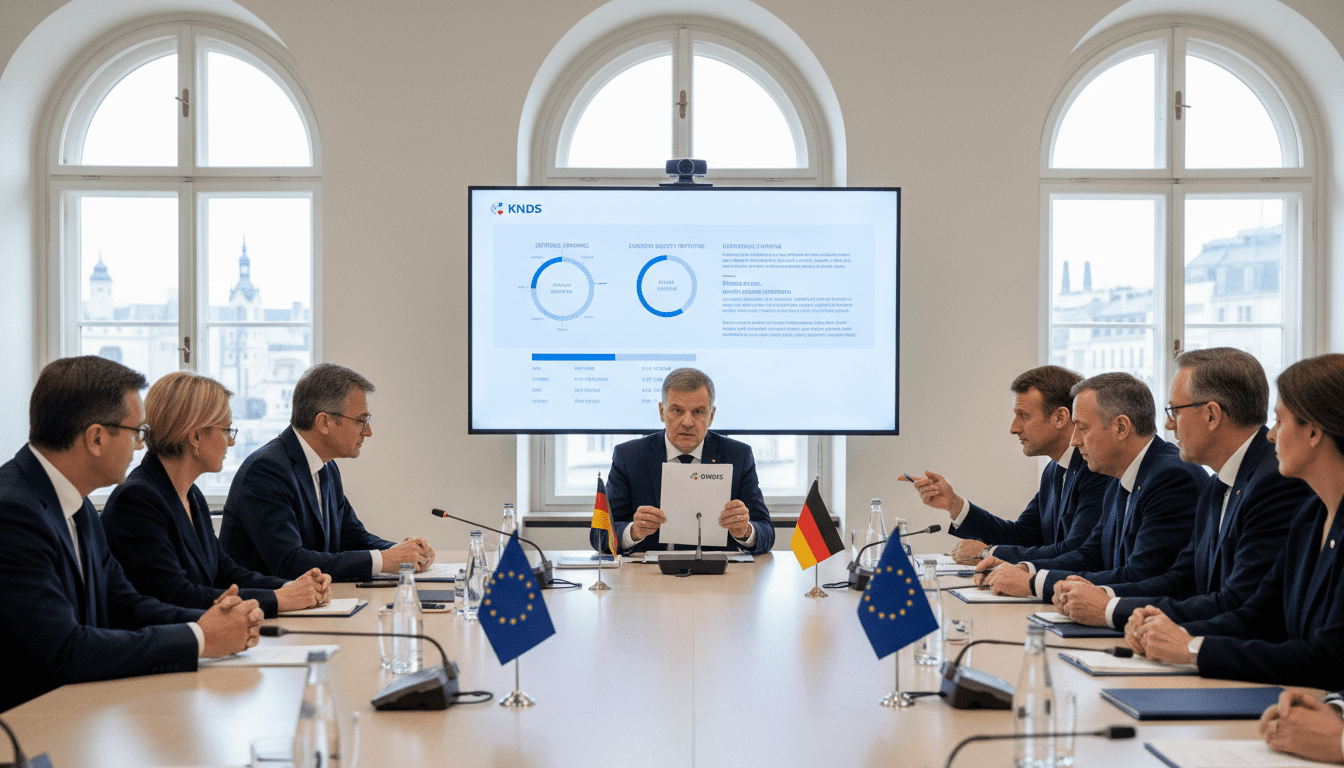
The handling of KNDS, the Franco-German armoured vehicle group formed from Krauss-Maffei Wegmann and Nexter, has become a focal point for criticism of Berlin’s approach. Months of internal disagreement delayed a planned state stake purchase and pushed the company to press ahead with an initial public offering to avoid further uncertainty. The government ultimately agreed to acquire roughly 40 percent, but only after prolonged wrangling that damaged Germany’s image as a reliable partner.
The episode underscored two persistent questions: how far should political authorities intervene in strategic industries, and can state involvement be structured to minimise political influence on corporate decisions. Defence analysts warn that heavy-handed or belated interventions risk scaring off investors and prompting partners to seek alternative arrangements outside German influence.
Risks to industrial cooperation and alliance cohesion
A drift toward national programmes threatens the very benefits Berlin claims to seek: interoperability, cost-sharing and political reassurance across Europe. When member states buy divergent systems, training, logistics and sustainment costs rise and collective readiness suffers. Political fallout is also tangible; partners may interpret unilateral moves as a lack of willingness to commit to shared strategic goals.
European officials and industry leaders are urging Germany to pair its investment with clearer, binding cooperation frameworks and to renegotiate programmes where possible to restore joint ownership. Successful defense integration, they stress, requires predictable decision-making, open procurement processes and agreed rules on cross-border industrial participation.
Germany’s rearmament will reshape European defence politics whether pursued cooperatively or not, but the strategy’s success depends on more than money and capabilities. Clearer communication, timely decisions and genuine industrial partnerships will be essential to turn Berlin’s spending surge into a net gain for European security rather than a source of division.
The coming months will test whether Germany can translate its rearmament ambition into durable, multinational projects or whether national priorities will prevail and leave allies to reconcile their anxieties with the benefits of a stronger Bundeswehr.
