
Germany pushes “Gebäudetyp E” into law to speed up and cheapen construction
Germany plans ‘Gebäudetyp E’ to permit simpler building contracts and cut construction costs by 10-20%, sparking legal warnings and wider industry debate.
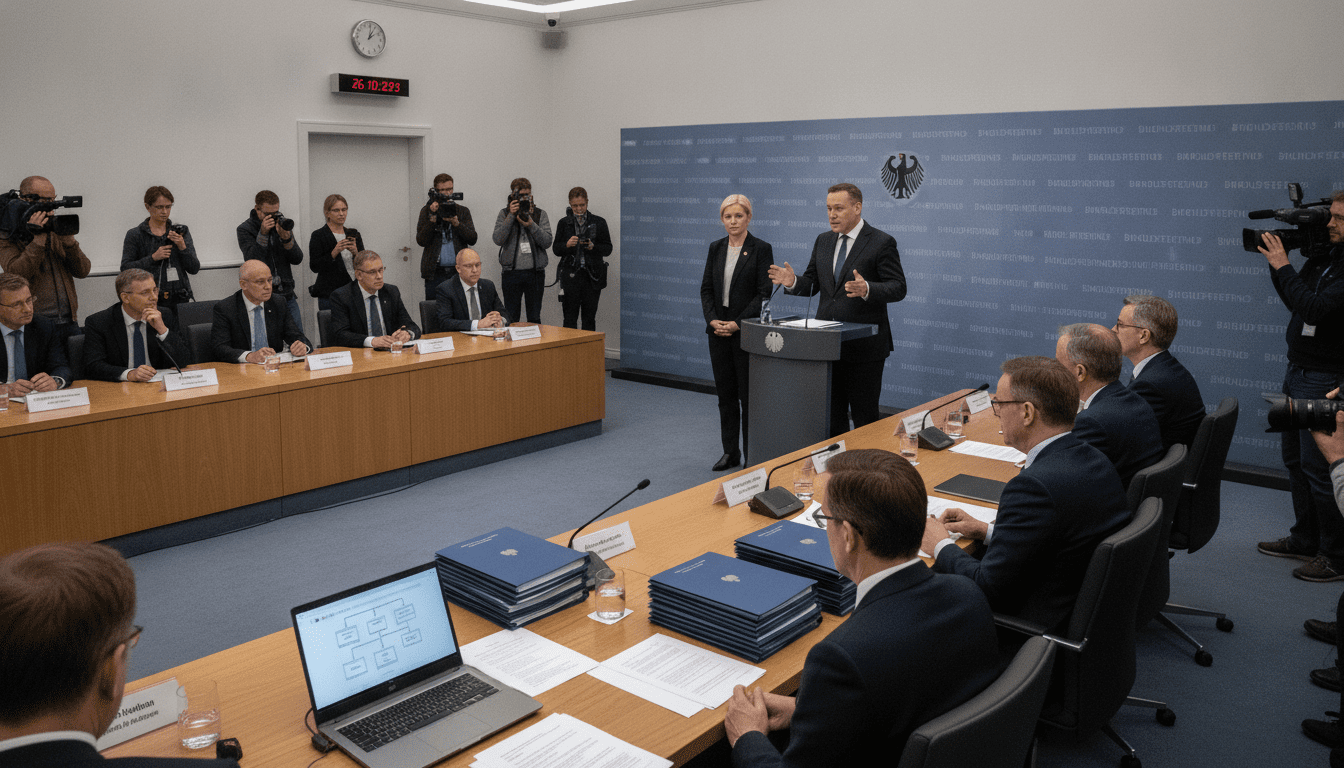
The federal government has proposed a new legal category, “Gebäudetyp E,” to allow simpler building standards and faster, cheaper construction under German law. The term Gebäudetyp E appears in a draft framework from the Ministry of Construction and the Justice Ministry, with ministers Verena Hubertz and Stefanie Hubig leading the initiative and the Justice Ministry preparing a bill to enshrine a Type‑E contract in the Civil Code. Proponents say the change would let builders depart from the current “generally accepted rules of technology” without facing automatic recourse, with potential cost reductions of 10 to 20 percent.
Cabinet directive and legal mechanism
The proposal would create a contract model for “simple” buildings directly in the Bürgerliches Gesetzbuch, aiming to give parties a legally secure way to agree lower technical standards. The ministries argue that a standardized Type‑E contract will reduce bureaucratic friction and make it easier for developers, contractors and buyers to set expectations at the outset. The Justice Ministry is drafting the statutory language to define the contract form and the obligations that follow when parties opt for the simpler standard.
Government rationale and claimed savings
Officials promoting Gebäudetyp E say the primary goal is to lower construction costs and speed delivery by avoiding over‑specification in materials and workmanship. The ministries estimate that, where appropriate, construction costs could fall by roughly 10 to 20 percent if unnecessary technical requirements are relaxed in a legally secure manner. They also present the change as a tool to expand housing supply and make renovation and smaller projects financially viable for more owners and investors.
Legal community raises concerns over vagueness
Legal experts and the Deutscher Anwaltsverein warn the plan may increase, not reduce, litigation because key terms remain undefined in the draft. Critics say phrases like “simple standard” and “contemporary usability” would leave judges and expert witnesses to interpret the meaning case by case, a process that could stretch over years and generate fresh dispute costs. The association also notes that current law already allows departures from DIN norms without automatically constituting defects, and that legal uncertainty, rather than technical rules alone, drives defensive overbuilding.
Industry leaders call for clearer reference levels
Representatives of the construction industry have voiced skepticism about the proposal’s practical effect, warning that the idea is “overly intellectual” unless tied to concrete benchmarks. Olaf Demuth, president of the main builders’ association, has urged a simpler, pragmatic approach: a clear statutory reference level that can serve as the baseline for funding and contracts. Industry voices argue that without explicit minimum requirements, builders and clients will still face ambiguity about what constitutes acceptable workmanship.
Norm bodies propose staged performance levels
The National Regulatory Control Council (NKR) and standardization committees point to the complexity of Germany’s norm landscape—currently comprising hundreds of DIN standards relevant to building. The NKR recommends dividing key standards into performance tiers and formally recognizing a lowest tier as a simple but legally secure standard. Advocates of that model say it would let the DIN committees identify which requirements are essential for safety and health and which can be relaxed, avoiding a mere relabeling of existing rules.
Disclosure obligations and contractual risks
The draft framework and legal advisers highlight significant disclosure duties for contractors wishing to use a Type‑E contract: sellers, landlords and builders would have to inform buyers, tenants and investors about the reduced technical standard, its foreseeable consequences and the expected cost savings. Lawyers caution that if the actual quality or savings deviate materially from what was presented, the agreement could be invalidated or produce liability claims, shifting financial risk back to builders and developers.
Public debate around Gebäudetyp E now centers on whether the law should create a clear, administrable baseline or instead open a field of case‑by‑case interpretation that courts will settle over years. The ministries continue to refine the draft while standardization bodies and industry groups press for concrete performance levels and precise definitions.
Whether Gebäudetyp E becomes an effective instrument to lower construction costs will depend on legislative clarity and parallel work by the DIN committees to specify which requirements can be safely relaxed. The legal and industry responses make clear that the technical details—definitions, disclosure rules and an enforceable reference level—will determine if the policy meets its ambitions or simply relocates disputes from bureaucratic specifications to the courtroom.
