
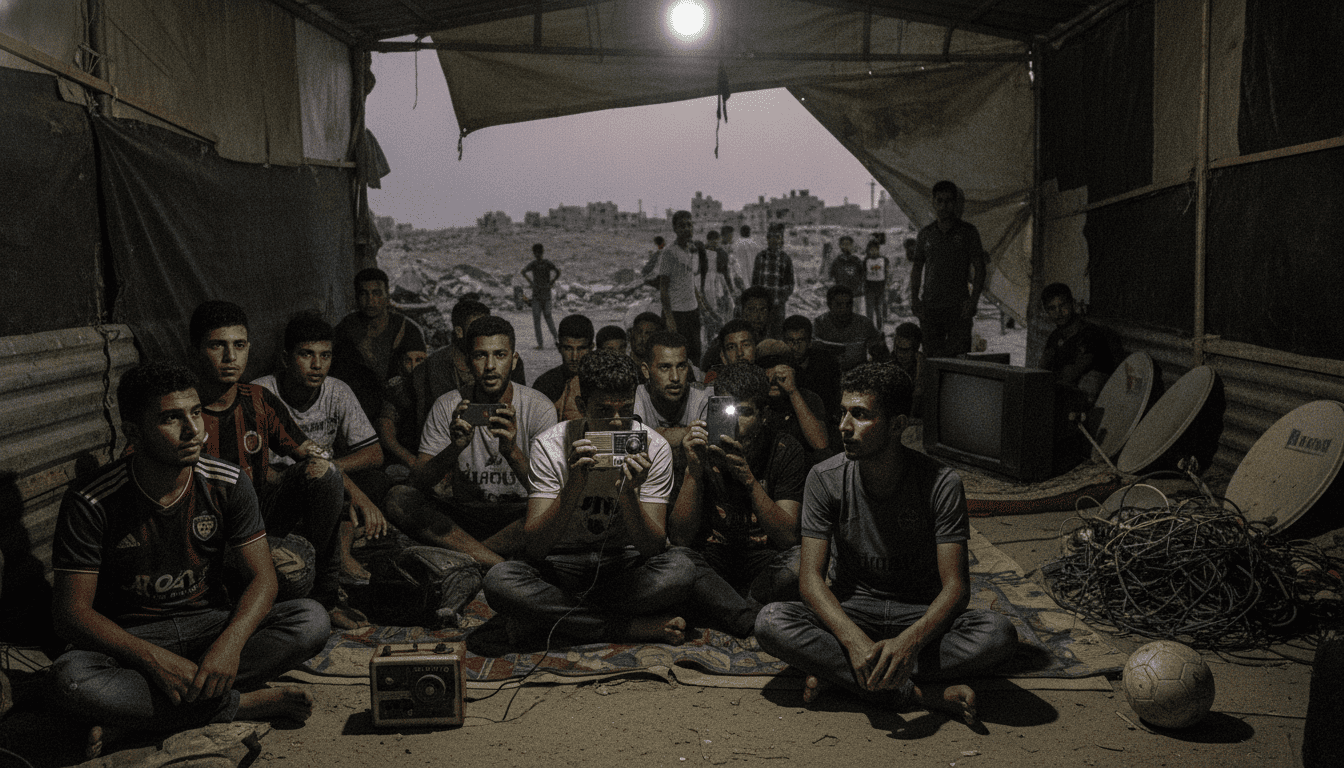
Gaza’s football fans struggle to follow World Cup as displacement, blackouts and attacks limit viewing
Gaza’s football fans who once watched the World Cup from the comfort of their homes are now displaced in schools and tents and face daily obstacles to following matches. On 16 June 2026, residents and aid workers described frequent power cuts, sparse internet connections and the constant threat of nearby military action that interrupt broadcasts and streaming. The disruption has turned a shared sporting ritual into a precarious and fragmented experience for families and communities across the territory.
Displacement Has Moved Fans into Schools and Tents
Many households forced from their homes are sheltering in packed schools and makeshift tent camps, where communal spaces replace living rooms and television sets. Residents say improvised arrangements can allow a group to watch a match together, but overcrowding and limited facilities mean those gatherings are often brief and crowded. Relief agencies report that these shelters were never intended for long-term occupancy, making privacy and steady viewing conditions rare.
Power Cuts Disrupt Live Broadcasts and Refrigeration
Unscheduled and prolonged power outages are a central barrier to watching live matches, interrupting satellite receivers and television sets mid-game. Beyond entertainment, outages affect refrigeration and lighting in shelters, increasing strain on daily life and on the small businesses that try to provide screening services. Technicians and humanitarian staff warn that repeated blackouts also prevent consistent operation of generators that communities rely on for essential electricity.
Limited Internet Hampers Streaming and Communication
Sparse and expensive internet access has reduced the ability to stream matches or follow live updates on social media and sports apps. Mobile data is intermittent and Wi-Fi hubs set up in relief centers are overloaded or offline at times, leaving many fans without reliable access to commentary, scores or highlights. For younger viewers accustomed to online streams, the gap is especially stark, limiting how they can engage with the global tournament.
Threat of Attacks Alters When and Where Matches Are Watched
The threat of Israeli strikes and ground operations has changed not only where people gather to watch but when they feel safe doing so. Families and community groups say they avoid public viewings at night and postpone gatherings when military activity is reported nearby, shrinking the windows during which matches can be enjoyed. Aid workers note that fear of escalation forces organizers to balance communal morale-boosting events with the obligation to keep people out of harm’s way.
Community Efforts Keep Match Rituals Alive
Despite constraints, local organizers and volunteers have improvised ways to preserve the ritual of watching football, setting up battery-powered radios, small LED screens and community loudspeakers when possible. Informal viewing circles still form in courtyards and on rooftops during daylight hours, and elder residents often narrate matches for those who cannot see pictures or stream. These efforts are described by community leaders as important for maintaining social bonds and offering a temporary respite from the crisis.
Aid Agencies Warn of Compounded Humanitarian Needs
Humanitarian organizations say the obstacles to basic services—electricity, internet and safe shelter—compound existing needs and strain limited resources on the ground. Agencies report prioritizing food, water and medical aid but acknowledge that restoring communications and reliable power is critical for broader public information and community resilience. Officials have called for unobstructed humanitarian access and for measures that reduce risks to civilians gathering in public spaces.
The changed experience of following the World Cup in Gaza underscores how conflict reshapes everyday life, turning routine leisure into a challenge tied to shelter, safety and infrastructure. For many fans, the tournament remains a source of connection and hope, even as the conditions under which matches are watched reflect the wider humanitarian crisis.
