
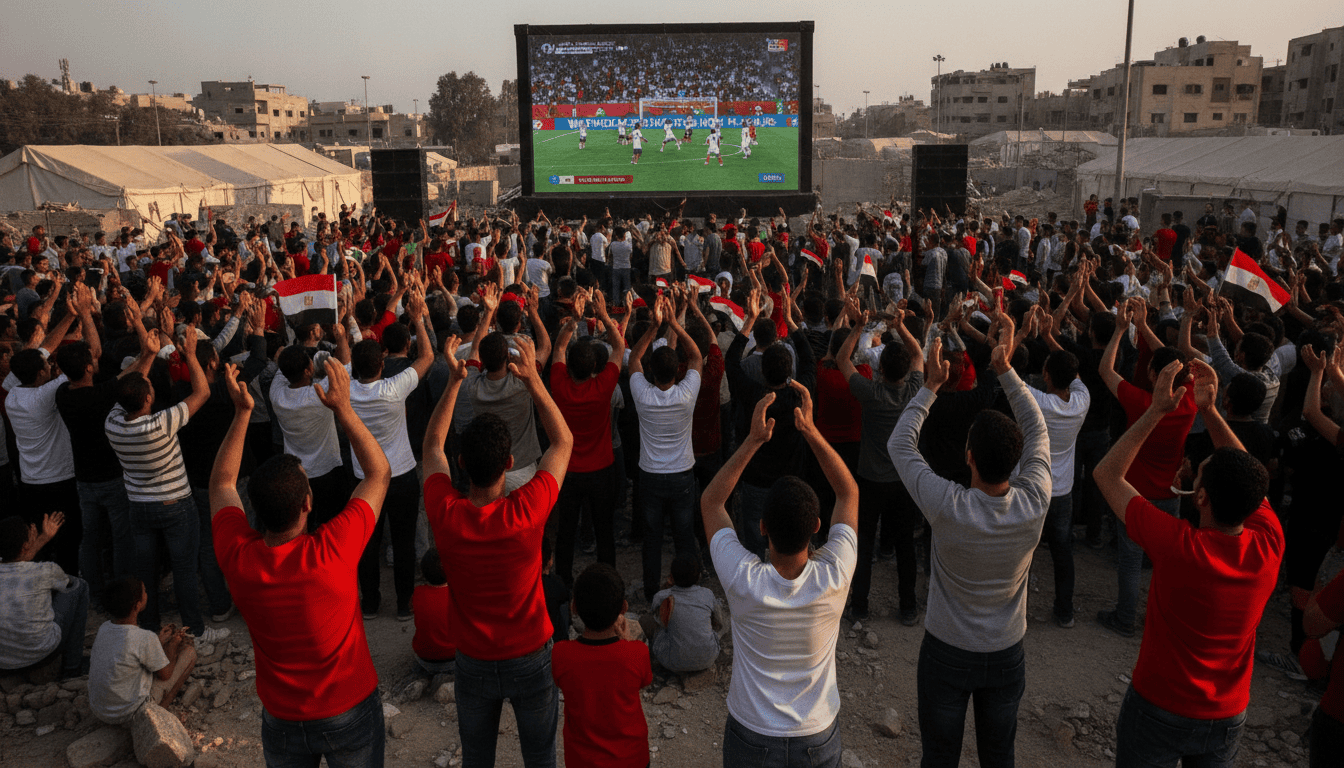
Egypt World Cup fever draws large crowds in Gaza as public screenings offer rare respite
Gaza residents gather for public screenings to watch the Egypt World Cup, finding moments of normality amid power cuts, summer heat and prolonged conflict.
Public screenings fill squares, cafes and restaurants
Fans across the Gaza Strip are turning public spaces into makeshift stadiums to follow the Egypt World Cup matches, with large groups gathering in town squares, cafés and local restaurants. Community organisers and shop owners set up screens and generators where possible to accommodate viewers who otherwise lack reliable access to broadcasts. The gatherings have drawn people of all ages, with applause and singing punctuating tight moments of play.
These screenings are increasingly important as formal venues remain limited and private electricity is sporadic. Organisers say the events provide a focal point for community life that television at home cannot always supply because of outages and cramped living conditions. For many attendees, the screenings are as much about socialising as they are about the sport.
Nuseirat camp turns into a viewing hub
In the Nuseirat displacement camp in central Gaza, makeshift viewing areas filled with families and young supporters as kick-off approached. Photographs taken in the camp show crowds packed close to screens, some sitting on cushions and others standing in narrow alleys to catch the action. Local volunteers coordinated seating and refreshments, turning small yards and community centres into temporary arenas.
The Nuseirat gatherings reflect wider patterns across the Strip, where camps and densely populated neighborhoods convert common spaces into gathering points for the World Cup. Even where infrastructure is weak, residents prioritise communal watching as a way to reconnect and share a rare public experience.
Egypt’s national team draws the biggest support
Egypt’s matches have attracted some of the largest and most vocal groups, reflecting deep cultural and historical ties between Palestinians and their Egyptian neighbours. Supporters waved scarves and chanted in Arabic, and many described following the team as both a sporting choice and a cultural expression. For older spectators, the matches often evoke memories of previous regional tournaments and cross-border connections.
Local organisers say that Egypt’s presence in the tournament has boosted attendance at screenings and helped sustain the events despite logistical challenges. The prominence of Egypt in viewing habits highlights the role of football in regional identity and solidarity.
Power cuts and extreme heat shape viewing conditions
Long and unpredictable power cuts, combined with intense summer temperatures, have shaped how and where people watch the World Cup. Generators are used to power screens in public areas, but fuel costs and availability limit how often and how long events can run. In displacement camps the heat adds a further strain, making evening screenings the preferred option when temperatures drop.
Organisers and attendees adapt by scheduling viewings later in the day, sharing battery-powered speakers and pooling resources for short bursts of power. These practical measures allow large groups to gather, but they cannot fully offset the discomfort and logistical strain posed by the conditions.
Screenings provide a brief social and emotional respite
For people living amid ongoing violence and blockade, the matches offer more than entertainment: they represent a temporary return to routine social life. Attendees described the screenings as a chance to laugh, argue and celebrate together — actions that are harder to come by in daily life under protracted conflict and restricted movement. Parents brought children to watch, and small businesses reported a modest uptick in customers around match times.
Community leaders emphasised that these moments do not erase the hardships residents face, but they do create important psychological relief. The shared experience of cheering a goal or commiserating after a loss can reinforce social bonds and provide a short-lived sense of normality.
Organisers and volunteers keep events running under strain
Local volunteers have been central to organising screenings, handling logistics from setting up screens to coordinating fuel for generators and managing crowds. These efforts often rely on informal networks and donations, with small charities and community groups stepping in where official support is minimal. Volunteers say they aim to keep gatherings safe and inclusive while navigating the practical limits imposed by the environment.
Despite these efforts, organisers warn that sustaining regular screenings will be challenging if access to fuel, equipment and safe public space deteriorates. They call for continued community coordination to preserve the gatherings while prioritising safety and resource-sharing.
The World Cup screenings across Gaza, particularly those rallying around the Egypt World Cup matches, have become a vivid example of how sport can provide brief but meaningful relief in a context of sustained hardship. Photographs from camps like Nuseirat capture the urgency of that respite: crowds packed around single screens, faces lit by the glow of the match, and a shared focus that, for a few hours, shifts attention from the pressures of daily life.
