
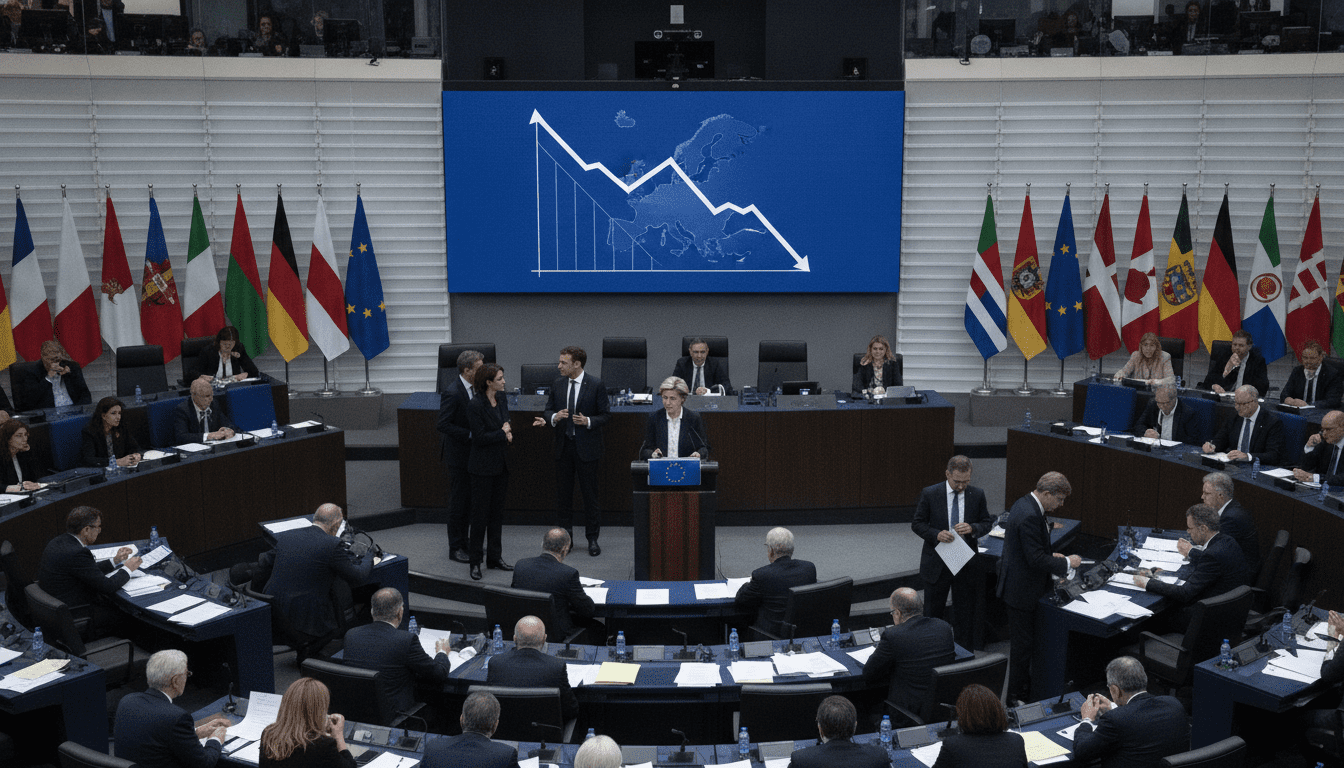
European industrial policy debate sharpens as economists push debt‑funded measures
European industrial policy debate intensifies as economists back debt-funded measures; Europe of the willing coalitions are offered as a pragmatic alternative.
European industrial policy has moved from academic debate to center stage as economists and policymakers renew calls for debt‑financed interventions to bolster strategic industries. The renewed urgency follows geopolitical tensions and concerns about supply chains, prompting advocates to argue that conventional market mechanisms alone will not secure Europe’s technological future. Critics counter that such measures risk repeating long-known policy failures and that pragmatic coalitions of willing states may offer a more effective path forward.
Economists advocate debt‑financed intervention
A growing number of economists are recommending targeted public spending and state-backed financing as tools to catch up with global competitors. Proponents frame these measures as temporary, strategic investments meant to finance large-scale projects in technology, infrastructure, and defense.
Supporters frequently cite contemporary interpretations of industrial strategy that favor active state involvement, including models championed by scholars such as Mariana Mazzucato. Critics warn that shifting to broadly debt‑funded strategies without strict safeguards could reproduce past inefficiencies and create persistent fiscal burdens.
Limits of tariffs and unilateral trade measures
Some policymakers have proposed tariffs and compensatory duties to shield domestic industries from perceived unfair competition, but trade specialists caution these tools are blunt and often counterproductive. While World Trade Organization rules allow certain countermeasures, legal permissibility does not guarantee economic effectiveness.
Historically, protectionist moves have produced short‑term relief for specific sectors while raising costs for consumers and downstream businesses. Analysts say Europe should be wary of quick fixes that substitute for long‑term competitiveness measures such as education, research funding, and regulatory reform.
Domestic preferences constrain pan‑European projects
Political realities in many member states complicate the adoption of sweeping EU‑level fiscal measures. Aging electorates and rising preferences for robust welfare provision reduce public appetite for sacrificing short‑term consumption for uncertain long‑term investments.
Observers note that national governments remain sensitive to domestic voter priorities, making cross‑border debt mutualization politically fragile. The result is a gap between strategic ambitions at EU level and what electorates will tolerate, which undermines large unified projects unless framed with clear, immediate benefits.
Coalitions of the willing as a pragmatic alternative
Policy thinkers increasingly point to flexible, smaller coalitions of like‑minded countries as a realistic mechanism to advance industrial objectives. The “Europe of the willing” concept envisions groups of member states and private partners working together on specific projects without waiting for unanimity across the entire union.
Proponents argue such coalitions can move faster, reduce bureaucratic gridlock, and align resources more coherently with market signals. They can also deepen cooperation with external partners — for example Canada, Japan, and South Korea — where shared standards and investment can augment European capabilities without full multilateral consent.
Capital markets and the case for targeted realism
Market signals remain a check on headline ambitions: bond markets and credit ratings reflect skepticism about open‑ended fiscal commitments framed as pan‑European. Financial market assessments show investors are cautious about large‑scale mutualized debt absent robust governance and credible repayment plans.
Experts say the practical route forward is to design limited, transparent instruments that attract private co‑investment and impose strict oversight. This approach prioritizes scalability and accountability while allowing public funds to catalyze innovation where private capital is reluctant to lead.
Lessons from past collaborative projects
Recent decades have offered cautionary examples for cross‑national industrial cooperation. The Franco‑German effort to develop a joint fighter jet (FCAS) and main battle tank (MGCS) has been mired in delays and disputes, illustrating how divergent national priorities can stall large programs. Advocates of a coalition approach point to these setbacks as proof that smaller, purpose‑driven groupings are often more productive.
Those lessons suggest Europe should avoid binary choices between full centralization and laissez‑faire market orthodoxy. Instead, combining disciplined public support with market discipline and international partnerships can yield more resilient outcomes.
The debate over European industrial policy is therefore less about whether government should act and more about how it should do so without repeating old mistakes. Pragmatic, accountable coalitions that leverage private capital and international partners may offer the fastest route to strengthening Europe’s industrial base while respecting political and financial constraints.
