
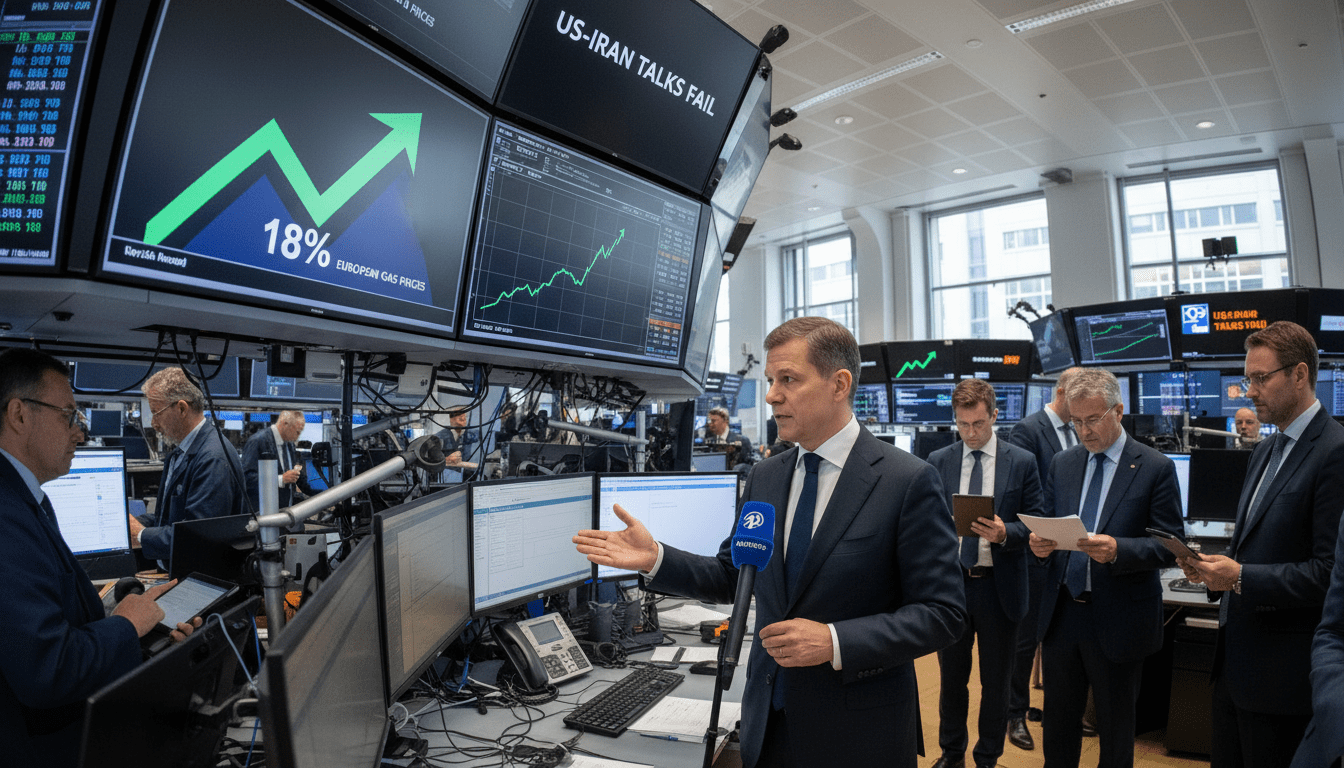
European gas prices surge up to 18% after failed US–Iran talks
European gas prices jumped on April 13, 2026 after talks between the United States and Iran collapsed, with key futures spiking and oil also climbing amid shipping disruptions and supply concerns.
Markets react: futures and benchmarks jump
The main European gas futures rallied sharply on the morning trading session, with some contracts rising as much as 18 percent. At the Amsterdam hub, the front-month TTF contract climbed by roughly 8.5 percent to €47.35 per megawatt-hour, signaling renewed volatility across European energy markets. Traders cited the breakdown in diplomatic talks and fresh geopolitical risk as the immediate catalyst for the abrupt repricing.
Geopolitical trigger: failed US–Iran negotiations and Hormuz threats
Market participants pointed to the unsuccessful weekend negotiations between the United States and Iran as the primary trigger for the sell-off in risk appetite and the surge in energy prices. The situation was compounded by a public announcement from U.S. President Donald Trump that the United States might move to block the Strait of Hormuz, a critical chokepoint for global oil and gas shipments. The combination of stalled diplomacy and the prospect of restricted maritime transit heightened concerns about potential supply interruptions.
Oil prices follow gas higher as tanker routes change
The rise in gas prices was mirrored in crude markets, where Brent crude rose sharply to about $102.80 per barrel in early Monday trading, an increase of roughly eight percent from the previous close. U.S. benchmark WTI also firmed in overnight trading, reflecting a broader reassessment of supply risks. Shipping tracking services showed tankers diverting from the Strait of Hormuz and anchoring in safer waters, a dynamic that pushed prompt oil premiums higher and pressured refiners juggling feedstock logistics.
Shipping data: tankers alter course over Hormuz risk
Vessel-tracking data from maritime analysts, including LSEG and Kpler, indicated that at least one Malta-flagged supertanker turned back before transiting the Strait of Hormuz and anchored in the Gulf of Oman. That vessel had reportedly been due to load Iraqi crude bound for Vietnam, illustrating how rerouting and delays can quickly ripple through physical supply chains. Such movements have direct consequences: when ships avoid key choke points, insurance and freight costs often rise and prompt cargoes become harder to secure.
Historical context: prices already elevated since the conflict began
Energy markets have been sensitive to developments since the start of the recent military strikes and related incidents more than six weeks ago, when benchmark gas values temporarily climbed above $70 per unit in previous measurements. By contrast, markets had been trading at roughly $30 per unit before the escalation, underscoring how conflict-driven supply fears can more than double energy costs in a short period. The latest spike adds another episode to a string of shocks that have pressured utilities and trading desks across Europe.
Immediate market implications and policy watching
The fresh price moves are likely to prompt close scrutiny from European energy regulators, national governments and large buyers that hedge supply risks with futures and long-term contracts. Utilities with limited hedges may face higher procurement costs heading into the summer, and refiners dependent on just-in-time deliveries could see margins squeezed if freight rates climb. Policy responses — including emergency stock releases, diplomatic efforts to reopen shipping lanes, or coordinated market interventions — remain possible but would depend on rapid de-escalation and clear assurances about safe passage.
The day’s market reaction underlines how quickly geopolitical shocks can transmit into energy prices and trade flows, forcing operators and policymakers to weigh contingency options as uncertainty around the Strait of Hormuz persists.
