
EU energy measures to cut bills as Commission readies package for April 22, 2026
EU Commission to unveil energy measures to lower consumer bills, spur electrification and coordinate gas storage after a €22bn jump in fossil-fuel import costs.
Commission to present coordinated energy package on April 22, 2026
The European Commission will present a set of EU energy measures on Wednesday, April 22, 2026, aimed at reducing costs for consumers and industry across the bloc. The move follows a Commission estimate that import costs for fossil fuels have risen by more than €22 billion since the start of the Iran war.
Officials say the package, drawn up over recent weeks, will combine short-term relief with measures designed to accelerate decarbonisation and lower reliance on oil and gas. The proposals are intended to be rolled out over the coming weeks and months, with Member States urged to coordinate implementation.
Proposal to lower electricity taxation and protect vulnerable households
One cornerstone of the package is a proposed change to the EU directive on energy taxation to make it easier for Member States to tax electricity at lower rates than fossil fuels. The draft document suggests removing some conditions that currently allow zero tax rates for energy-intensive industries and instead freeing Member States to apply relief targeted at vulnerable households.
Under the draft, households judged to be in need of protection could see electricity taxation reduced to zero, while companies would face a reworked framework that emphasizes efficiency and decarbonisation. Brussels argues the shift will make electrified energy uses more competitive versus direct fossil-fuel consumption.
Coordinated filling of gas storage to avoid price spikes
To stabilise supply and prices, the Commission plans to strengthen coordination on the timing and extent of gas storage replenishment among Member States. The draft recommends closer monitoring and synchronized purchasing windows to prevent simultaneous buying that drives up market prices.
The measures would also encourage more flexible approaches to storage filling, allowing countries to manage national requirements while avoiding coordinated demand peaks. The Commission believes this approach will reduce volatility and ensure adequate inventories for the winter season.
Electrification target proposed for industry, transport and buildings
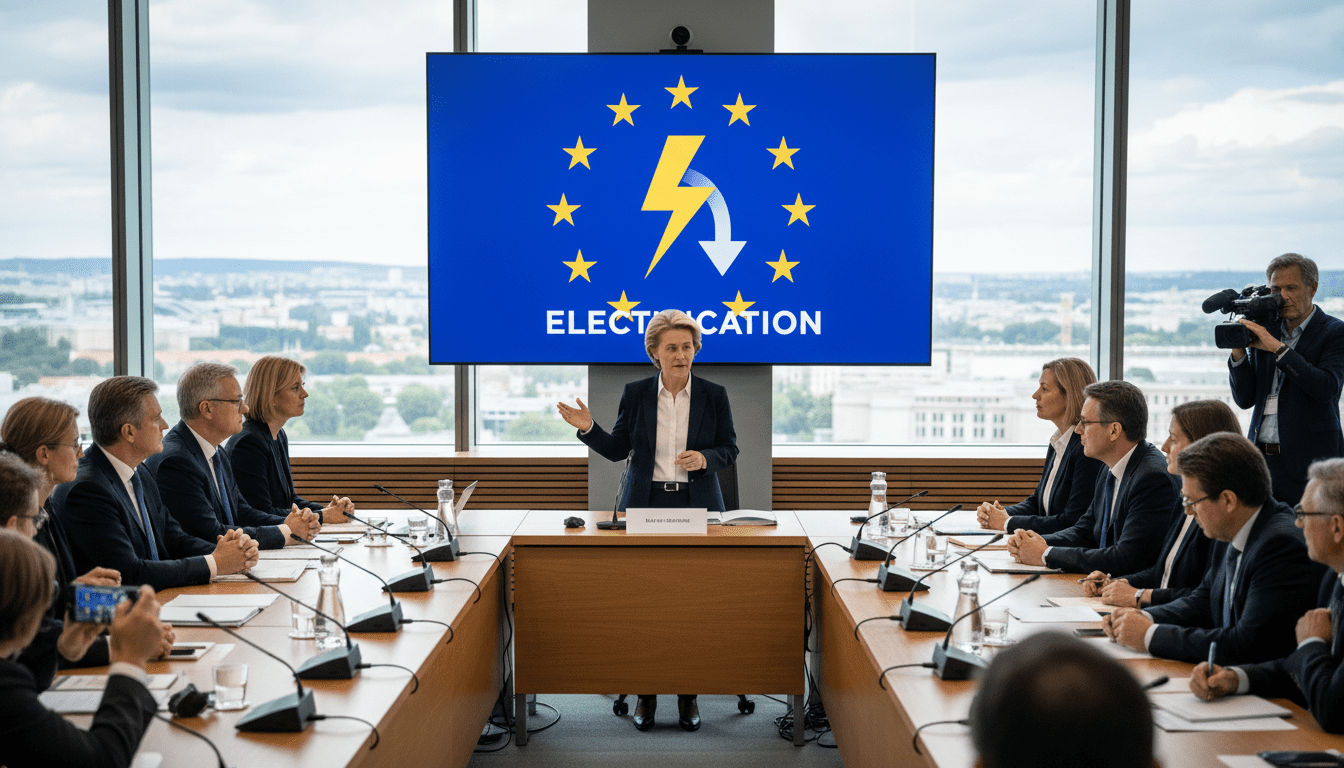
As part of a medium-term strategy, the Commission intends to propose an explicit electrification target for the economy to remove barriers to switching from fossil fuels. The aim is to accelerate uptake of electric technologies in industry, transport and buildings where electrification is feasible and efficient.
Brussels says the target would be accompanied by actions to address regulatory obstacles, grid constraints and permitting delays that currently slow large-scale electrification. The package is expected to include incentives and regulatory tweaks to foster investment in electrification infrastructure.
Measures addressing refinery capacity and aviation fuel shortages
The draft also flags concerns about potential kerosene shortages that could affect the aviation sector and calls for maximising European refinery capacities. The Commission urges Member States and industry to assess and, where possible, boost production of jet fuel to avoid supply bottlenecks.
While the paper outlines the need to prioritise refinery outputs for aviation fuel, it stops short of prescribing detailed interventions and leaves room for market-based and regulatory responses. Proposals touching the EU emissions trading system are mentioned but not yet specified in the draft.
Environmental group welcomes package; political tensions remain
Germany’s Deutsche Umwelthilfe (DUH) welcomed the draft as a pragmatic response that aligns the energy crisis response with the objectives of the Green Deal. The NGO said the plan demonstrates how efficiency, electrification and renewables can form a resilient basis for Europe’s energy future.
At the same time, the DUH urged national governments — and specifically singled out calls to the German federal level — to abandon ideological resistance to electrification and adopt the Commission’s measures in full. Political debate is likely to intensify as Member States weigh the balance between short-term price relief and long-term climate commitments.
EU capitals will now review the draft ahead of formal discussion and possible adoption, with industry groups, consumer organisations and national ministers set to lobby for adjustments. The coming weeks will test whether the Commission’s combined approach can deliver both immediate relief and sustained progress toward cleaner energy.
The Commission’s package aims to reduce the immediate cost burden on households and firms while accelerating structural shifts away from oil and gas, but its ultimate impact will depend on political agreement, the speed of implementation and market responses.
