
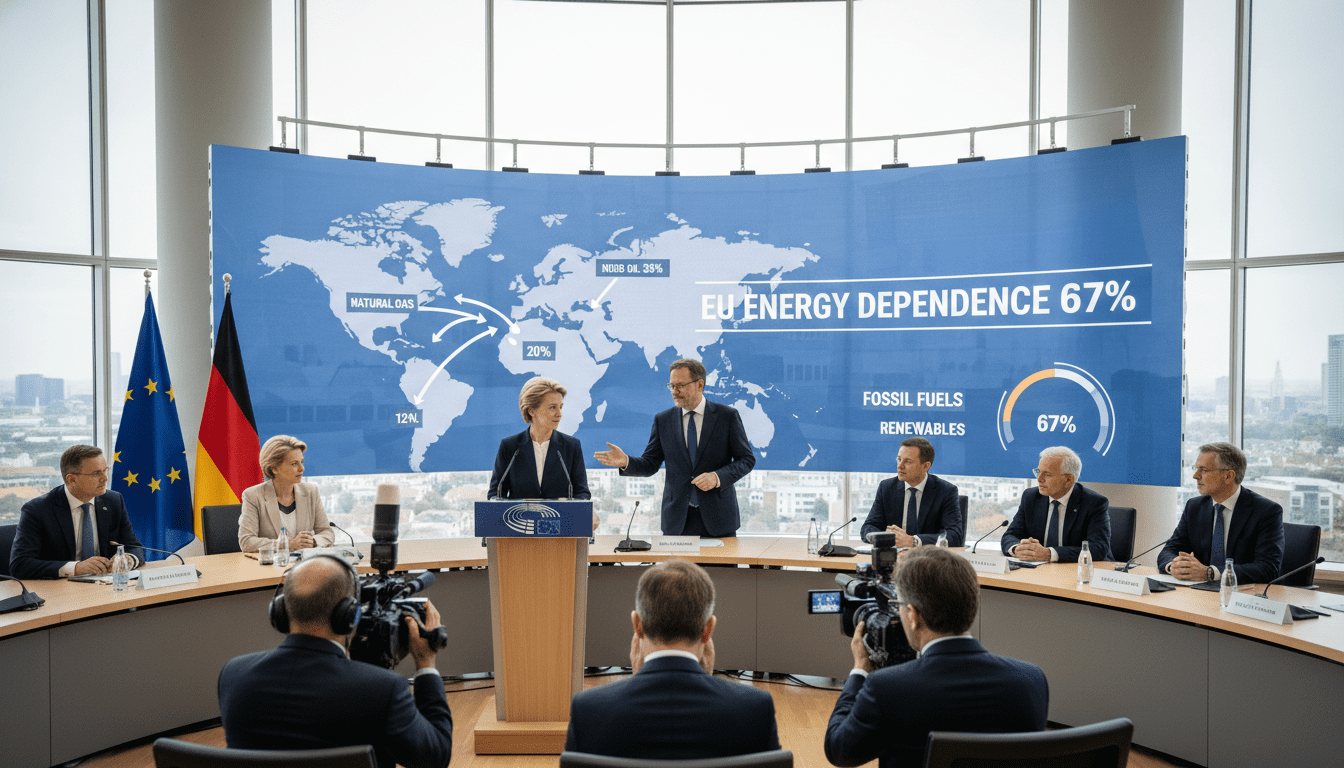
EU energy dependence remains at 57% despite surge in renewables
EU energy dependence stays at 57% as renewables grow, but slower electrification and falling domestic fossil output keep import needs high.
Europe’s energy dependence remains stubbornly high at roughly 57 percent of primary energy consumption, according to recent German statistical reporting, even after years of heavy investment in wind, solar and other renewables. The persistence of EU energy dependence reflects not a rebound in demand but a structural mix problem: renewables lower overall primary energy needs, yet Europe still imports a large share of fuels that remain irreplaceable in many sectors. Policymakers and industry leaders are now debating whether faster electrification and targeted supply strategies can meaningfully cut import reliance.
EU statistics and the paradox of lower consumption
Official data show that primary energy consumption in the EU has trended downwards, driven in part by renewables and efficiency gains. Despite that decline, the percentage of energy sourced from imports has not fallen because domestic extraction of fossil fuels has diminished faster than the share supplied by renewables has risen.
This statistical paradox arises because the primary energy metric counts raw energy inputs rather than usable final energy, so gains from electrification and efficiency can lower consumption figures without proportionately reducing reliance on imported fuels. The result is a headline figure — 57 percent import dependence — that masks significant internal shifts in Europe’s energy mix.
Electrification lag slows import reduction
A key factor keeping EU energy dependence high is the comparatively slow rate of electrification in some sectors. Transportation, heavy industry and building heating still rely heavily on liquid and gaseous fuels that are largely imported.
Countries such as Japan, South Korea and China have accelerated electrification in recent years, increasing resilience by converting more end uses to electricity supplied from domestic or regional renewable resources. European progress has been uneven, and delaying the shift from internal combustion engines, gas-based heating and fossil-intensive industrial processes limits the potential import reductions offered by renewable power deployment.
Domestic fossil output has collapsed
Domestic production of fossil fuels across the EU has fallen sharply since the turn of the century; gas output today is roughly one quarter of levels seen around 2000, and coal production has halved in the same period. Member states that once produced meaningful volumes of oil, gas or coal now contribute only marginally to overall supply.
In Germany, for example, national authorities reported that about five percent of consumed natural gas and roughly two percent of mineral oil demand were met by domestic production in 2024. The broader decline in onshore fossil extraction has therefore increased the share of imports even as renewables expand.
Wide variation between member states
Not all EU countries face the same exposure to imports. Several member states, including Germany, import more than half of their energy, while others are far less dependent. Estonia, for instance, reports minimal import reliance in contrast to many Western European economies.
These disparities shape national policy choices and geopolitical vulnerability. Countries with high import shares face stronger incentives to diversify suppliers and accelerate electrification, while low-dependence states have different strategic priorities and less immediate pressure to overhaul energy systems.
New supply partners and geopolitical shifts
Russia’s role as a supplier has diminished markedly in recent years, and Europe has reoriented toward other exporters. The United States and Norway have become prominent sources of both natural gas and crude oil, while countries in North Africa and the Middle East continue to contribute significant oil volumes.
This realignment has geopolitical and commercial implications: major exporters increasingly use energy sales as leverage in trade and foreign policy, and long-term contracts and infrastructure choices now reflect a more complex network of suppliers and strategic interests.
Scenarios for cutting import dependence
Think tanks and industry leaders point to accelerated electrification and targeted domestic production as pathways to lower import needs. Analysis by independent researchers indicates that if the EU manages to electrify roughly half of its economy by 2040, combined increases in local gas output and imports from nearby producers such as Norway and the United Kingdom could cover remaining needs.
Energy companies that profit from electricity generation are generally supportive of this route. Executives argue that a faster shift to electricity, supplied increasingly by renewables, would reduce the volume of fossil fuels that must be imported and thereby improve resilience — though the supply chains for solar panels, batteries and green hydrogen introduce new import dependencies, especially for components manufactured outside Europe.
Europe’s transition therefore looks twofold: replace fossil fuels where possible with domestic renewable electricity, and at the same time manage strategic supply lines for fuels and critical technologies that cannot be produced locally. The policy challenge will be to coordinate investment, regulation and industrial strategy so electrification, infrastructure and supply diversification proceed in step.
The coming years will test whether the EU can turn its large renewables build-out into a genuine reduction of energy imports, or whether declining domestic fossil output combined with ongoing demand in non-electrified sectors will keep European markets tied to external suppliers.
