
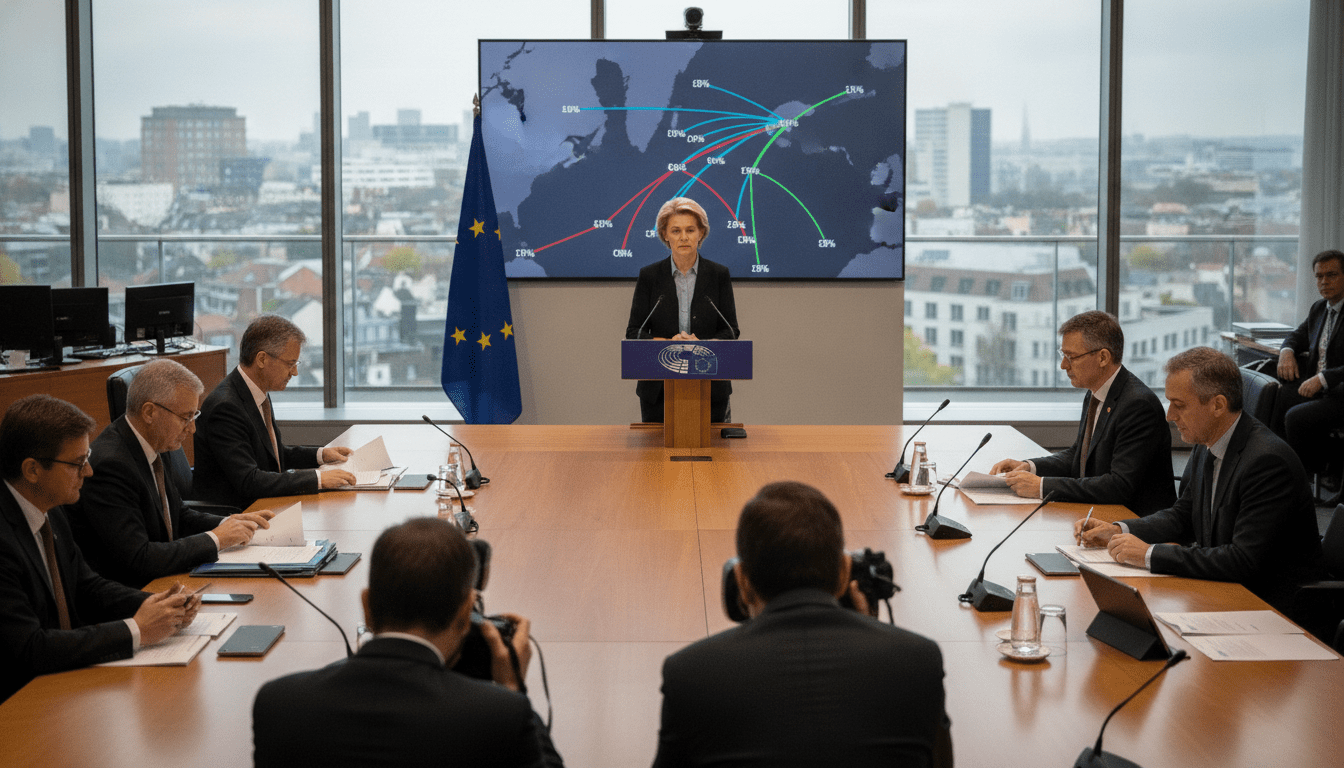
EU supply chain law to force companies to diversify suppliers and curb reliance on China
EU Commission will propose an EU supply chain law to force companies to diversify suppliers and reduce dependence on China, announced after the Brussels summit.
The European Commission has said it will put forward legislation requiring companies to spread their suppliers more widely to cut heavy reliance on single countries such as China. Commission President Ursula von der Leyen framed the move as necessary because private-sector efforts to reduce concentration risks have been too slow. EU leaders agreed at a summit in Brussels to press major trade partners on distortions and signalled readiness to act collectively if third countries apply coercive trade measures.
Commission announces draft law to push supplier diversification
The Commission indicated the proposal will be aimed at compelling firms to assess and mitigate concentration risks in their supply chains. Von der Leyen said the measure is intended to accelerate risk reduction where voluntary steps have not delivered fast enough. She warned that if companies strengthen resilience on their own, the law might ultimately become unnecessary, but stressed the Commission’s duty to prepare a binding option.
The move follows months of debate inside EU institutions about strategic dependencies and economic security. Officials framed legislation as part of a broader push to protect critical industries and limit vulnerability to external pressure during crises.
Summit leaders single out trade imbalances and lack of reciprocity
EU heads of state and government used the summit to highlight distortions in trade relationships with major partners, focusing on the economic dynamics with China without naming it in the final text. European Council President António Costa described the EU’s daily trade deficit with China as “simply unsustainable,” noting the imbalance has political as well as economic implications. Leaders agreed to open dialogues with trading partners about unfair practices and to seek concrete improvements.
Discussions reflected frustration that prior engagements have yielded limited results and that export controls or state support in third countries can quickly create new risks for European industry. The summit language aimed to combine diplomatic engagement with the credible threat of legislative countermeasures.
Rare earths and magnesium cited as strategic pressure points
Officials and industry experts at the summit highlighted specific raw materials where the EU is heavily dependent, including rare earths and magnesium. Rare earths are used in electronics, electric vehicle motors, semiconductors and wind turbines, making them crucial to the green transition and digital economy. The Commission and several member states warned that export restrictions on such inputs can quickly translate into supply shocks for European manufacturers.
Those warnings drew on a sharp example from the previous year, when export curbs on rare earths and other materials raised alarm about the EU’s ability to secure critical inputs. Policymakers cited the need for both diversification of external suppliers and accelerated investment in domestic and allied-sourced production.
G7 alignment and import caps discussed in parallel talks
The EU’s approach follows parallel commitments by leading democracies at a recent G7 meeting in Évian, where participants agreed on measures including potential import caps for selected raw materials. That discussion was framed as a way to reduce leverage by dominant suppliers and to limit the threat of coercion via essential inputs. EU leaders said coordination with partners will be part of the strategy to lower systemic risk across allied economies.
Commission officials signalled that any domestic law would be designed to complement international efforts, not to isolate European firms from global markets. The emphasis is on resilience rather than protectionism, officials said, though concrete policy tools and thresholds remain to be defined.
Member states stress unified response to retaliation risks
EU leaders also agreed that the bloc must act in concert if third countries respond with retaliatory measures to European policies. Belgium’s Prime Minister Bart De Wever warned that not all member states are equally exposed to retaliation and that unity is therefore essential. The summit communiqué, as described by participants, underlined the need for joint analysis, common messaging and collective countermeasures where appropriate.
The Commission is expected to include provisions for coordination in the draft law or accompanying instruments, ensuring that national vulnerabilities are considered and that smaller economies receive support.
Industry reaction and compliance pathways under scrutiny
Business groups and trade associations are likely to scrutinise the proposal for compliance costs and operational impact, particularly for SMEs that rely on concentrated supplier networks. The Commission has signalled it will seek input from industry, though it also emphasised urgency driven by recent geopolitical shocks. Potential features under discussion include mandatory risk assessments, diversification targets or reporting requirements, but officials have not confirmed specific obligations.
Legal experts note that the text will need to balance enforceability with proportionality, and that the timeline for adoption will depend on consultation outcomes and member-state negotiations in the Council and Parliament.
European institutions now face a fast-moving policy sequence: drafting a legislative text, consulting stakeholders and negotiating with member states, all while continuing diplomatic engagement with trade partners. The Commission’s next public steps should clarify concrete measures, deadlines and the scope of companies covered, as the EU seeks to translate summit commitments into enforceable law that reduces strategic dependencies and strengthens economic resilience.
