
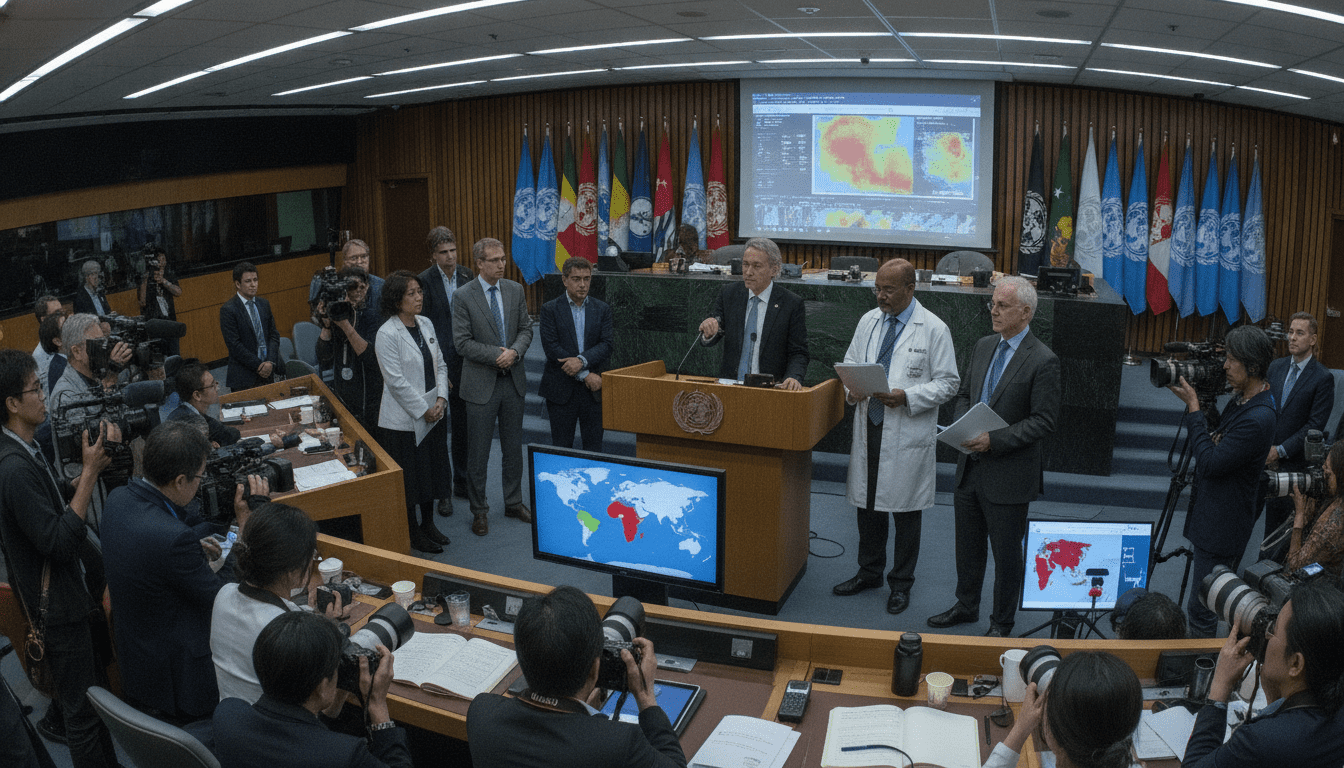
Powerful El Niño Forecast to Peak in November 2026, Threatening Food Supplies and Intensifying Extreme Weather
Powerful El Niño expected to peak in November 2026, threatening global food supplies and increasing extreme weather risks across vulnerable regions worldwide.
A powerful El Niño is now forecast to intensify through mid-2026 and reach its peak in November 2026, raising fresh concerns about global food security and the likelihood of more extreme weather events. Climate models and meteorological agencies point to above-average sea surface temperatures in the central and eastern tropical Pacific, a hallmark of El Niño that typically alters weather patterns worldwide. Governments, farmers and humanitarian organizations are being urged to prepare now for disruptions to crops, fisheries and water supplies.
El Niño now forecast to peak in November 2026
Multiple climate models converged in recent weeks on a scenario in which El Niño strengthens through boreal summer and peaks in November 2026. Forecasters cite persistent warming of tropical Pacific waters and weakening trade winds as the principal drivers of the developing event.
While models agree on a strong event, they differ on exact amplitude and duration, leaving room for variation in regional impacts. Experts stress that a peak in November will coincide with critical planting and harvest cycles in several regions, amplifying food security risks.
Threats to global food supplies and harvests
El Niño events typically disrupt seasonal rainfall and temperature patterns that underpin global food production, and this forecasted event poses risks to staple crops from rice to maize. Drier-than-normal conditions are likely in parts of Southeast Asia and southern Africa, where reduced rainfall can lower yields and strain water-dependent irrigation systems.
Conversely, heavier rainfall and floods are expected in parts of the eastern Pacific and Andean South America, where waterlogged fields and landslides can destroy crops and infrastructure. Fisheries along the Pacific coast may also suffer as warmer surface waters alter marine ecosystems and reduce fish stocks that coastal communities rely on.
Expected rise in floods, droughts and storm patterns
El Niño changes the distribution of atmospheric heat and moisture, and forecasters warn of an elevated chance of extremes including droughts, heavy rains and warmer-than-average temperatures in many regions. Southeast Asia, Australia and parts of southern Africa historically experience drier conditions and wildfire risk, while western South America often sees increased rainfall and flood events.
At the same time, the state of El Niño tends to suppress Atlantic hurricane frequency but can enhance tropical cyclone activity in the central and eastern Pacific. Emergency managers will need to factor these shifting risks into planning for both inland flooding and coastal storm impacts over the remainder of 2026.
Scientific confidence and remaining uncertainties
Scientists involved in the forecasts emphasize that while consensus on a strong El Niño has grown, uncertainties remain around timing and regional expression of impacts. Model ensembles indicate a high probability of an event peaking in late 2026, but the precise intensity and how long anomalous conditions will persist cannot be known with certainty yet.
Interactions with long-term warming and other climate signals may amplify or modulate impacts in ways models find difficult to resolve early in the season. Researchers caution policymakers to prepare for a range of scenarios, from a short, sharp peak to a longer-lived episode that extends well into 2027.
Economic, market and humanitarian implications
Commodity markets and food-importing countries could face price volatility if harvests in key producing regions are disrupted. Historically, strong El Niño events have been linked with spikes in cereal prices and increased import needs for vulnerable nations, placing pressure on budgets and aid pipelines.
Humanitarian organizations and relief agencies are already assessing needs and considering pre-positioning supplies to respond to potential crop failures, water shortages and displacement triggered by floods or drought. Early planning can reduce response time and costs while protecting vulnerable populations.
Preparedness measures for governments and communities
Experts recommend immediate steps including enhanced monitoring of forecasts, ramped-up support for early warning systems, and targeted assistance to smallholder farmers to protect planting and livestock. Water conservation, diversified cropping strategies and emergency seed distribution are practical measures that can reduce losses if conditions deteriorate.
Private sector actors, including insurers and commodity traders, should review exposure and contingency plans, while international donors may need to allocate flexible funds for rapid response. Clear communication of risks to communities and local authorities will be critical to mobilize timely action.
As the November 2026 peak approaches, the forecast for a powerful El Niño underscores the importance of coordinated preparation across meteorological services, governments, the private sector and humanitarian agencies. Early, targeted measures can mitigate some of the worst impacts on food supplies and livelihoods, but the coming months will determine the scale of the challenge and the urgency of international response.
