
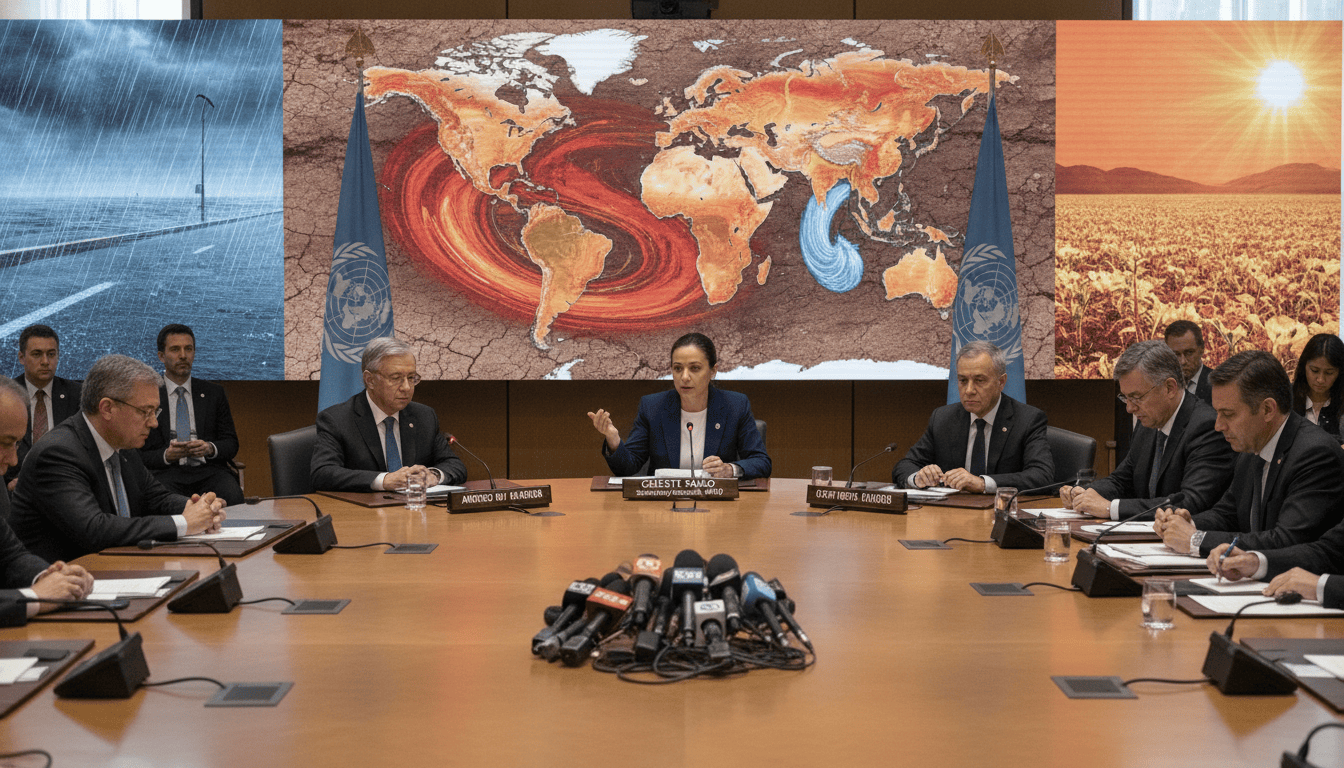
WMO Warns of Strong El Nino, Urges Governments and Aid Agencies to Prepare
UN weather agency warns of El Nino strengthening between July and September, increasing risks of heatwaves, droughts and heavy rainfall worldwide.
The World Meteorological Organization has alerted governments and humanitarian organisations that El Nino conditions are already present and expected to intensify, raising the probability of extreme weather events in many regions. WMO officials said the pattern is likely to strengthen rapidly between July and September, prompting activation of climate-information services and early-warning systems to protect farmers and vulnerable communities. The agency emphasized that while the phenomenon typically peaks in the November–February period, its early onset and rising ocean temperatures could drive impacts sooner and more broadly than usual.
WMO confirms El Nino phase and rapid intensification
The WMO issued an official statement on July 3, 2026, describing current sea-surface and atmospheric indicators as consistent with a developing El Nino that is likely to grow stronger through late summer. Secretary-General Celeste Saulo told reporters that models show a clear signal for a strong event, and that advanced seasonal forecasts were underpinning the agency’s alerting. Officials warned that the accelerated development means governments should move from planning to immediate readiness over the coming weeks.
Higher chance of heatwaves, droughts and heavy rainfall
The agency warned that the strengthened El Nino will skew global weather patterns, increasing the likelihood of terrestrial and marine heatwaves, longer and more severe droughts in some areas, and episodes of heavy rainfall and flooding in others. Regions historically vulnerable to El Nino-driven droughts — including parts of southern Africa, Southeast Asia and Central America — may face heightened food and water security pressures. Conversely, regions that tend to receive excess rainfall during El Nino phases could confront flash floods, landslides and crop losses, stressing local infrastructure and emergency services.
Early warning systems and climate services mobilised
In response to the outlook, WMO said it has activated climate information services and scaled up early-warning coordination with national meteorological services and humanitarian partners. The move is intended to give governments, relief agencies and farmers more lead time to prepare contingency measures such as water-management plans, emergency stocks and targeted cash assistance. WMO officials stressed that timely, science-based seasonal forecasts are essential to reduce humanitarian harm and help officials prioritise resources where the risk is greatest.
Ocean heat and recent temperature records provide context
WMO data show global ocean temperatures reached a new high in June, a trend the agency partially attributes to the emerging El Nino. That warming comes on top of recent record years: the previous El Nino contributed to 2023 being one of the warmest years on record and to global temperatures peaking again in 2024, well above pre-industrial averages. Scientists caution that El Nino can amplify the background of long-term climate warming, making extreme temperature and precipitation anomalies more severe than in past cycles.
Sectors and communities told to prioritise prevention
WMO and partner agencies urged governments to prioritise sectors likely to be hardest hit, including agriculture, water resources, health and fisheries, and to support communities with limited adaptive capacity. For farming areas, early advisories can inform planting decisions, drought-resistant seed distribution and livestock management to reduce losses. Health services were also advised to prepare for heat-related illnesses and vector-borne disease spikes that often follow shifts in temperature and rainfall patterns.
Aid agencies and insurers recalibrate responses
Humanitarian organisations and insurance firms are revising contingency plans and risk assessments in light of the WMO’s forecast, according to statements from several agencies involved in preparedness coordination. Pre-positioning relief supplies, expanding early warning outreach and adjusting insurance products for climate risk were among the measures being discussed. Donor governments and international bodies were urged to consider timely funding to enable rapid response and resilience-building before impacts escalate.
The WMO reminded policymakers that El Nino is a natural cycle in the El Nino–Southern Oscillation system and does not affect all regions equally, but said its current projection of a strong event increases the urgency for preparedness. Officials recommended that national meteorological services closely monitor seasonal outlooks and issue community-level advisories where risks are rising. With ocean heat already elevated and models indicating a pronounced El Nino through key months ahead, authorities and communities are being asked to act now to reduce foreseeable harm.
