
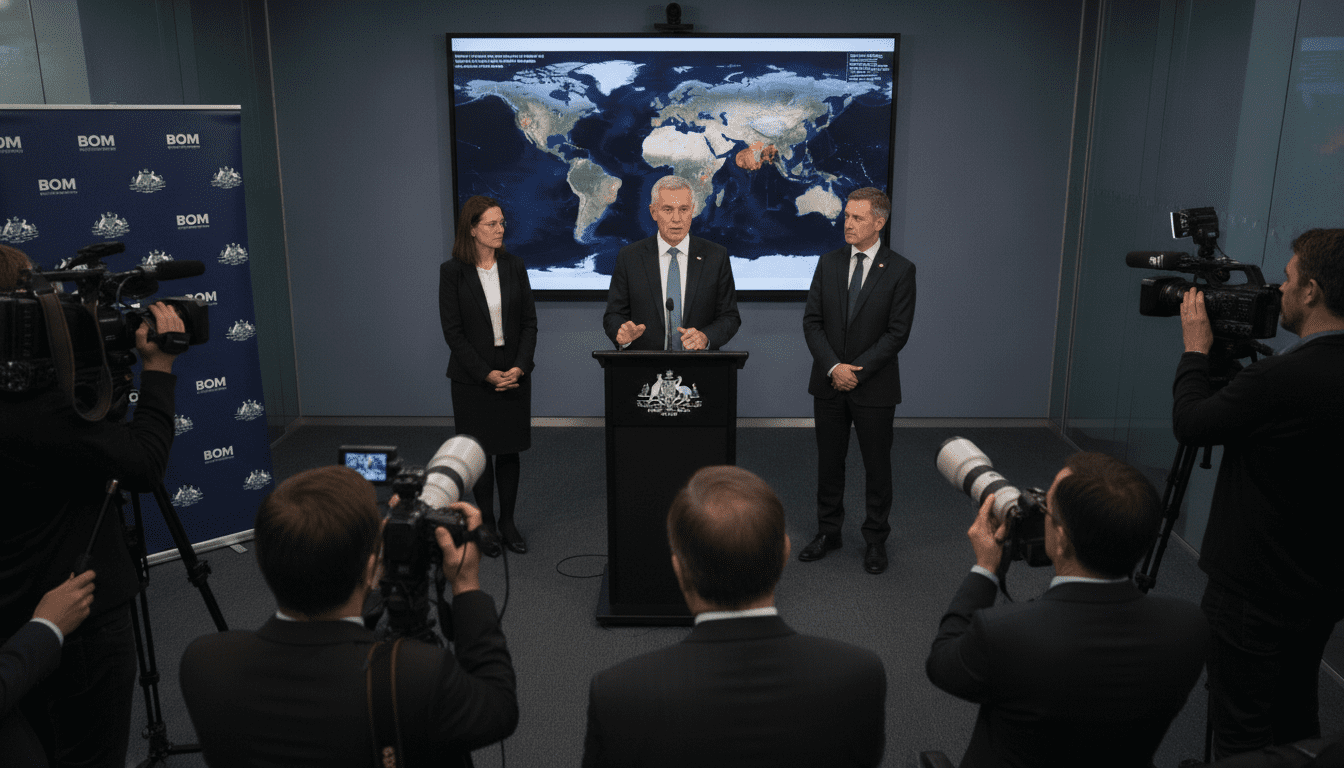
El Nino Forms in Tropical Pacific; Australia Warns Event Could Become One of the Strongest Since 1950
Bureau of Meteorology says El Nino has formed and could intensify into a very strong event, risking droughts, floods and crop disruptions worldwide through late 2026.
Australia’s Bureau of Meteorology has confirmed an El Nino has formed in the tropical Pacific and warned the phenomenon could strengthen significantly in the second half of 2026. Models now point to a strong to very strong El Nino, with sea surface temperatures and atmospheric indicators exceeding established thresholds. Officials say the pattern raises the prospect of widespread impacts on rainfall, temperatures and agricultural output across multiple continents.
Bureau of Meteorology confirms El Nino formation
The Bureau’s statement said sea surface temperatures in the central tropical Pacific have surpassed El Nino thresholds and that coupled atmospheric signals indicate the event is underway. Forecasters noted that roughly half of the climate models surveyed now project a peak comparable to some of the largest events recorded since 1950. The bureau emphasized that continued monitoring will be required as the Pacific evolves through the southern hemisphere winter.
Global models point to a potentially very strong peak
Numerical forecasts from international climate centres show a split but concerning outlook, with a substantial share of models indicating an unusually large warming peak. Where several models converge on a high peak, others show a more moderate course, creating uncertainty about intensity and timing. Scientists caution that even where model agreement is incomplete, the aggregated probability of a sustained El Nino through the remainder of 2026 is markedly elevated.
Expected regional impacts: heavy rain in the Americas, dry spells in Asia
Meteorologists say the developing El Nino will likely shift global rainfall patterns, bringing above-average precipitation to parts of the Americas and drier-than-normal conditions across much of Asia. Regions in South and Central America face heightened flood and landslide risk during the coming months, while major agricultural zones in Asia could experience planting delays and water stress. These divergent outcomes create simultaneous hazards: extreme wetness in some regions and acute drought-related risks in others.
Australia faces higher temperatures and reduced winter-spring rainfall
In Australia, the bureau linked El Nino to a propensity for below-average rainfall during winter and spring and elevated daytime temperatures in southern areas. The pattern is particularly consequential for eastern Australia, where reduced precipitation can strain water supplies and affect pasture and crop yields. Agricultural authorities have flagged potential impacts on wheat, sugar and beef production, sectors in which Australia is a major global supplier.
Climate change likely to amplify impacts, warn scientists and the UN
Researchers and international agencies have stressed that background warming from climate change tends to intensify the impacts of El Nino by raising heat extremes and shifting rainfall intensity. The World Meteorological Organization reported a high probability that El Nino conditions would persist through mid- to late-2026 and increase risks of extreme weather and higher global temperatures. UN officials have urged accelerated climate mitigation, expanded early warning systems and targeted support for vulnerable communities to reduce humanitarian fallout.
Historical precedents and agricultural consequences
Historical records show that the strongest El Nino events have produced severe humanitarian and economic consequences, including historic famines in the late 19th century and widespread crop shortfalls during strong events in recent decades. The episodes of 2015–2016 and 2023–2024 are cited by analysts as examples of how intense Pacific warming can curtail grain and oilseed output and trigger water scarcity. Policymakers and farming groups are therefore monitoring planting decisions, irrigation plans and supply chain vulnerabilities closely.
Global forecasters continue to refine seasonal outlooks as the situation develops, urging governments, utilities and agricultural managers to strengthen preparedness measures. Early warning systems, contingency water allocations and crop insurance mechanisms are being reviewed in several countries to reduce exposure to sharp swings in weather conditions. Humanitarian agencies have also started assessing regions at greatest risk of food insecurity and flood damage.
Authorities stress that uncertainty remains about the exact strength and duration of the event, but there is a clear and elevated risk profile compared with a neutral Pacific state. As the southern hemisphere moves into winter, the coming weeks will be critical for determining whether the El Nino peaks at levels among the highest observed since 1950. Communities, sectors and governments are being advised to treat forecasts seriously and to accelerate prudent measures that can mitigate harm.
